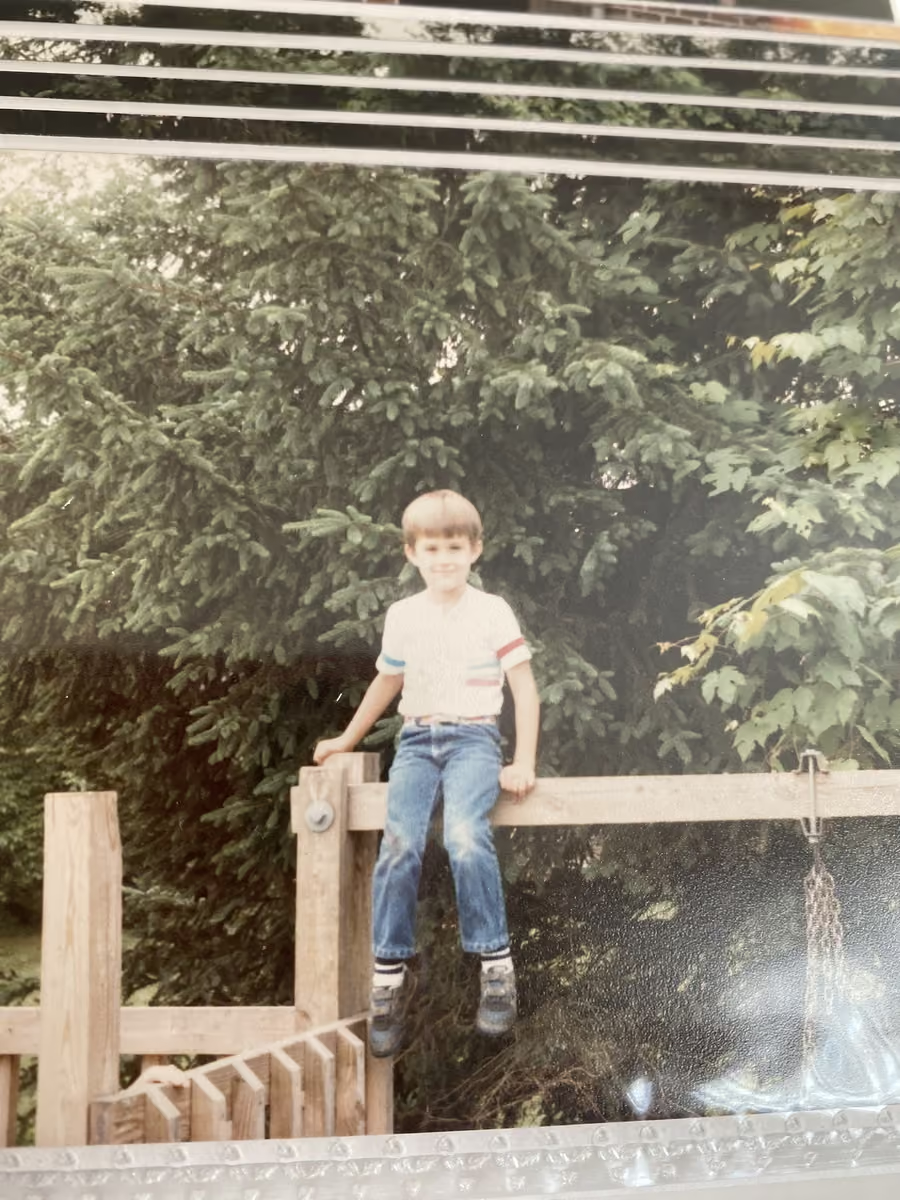
Kanawha County, c. 1985. Photographed from the print, in sleeve. Also answers to "Termite."
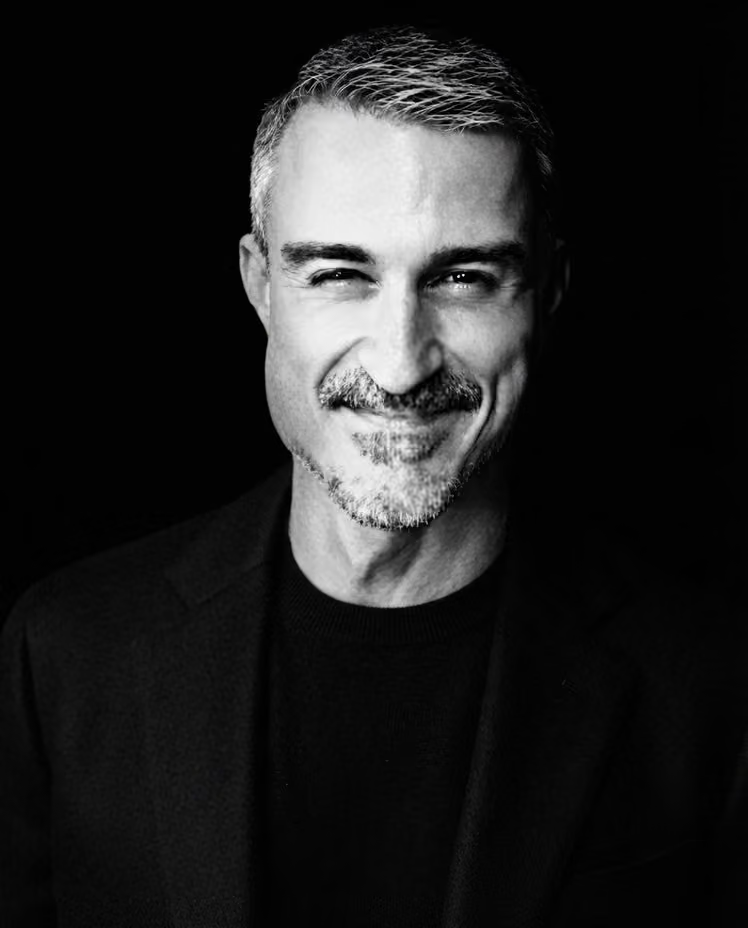
Joshua Tawney is a designer working across architecture, interiors, brand identity, and publishing. Trained in Ithaca, NY. Based in NYC since 2004 (+/-).
Kanawha County, c. 1985. Photographed from the print, in sleeve. Also answers to "Termite."
Cornell + early NYC — I came to architecture sideways. Before Cornell I'd worked at Marc Jacobs International in New York — graphic design, sales, store photography, ration-ing champagne for Sofia Coppola — and learned that visual culture was a discipline you could actually do as a job. I'd already cycled through journalism school at Mizzou and political science with French at WVU. Architecture itself was because of Stephan Jaklitsch, MJ's store architect, who stopped by the office to chat at length. He planted a seed in my mind that I could not ignore, so I proceeded to purchase several books on the matter and speak to architects in practice. Stephan told me, "Whatever you do, do not quit your job here and go study architecture." Simon Ungers' Cube House was the perfect place to park the blue Volvo wagon I bought to move from Brooklyn.
Cornell's Bachelor of Architecture was the only program I applied to. Five years of studio in Ithaca trained me to think structurally about everything — buildings, yes, but also arguments, drawings, and an existential read on the built environment. Summer 2009 took me to Buenos Aires for an internship with Julian Varas on the Mar del Plata Contemporáneo competition. Montreal, Oslo and Snøhetta, Taipei with Arthur Huang and Miniwiz, Tokyo.
After graduation I went to San Francisco to work for BRU | Mason, where I built proof-of-concept models for an undisclosed casino in the American Southwest. Then NYC, where Architecture Work Office hired me for the Design Marfa Housing Competition. These were the years of being shaped — of learning what a discipline does to your habits of attention. I left them able to see scale, time, and surface as the same problem.
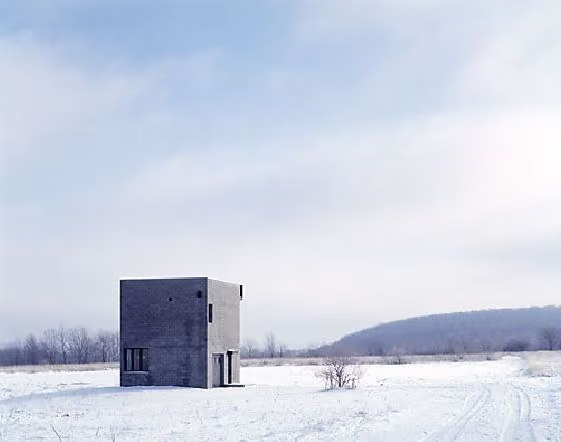
Cube House, Danby, New York — Simon Ungers. Where I lived at Cornell. Photograph: Eduard Hueber.
Silling / Prophet years — Six years inside firms taught me what an architecture practice actually is. I started at Ismael Leyva as an Intermediate Architect — multifamily towers in NYC, construction documents at the Domino Sugar Factory, density studies for NYCHA. Then Frederick Tang Architecture, where the work scaled down and the craft scaled up: a black-rope ceiling installation at Hey Hey Canteen in Gowanus; a kitchen renovation for the Parkers with oversized Danish pulls and Moroccan tile; the second location of Greenlight Bookstore on Flatbush; the Mack Weldon headquarters; FF&E for a Carroll Gardens townhouse on Sackett Street. Boutique residential, retail, restaurant — the full vocabulary of a small Brooklyn studio.
In 2017 I moved to Prophet, the brand consultancy, to lead the architectural side of their relationship with CHOPT — a complete physical restaurant redesign, ground-up guidelines package, custom millwork, and the strategic programming of the "customer's journey" from entry to POS. Then expansion drawings for new locations across the eastern US — Connecticut, New Jersey, Maryland, Virginia, DC, the Carolinas, Tennessee, Georgia. Encompass Health became a national signage guidelines package, which I presented to the client in Birmingham. Arby's became drive-thru re-imagination concepts. I learned what brand consulting actually meant — architecture as a brand instrument, not just a building.
Then home. From 2018 I was project designer at Silling Architects in Charleston, leading interiors for Lofts on 5th in Fernandina Beach — nine urban-luxury apartments inside a non-contributing three-story historic masonry building. I presented that project to the Fernandina Beach historic district committee and got it approved. Alongside it, courthouses and university buildings across the Carolinas and West Virginia. By 2019 I was working for myself — the magazine I'd founded the year before had become the job.
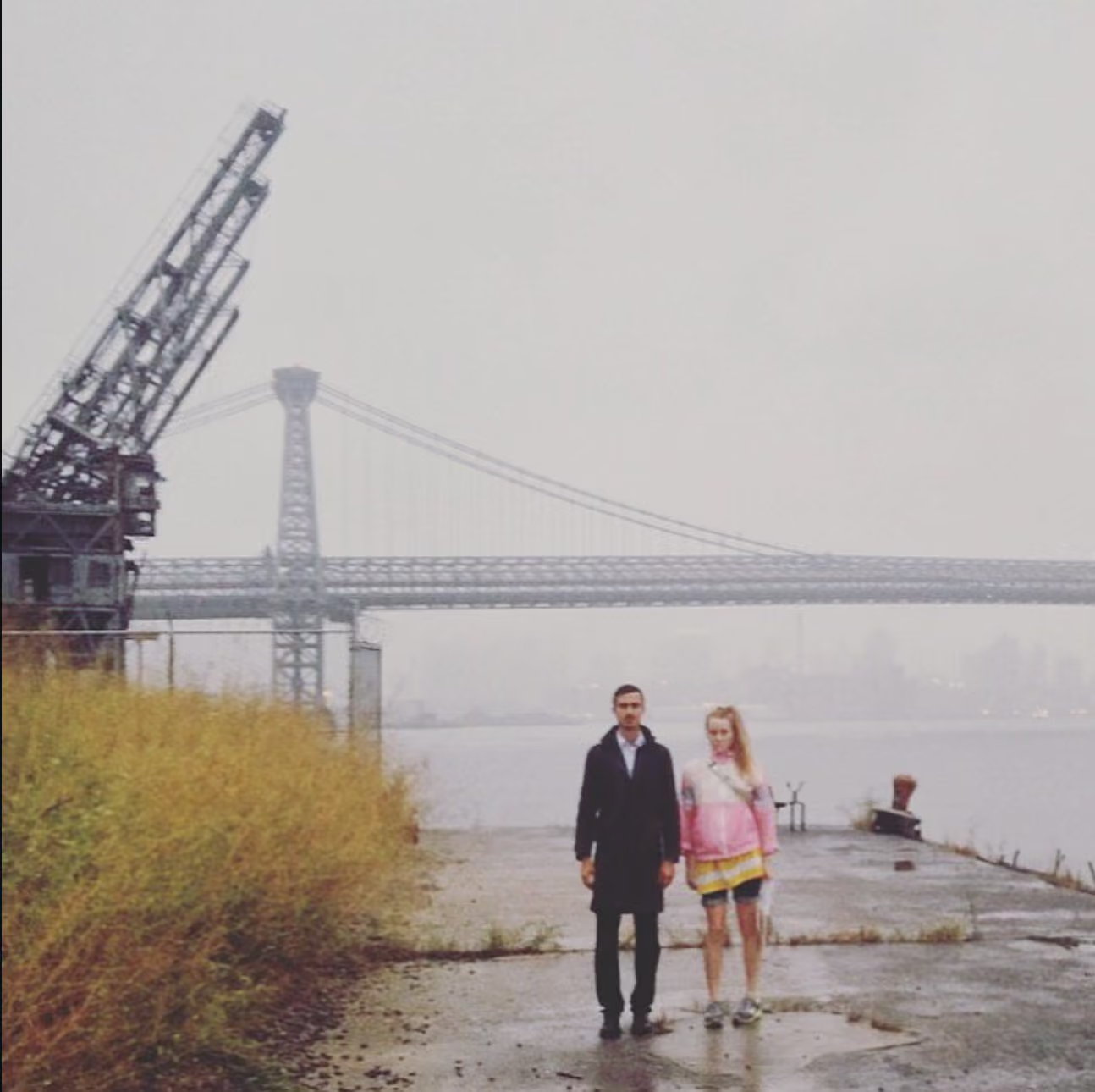
East River, Williamsburg. Where M, B, and I were unintentional Situationists.
ERL + Fabrication + Moves — In 2018 I founded CJT Publishing with my mother as editor-in-chief and launched Elk River Living — a monthly regional lifestyle magazine for the Elk River area of West Virginia. We're on volume eight. I designed the publication from the ground up, built the website, manage the print pipeline, and shape every issue's editorial system. It's the most rigorous design work I do because every issue has to actually arrive in mailboxes on schedule.
I've been independent since 2019, and running the practice from Brooklyn since 2020. The practice has three orbits that share a center of gravity. Architecture, for residential and commercial clients — interiors, brand environments, and the architectural research that becomes the studies on this site. Design strategy, applied to brands that need their physical and digital expression considered as a single problem. And publishing, where every issue of ERL is a chance to test how editorial structure, typography, and physical artifact reinforce one another.
In 2024 I came on as creative director at Litstone — a lighting company founded by Ioannis Pappos in Pelio, Greece, where river-battered stones from the mountain that cuts straight into the Aegean are transformed into functional art. The product existed; the brand didn't, and that was my year there. Litstone is the chapter I'm still figuring out. The rest of the practice is the one I've made by hand.
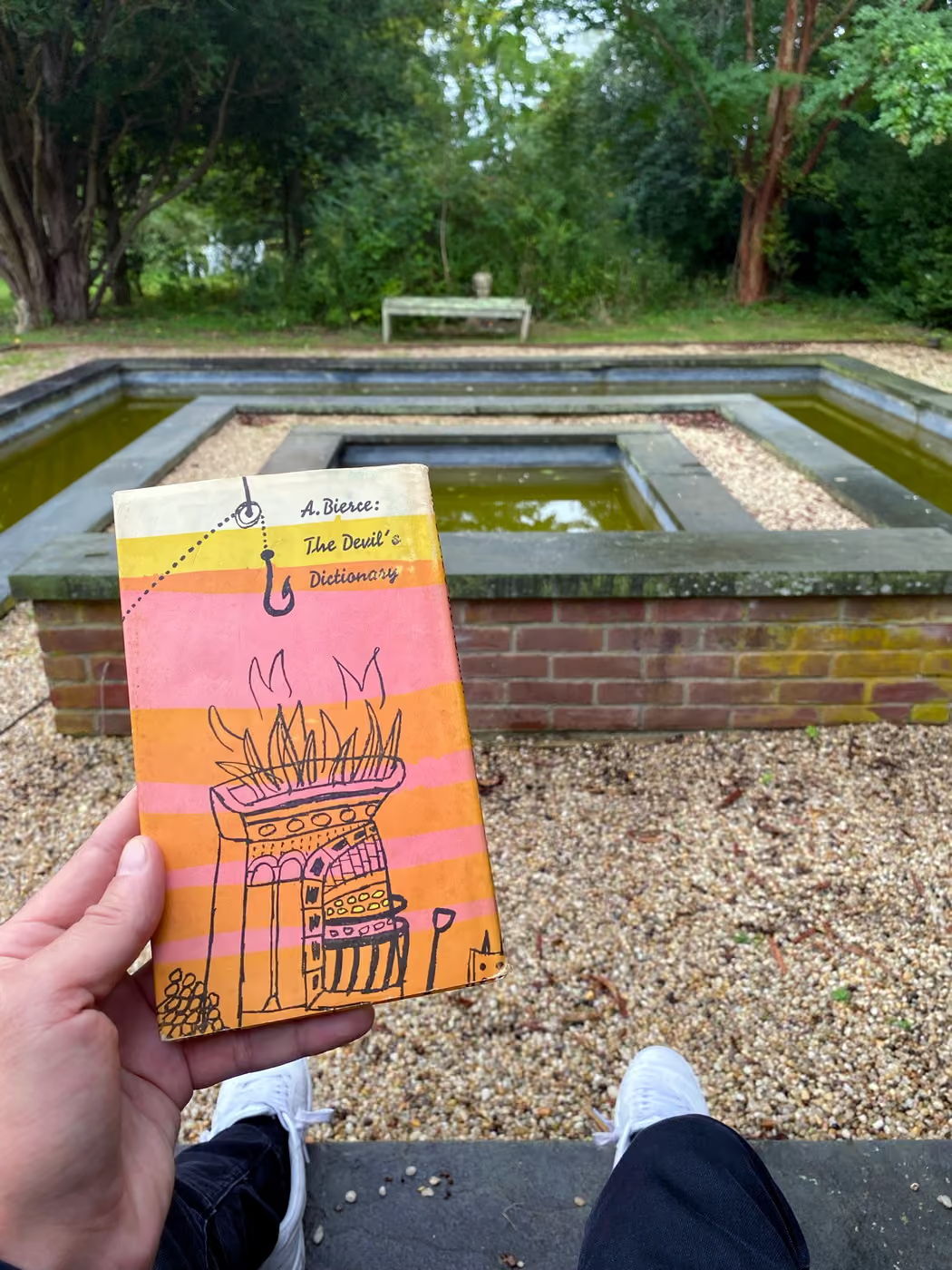
Ambrose Bierce, The Devil's Dictionary.
Adobe Creative Suite, Rhino 3D, Blender, AutoCAD, Revit, Grasshopper, V-Ray, Global Mapper, QGIS.
Adobe Creative Suite — Photoshop, Illustrator, InDesign, After Effects, Premiere Pro, Lightroom, Dimension, Fresco, Capture. Webflow. Notion.
Wood, metal, plastic, paper. 3D printing, CNC milling, casting in resin, concrete, and silicone. Architectural modeling, rapid prototyping.
Curriculum Vitae 2026PDF · 2 pagesSelected Works · Portfolio 2026PDF · 74 pages