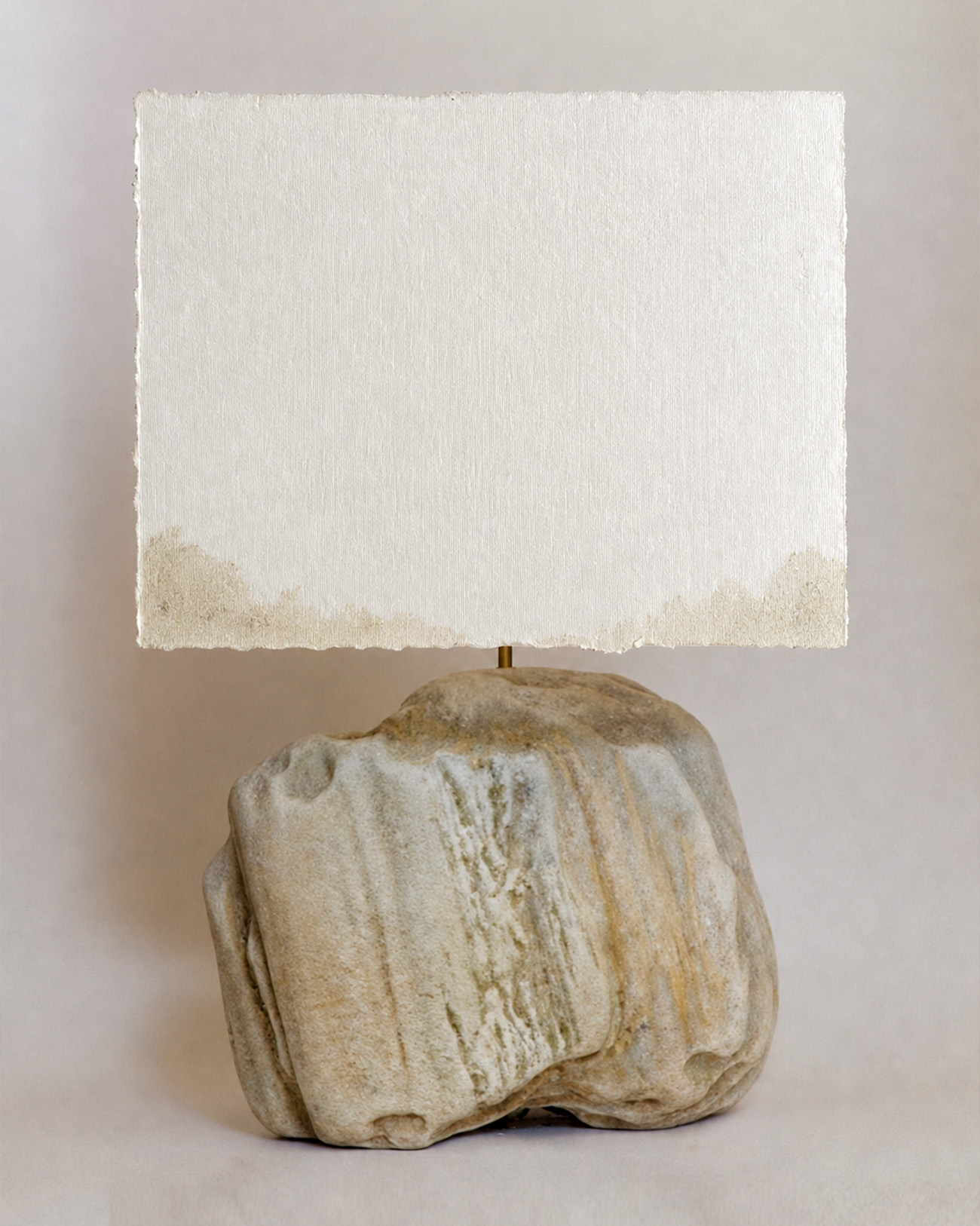
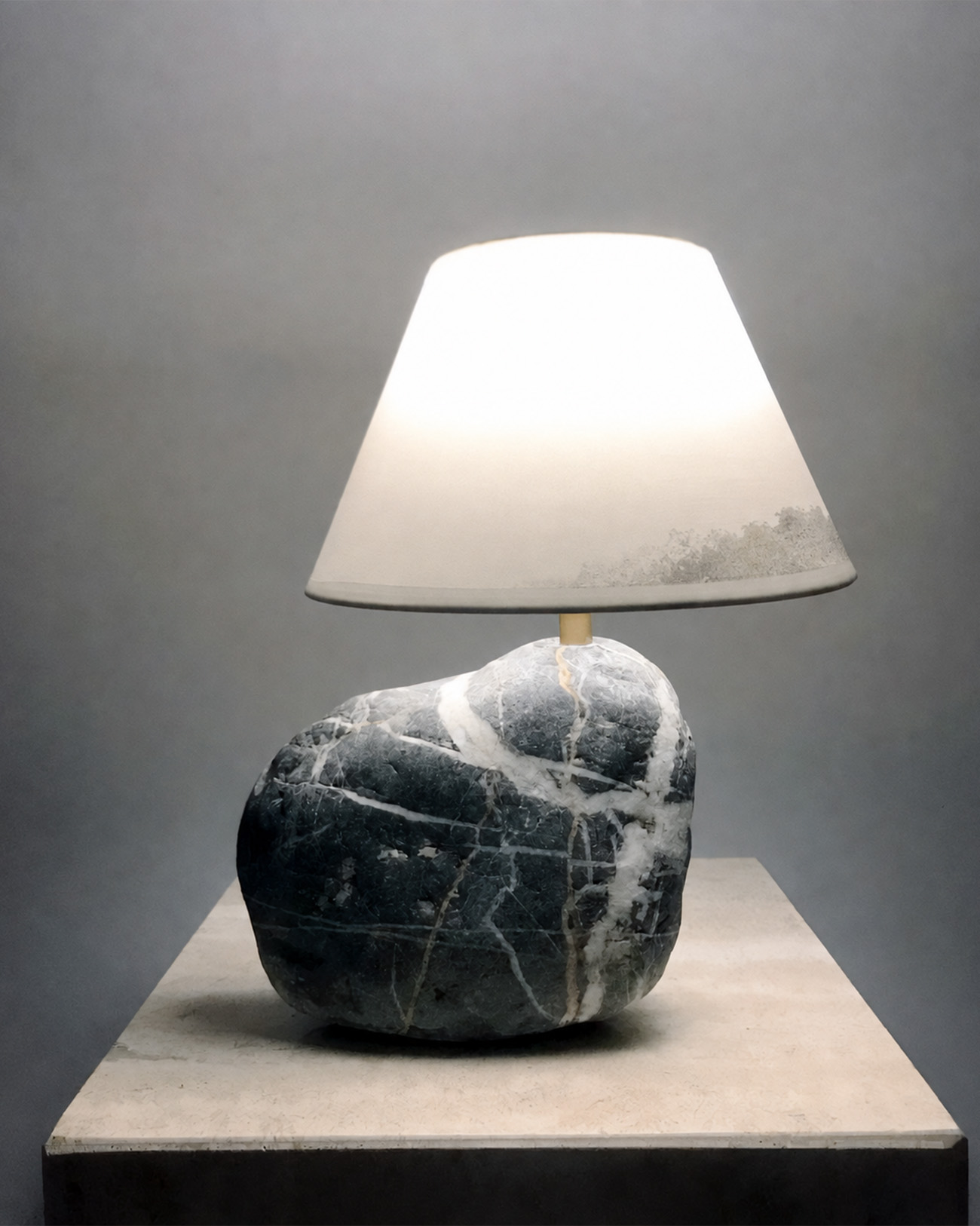
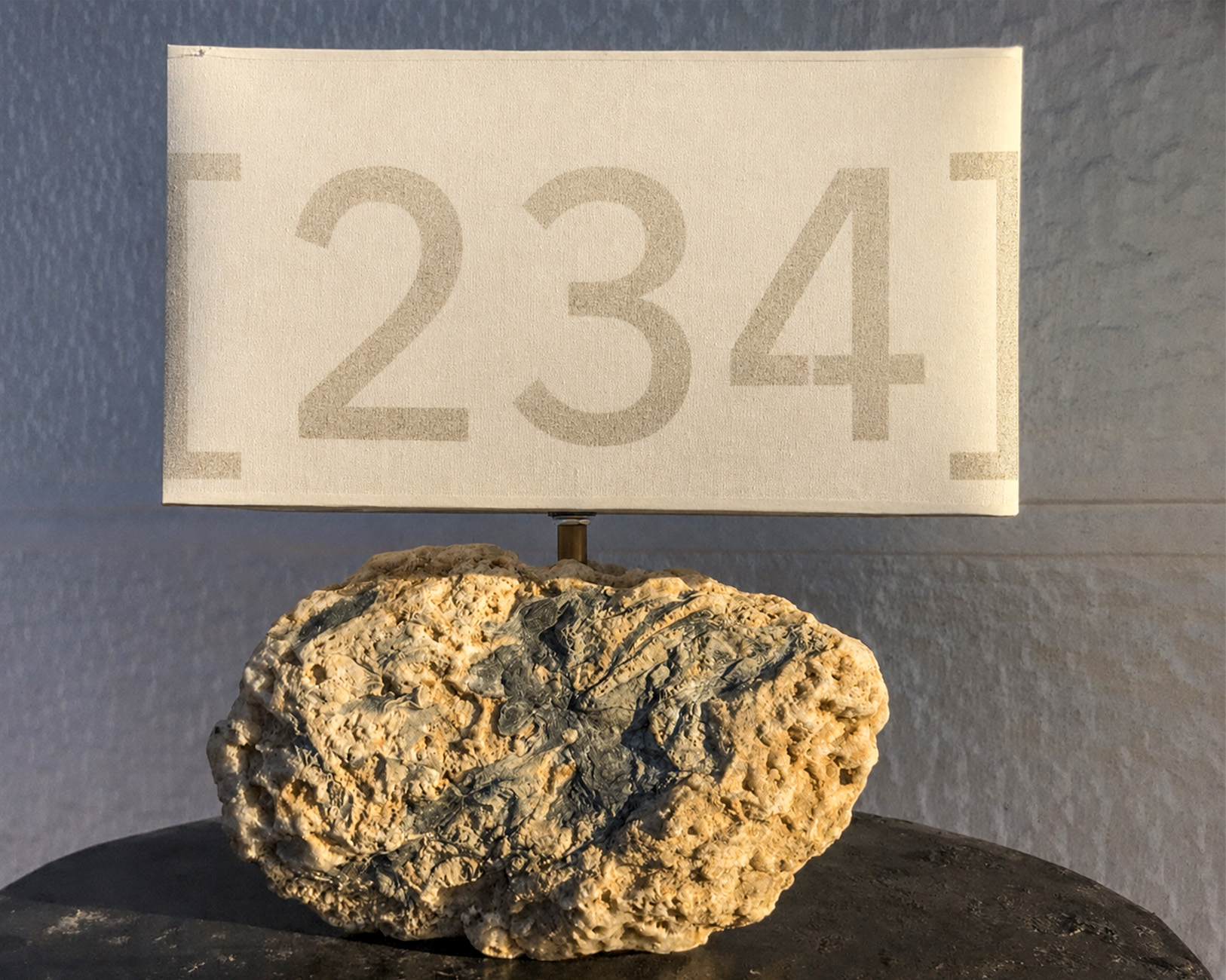
Litstone Shade Study
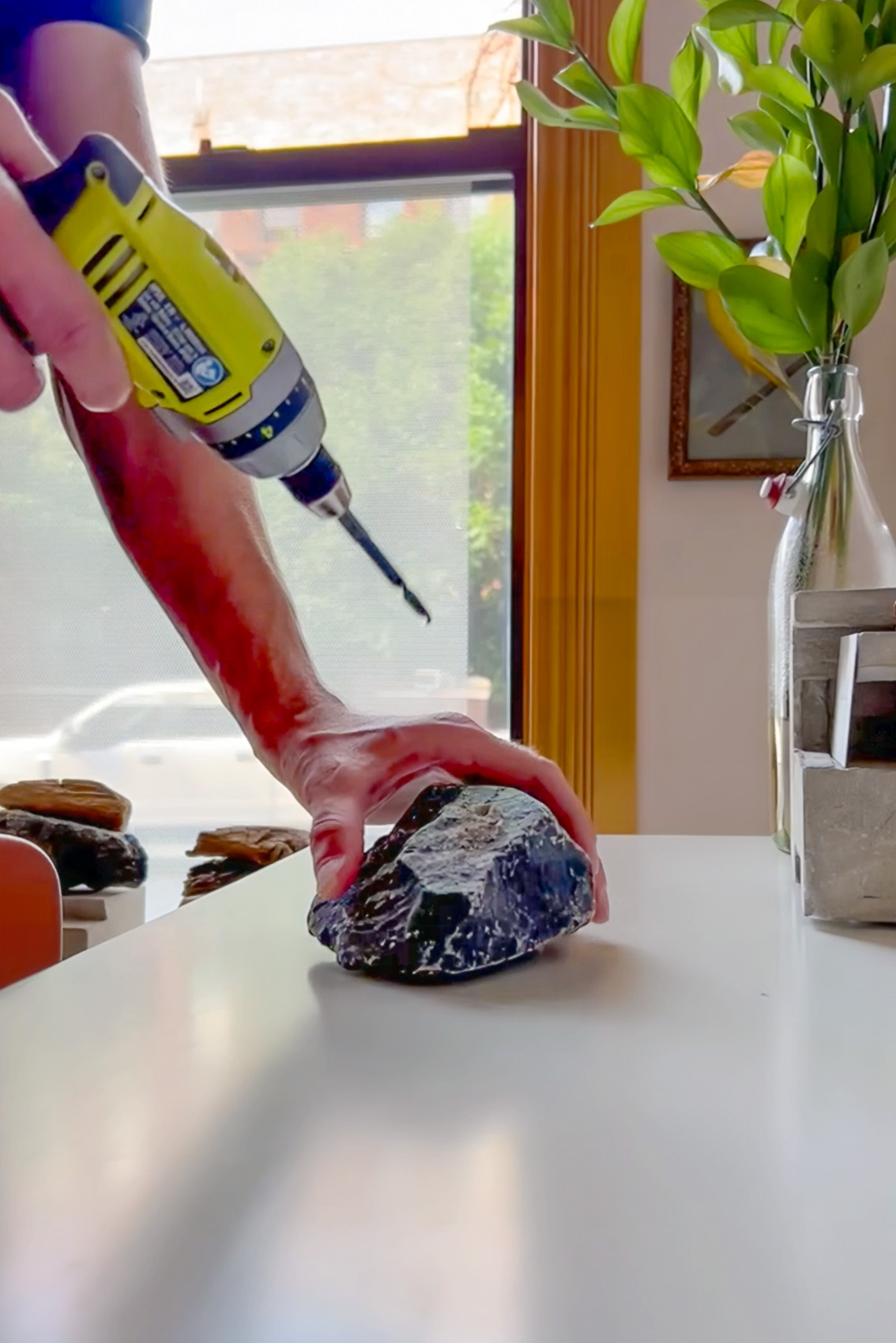
Each lamp needs one hole drilled through its stone base. Five stones, five colors of powder, and a hand-ruled register built to find out which of them could actually mark a shade.
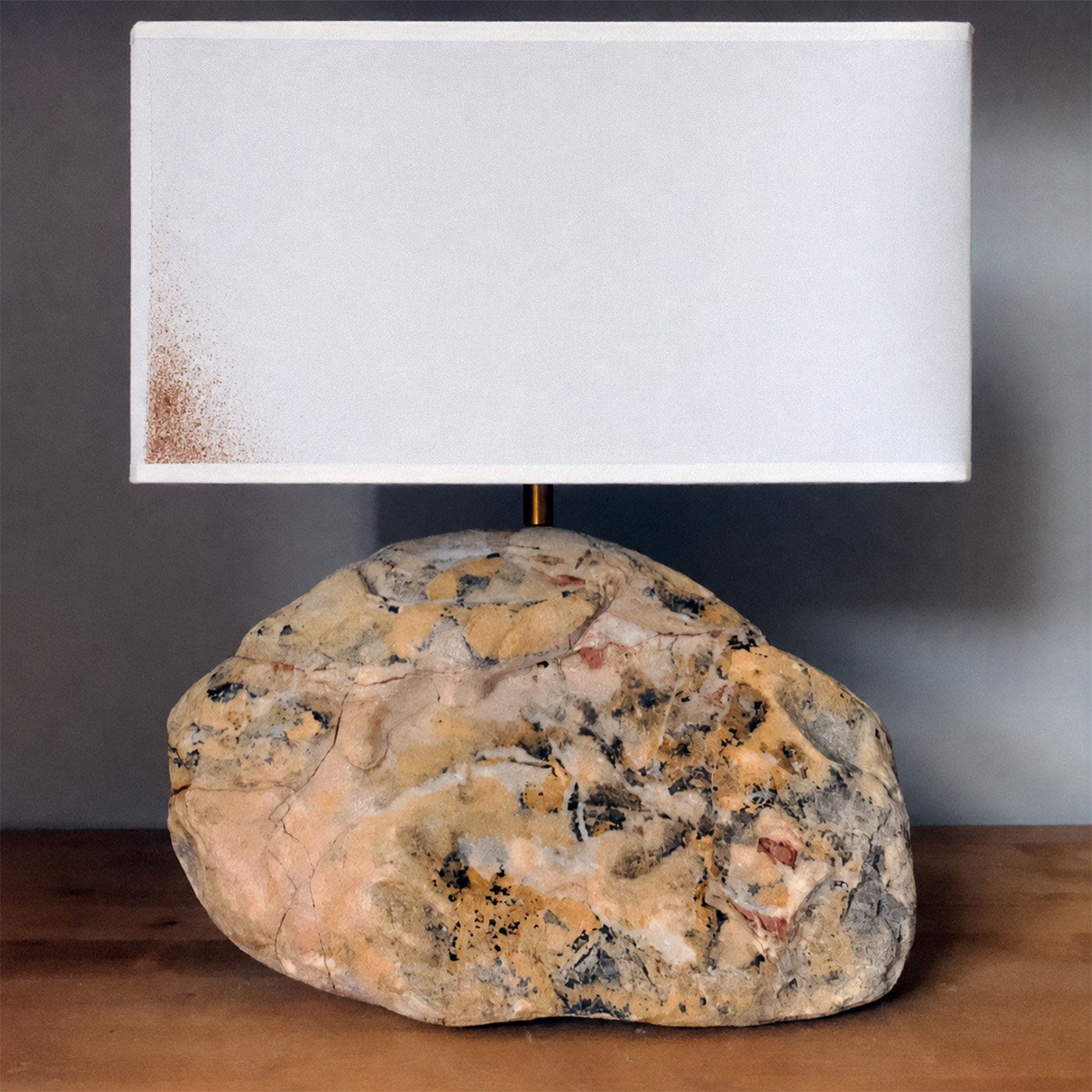
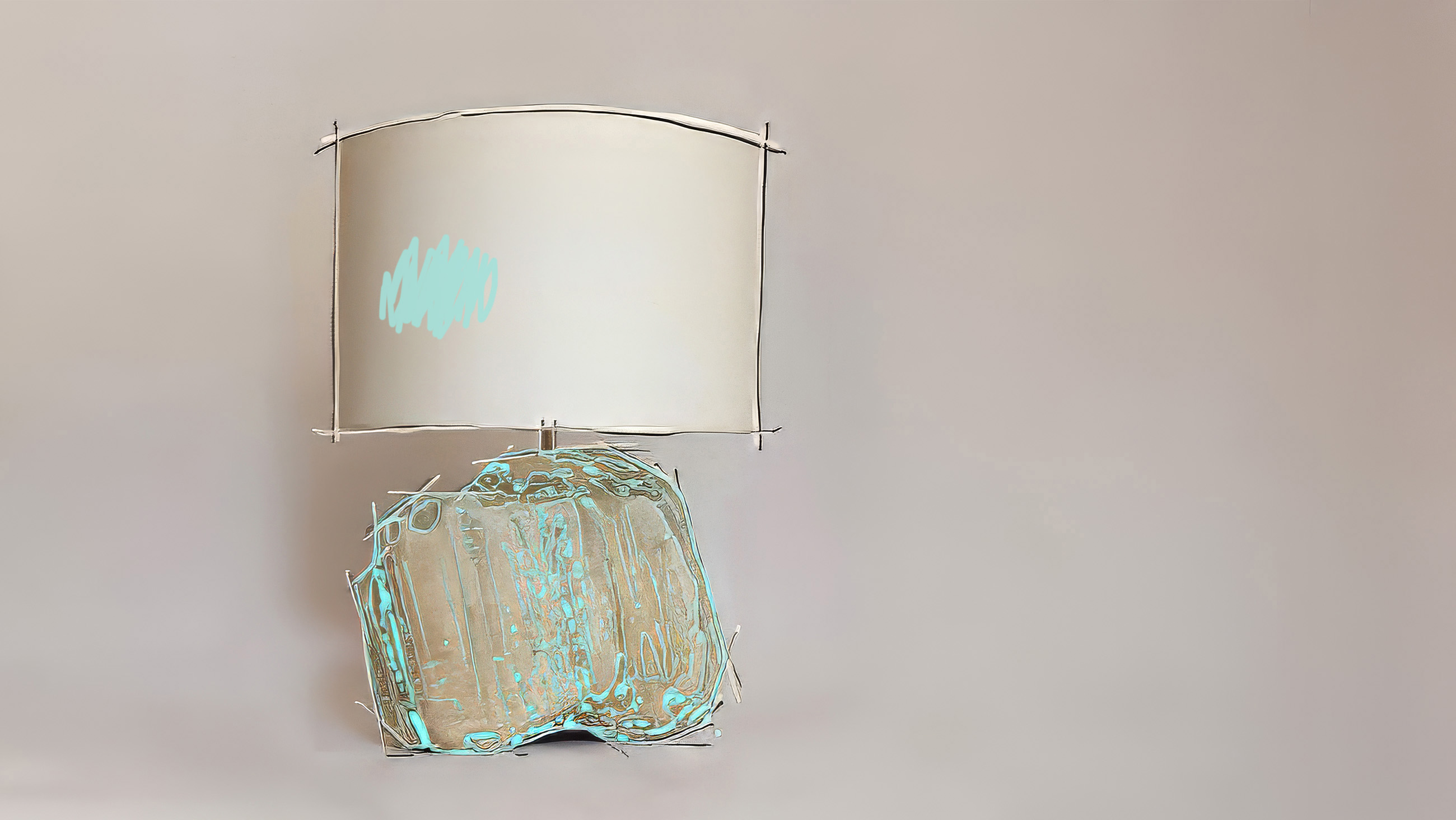
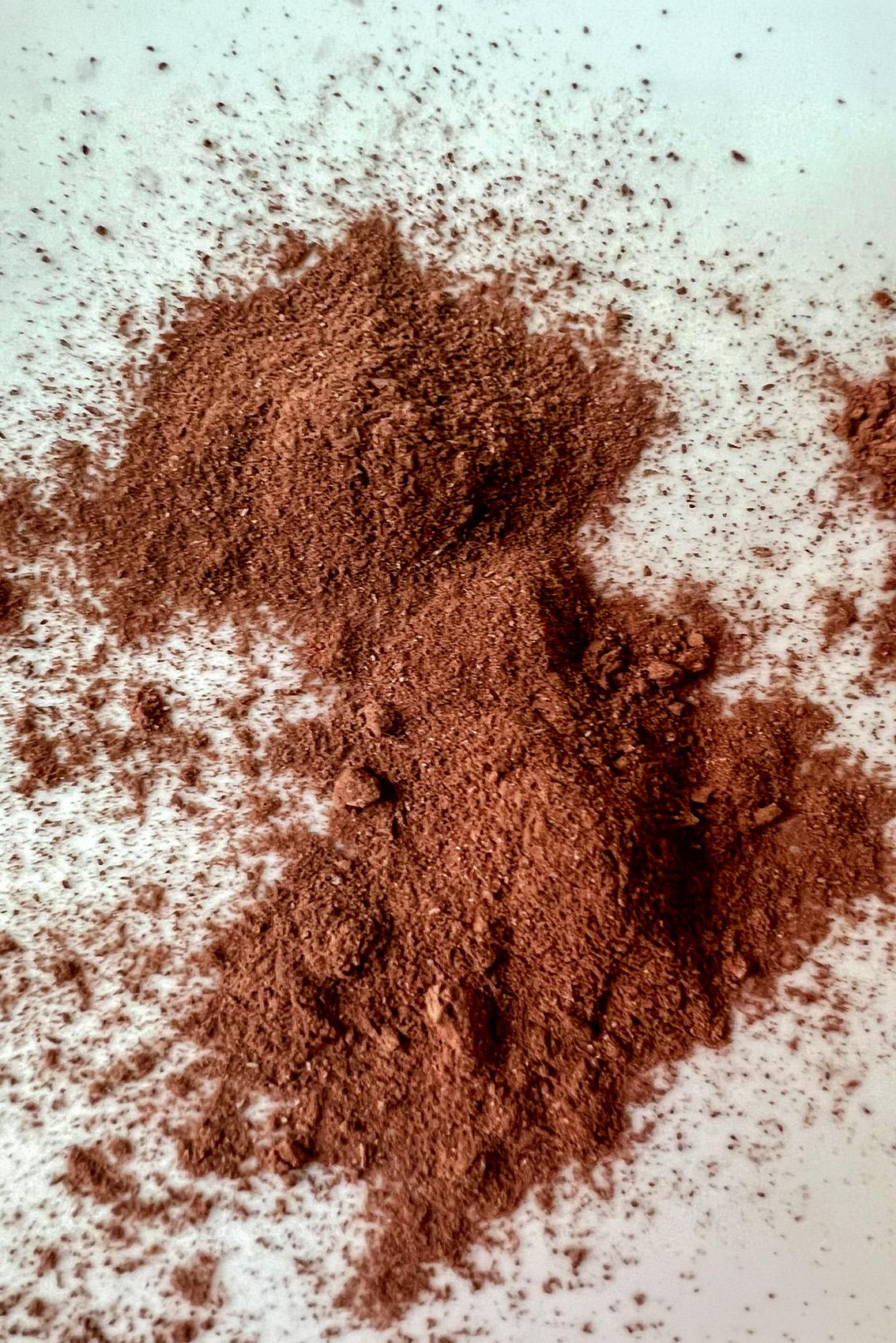
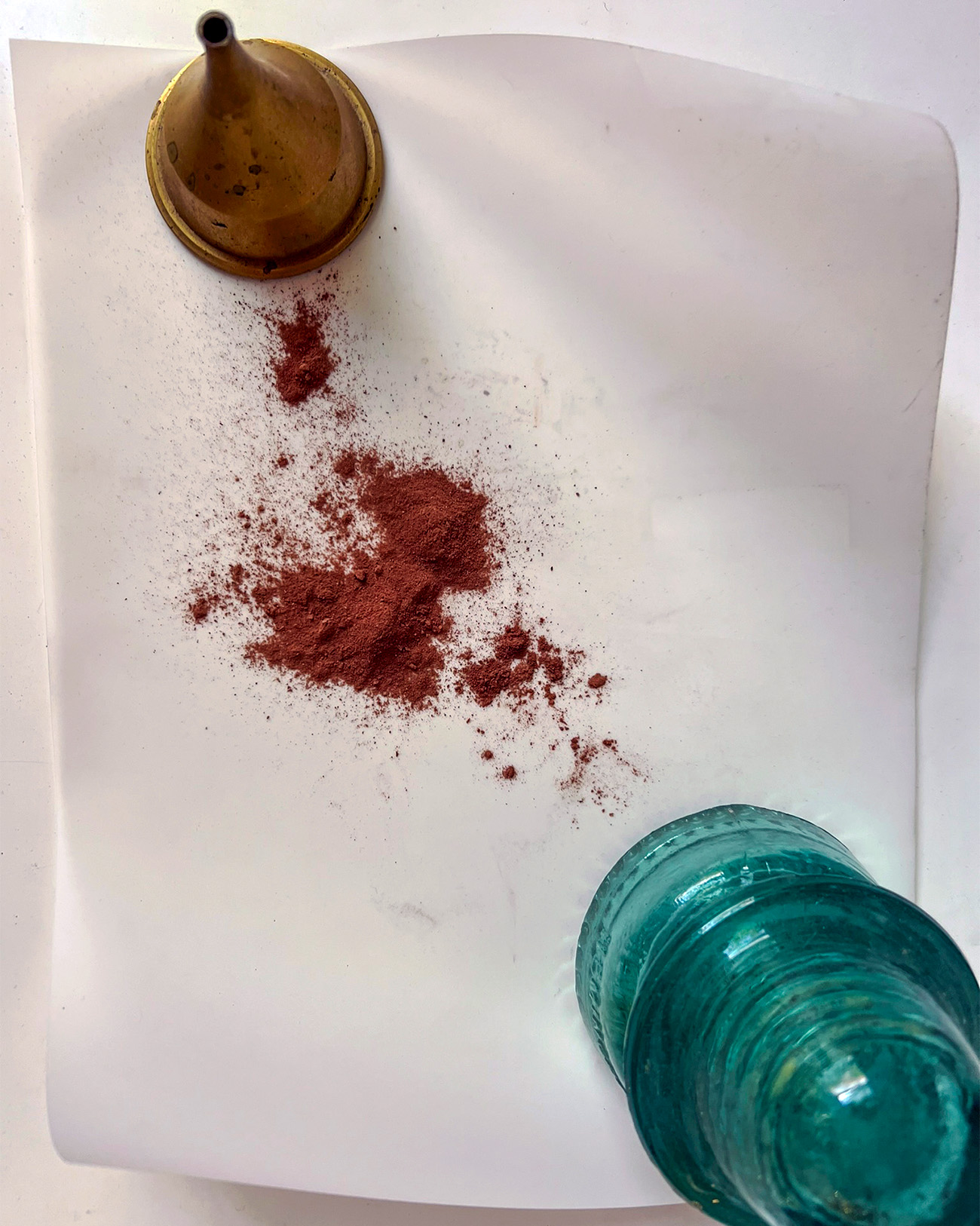
*The Dust Mark. The boulder's own red-brown pigment, drifted across the corner of its shade. Every Litstone carries the dust of its own making.
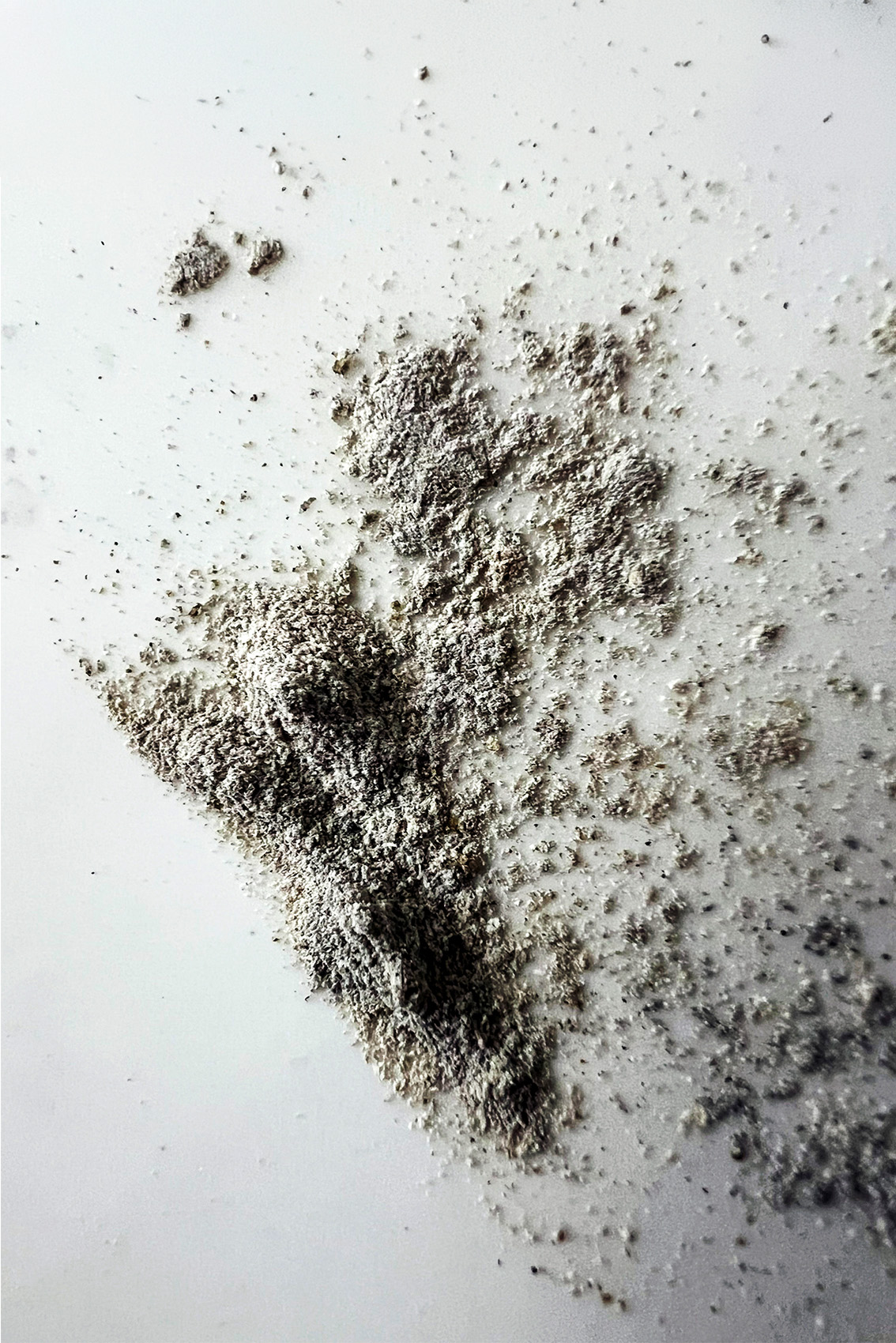
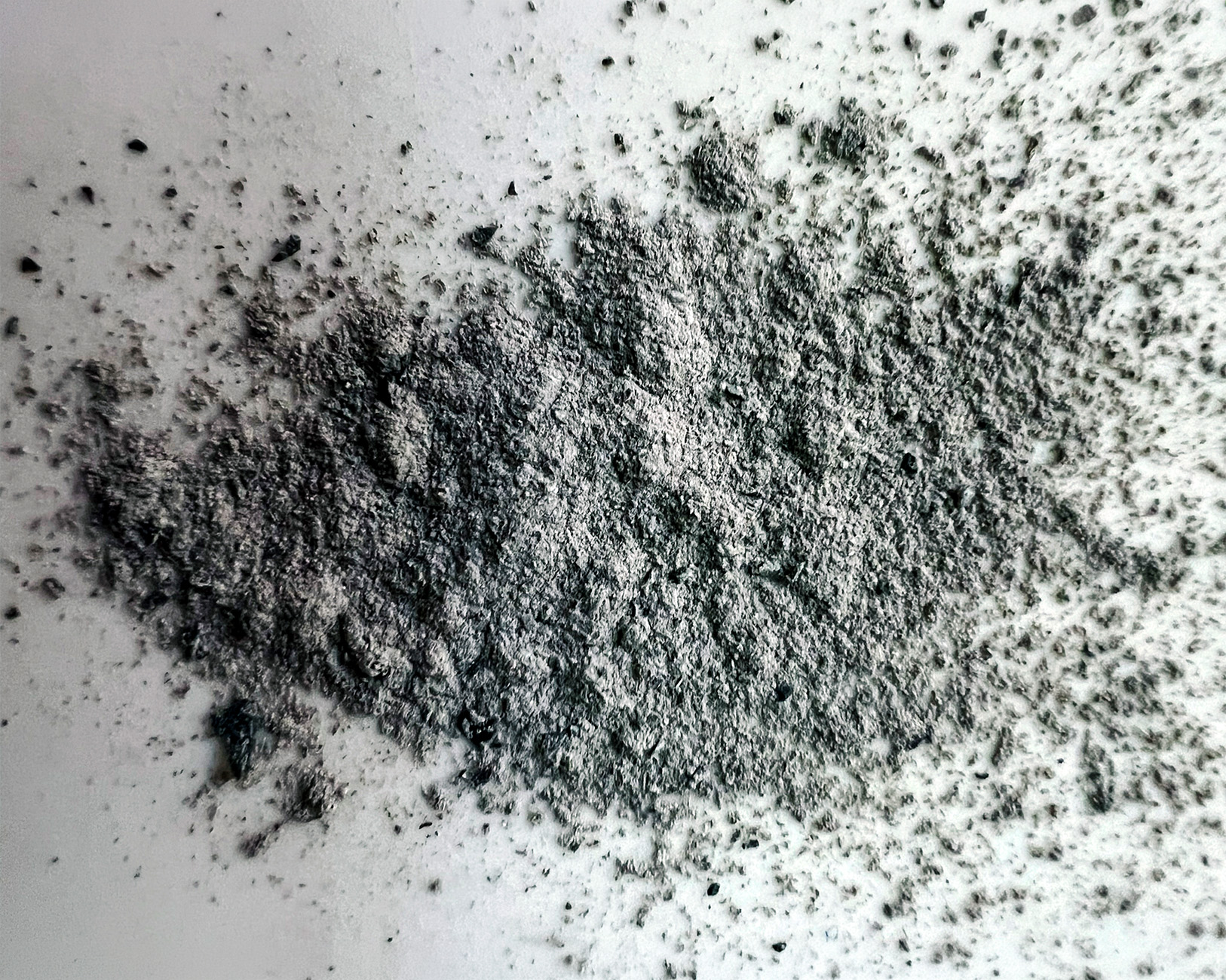
Litstone is a lamp: a stone found, bored for its cord, wired, and shaded. The boring is the only violence in the whole process — a minute of drill time through the one material the lamp is actually made of. It leaves a small cone of powder at the hole. This study is about not sweeping that up.
The Harvest
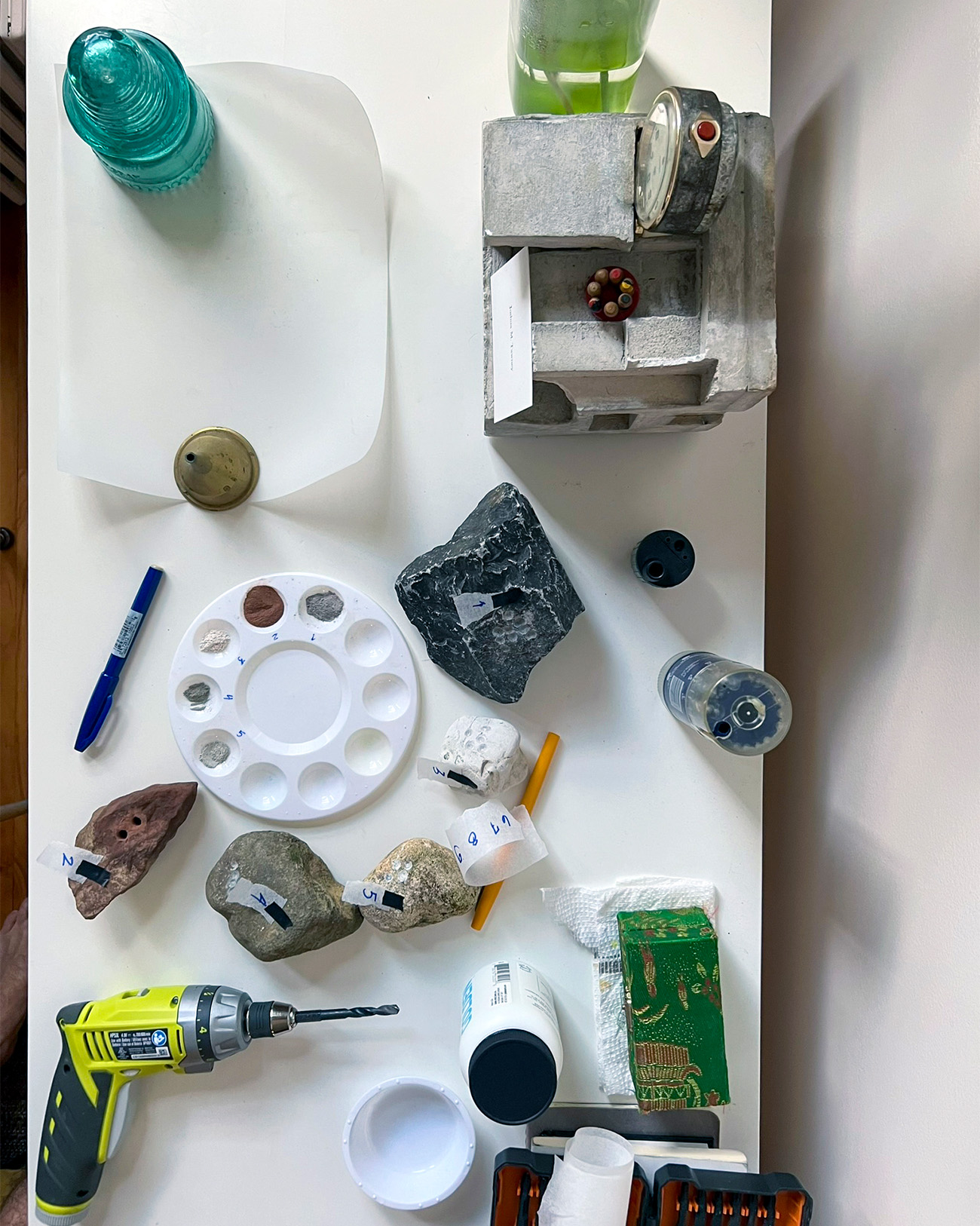
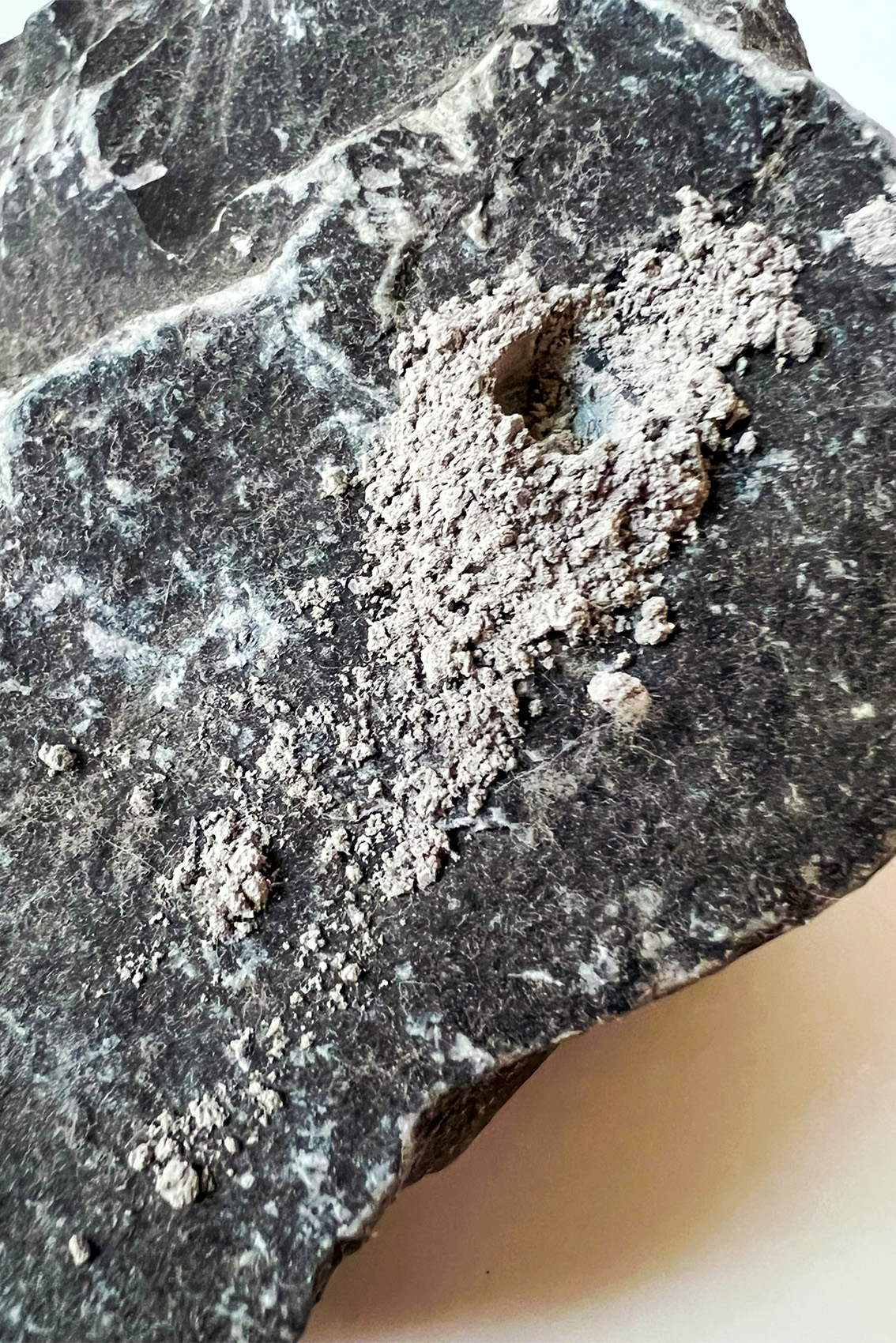
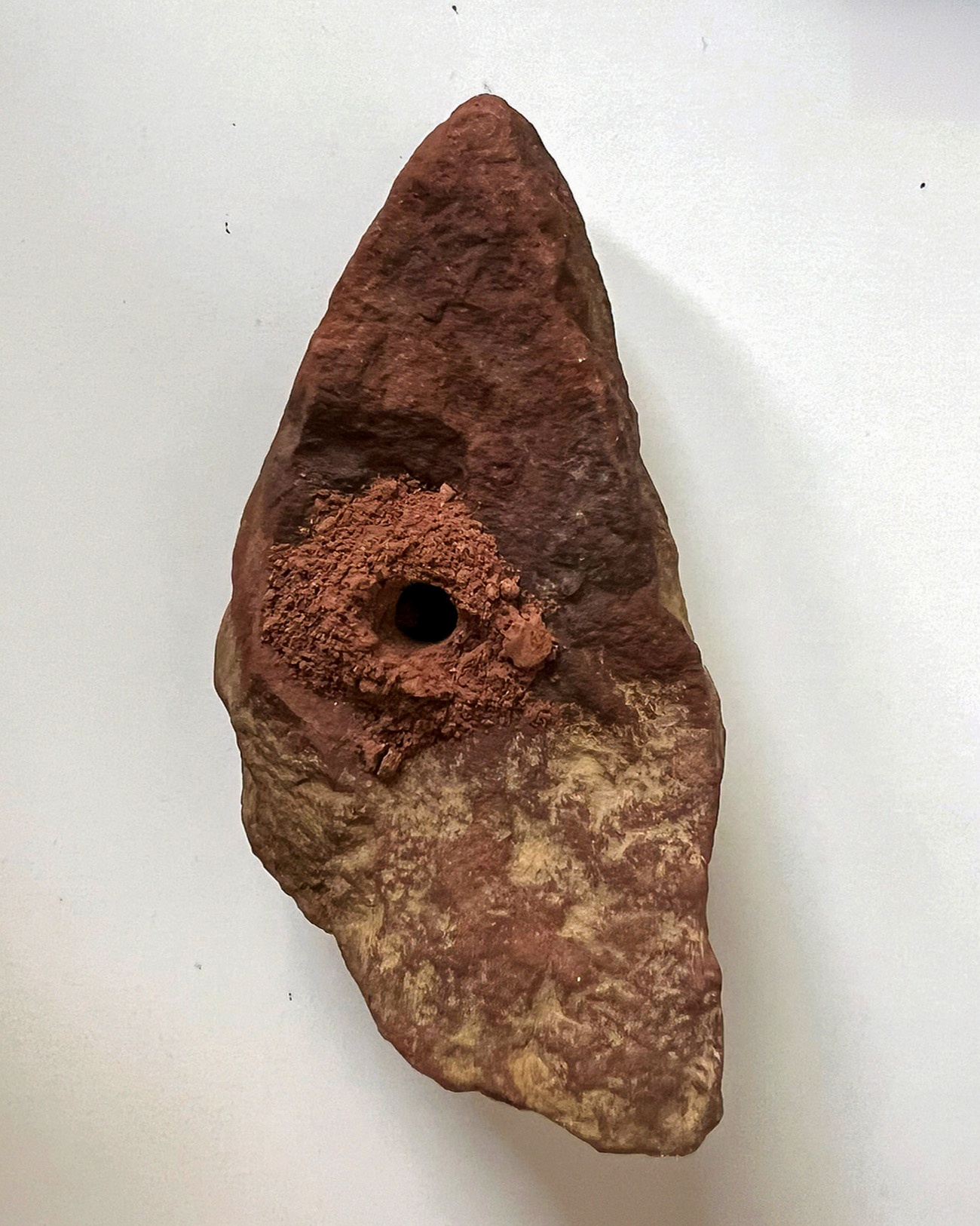
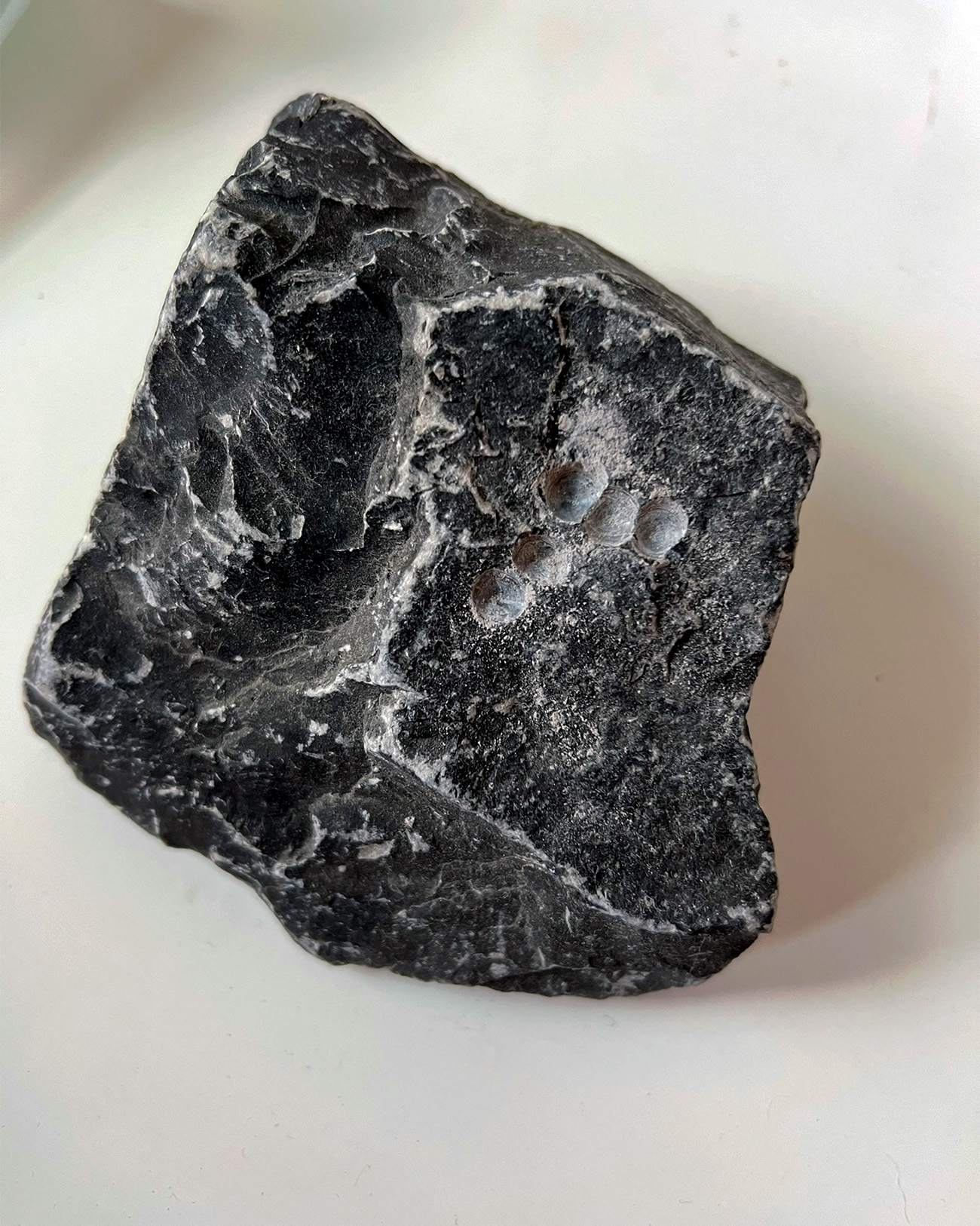
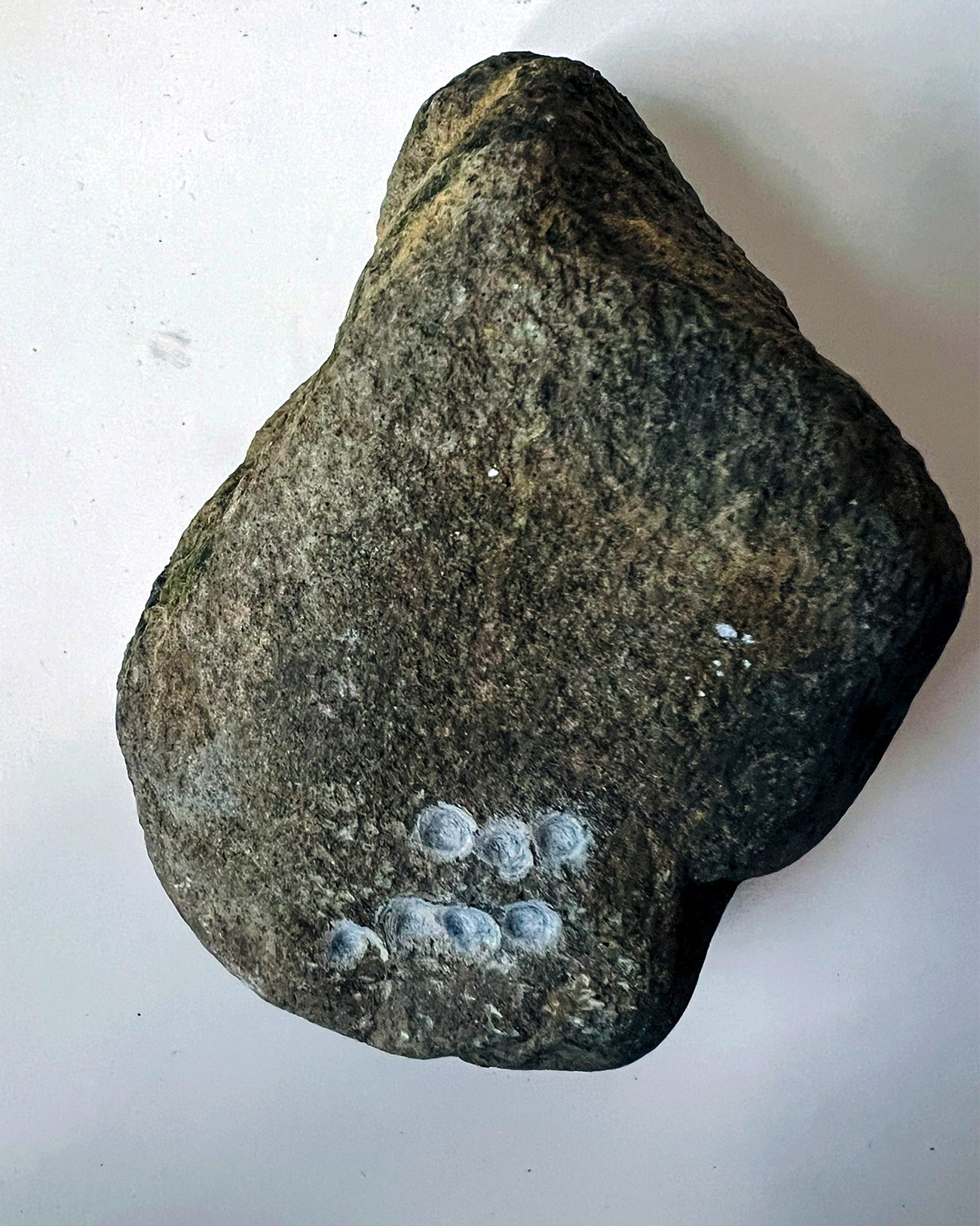
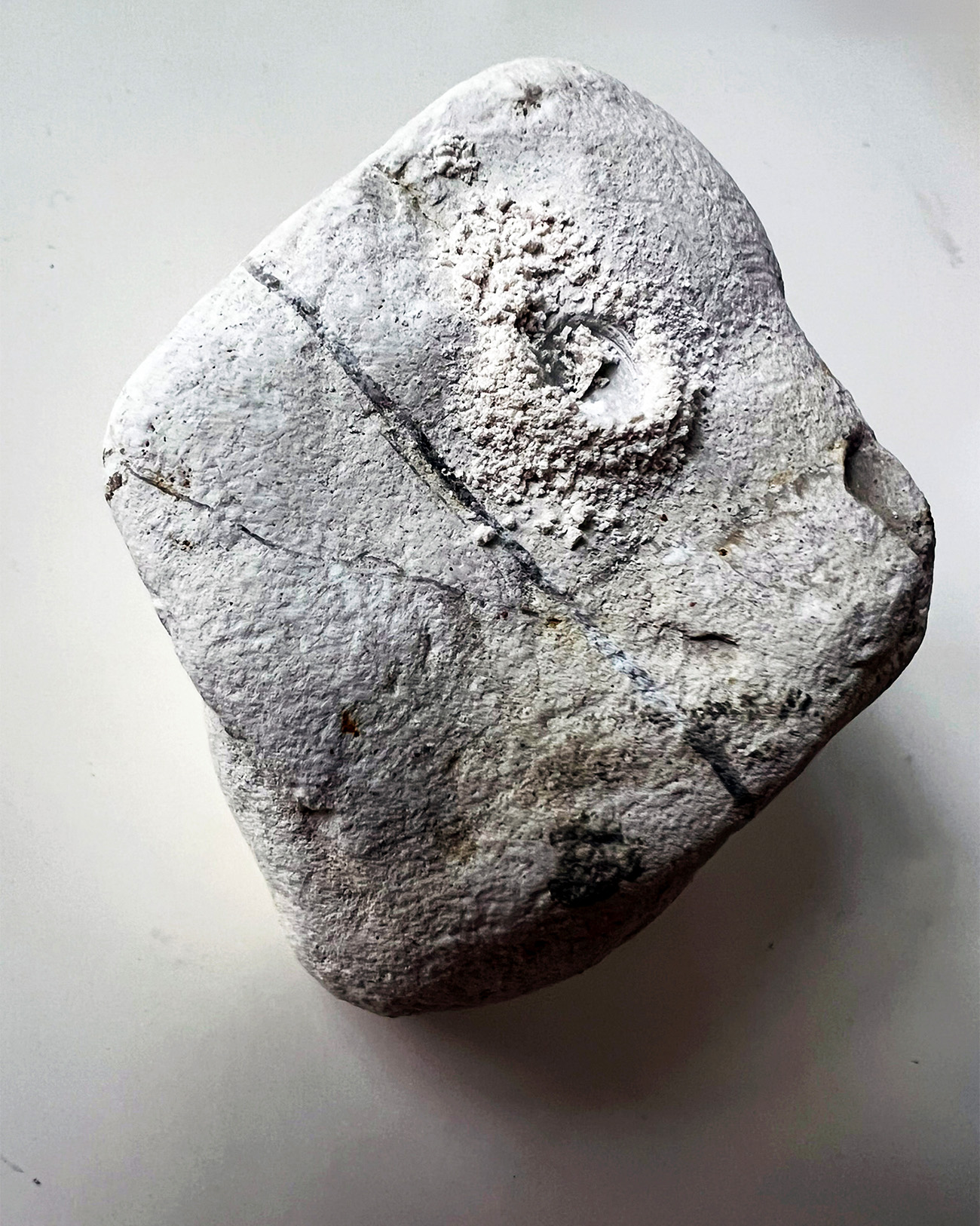
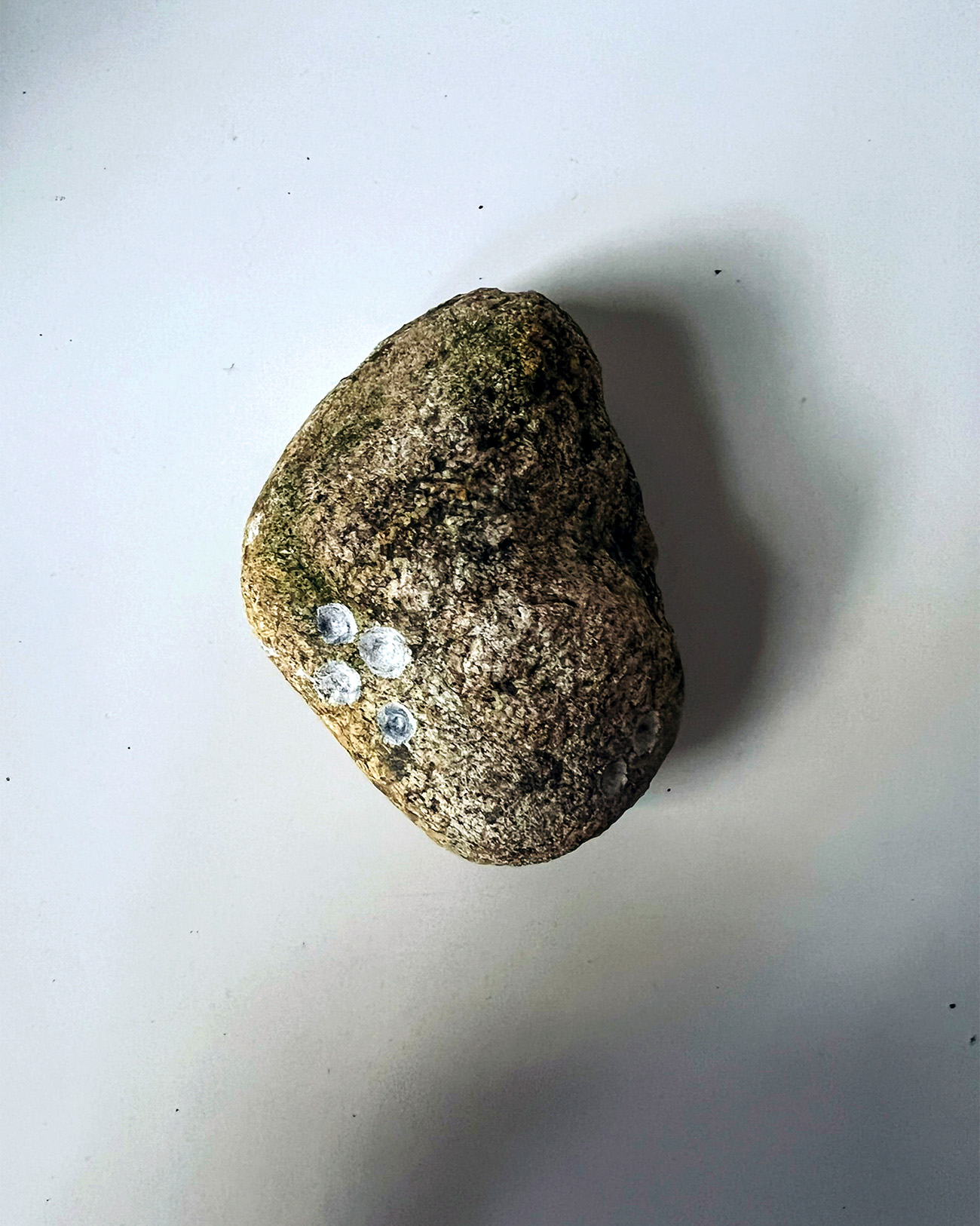
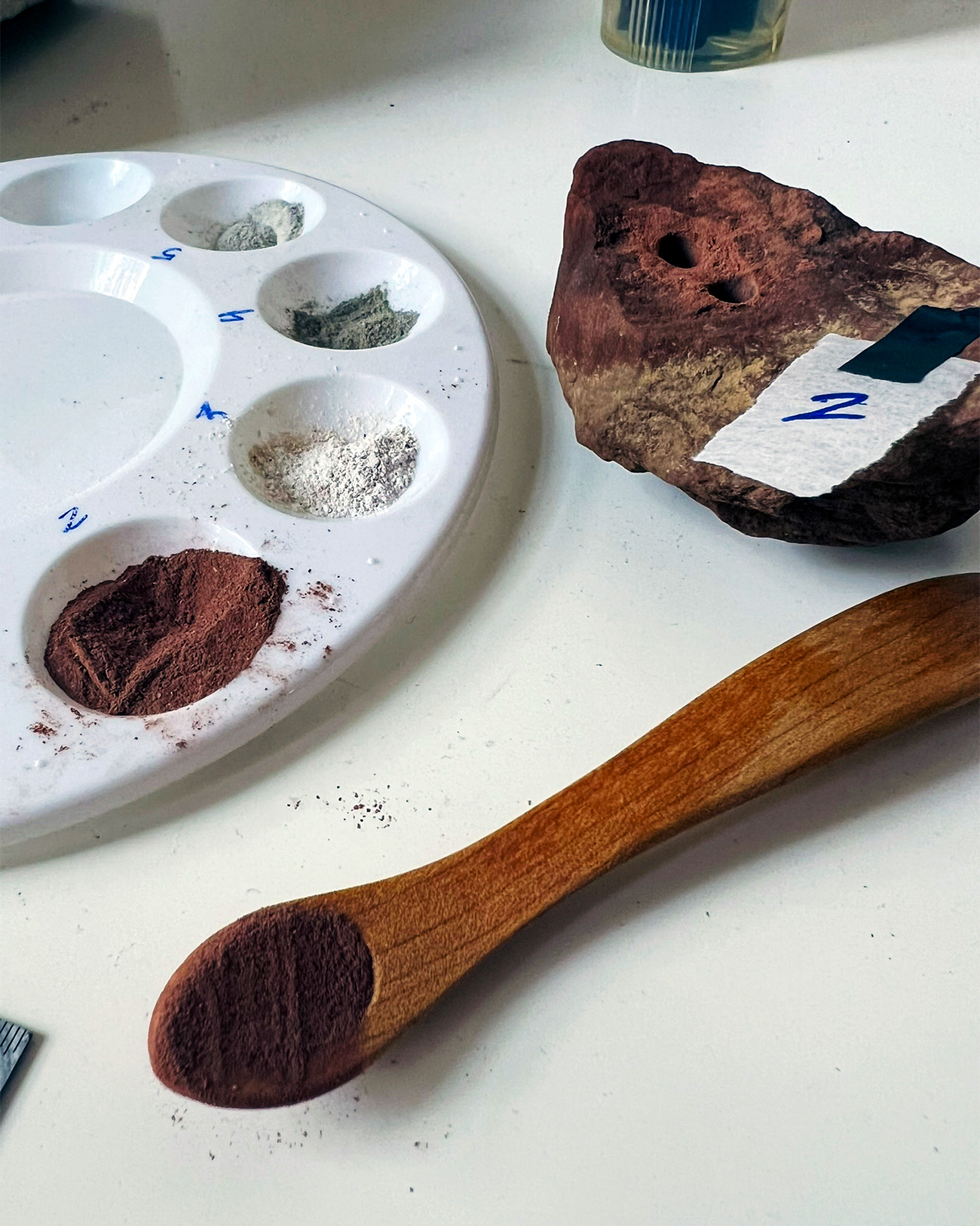
Five stones came off the candidate shelf — a black basalt, a red sandstone, a green-gray graywacke, a white marble, and a river-rounded granite. Those names are my best reading and nothing more: no acid, no streak plate, no thin section. Each was taped with a number, each bored, each leaving a different color of itself at the hole. The harvest is small: one bore yields about enough to swatch a sheet. It is also exact. No pigment could be more of the stone than this.
The Ratios
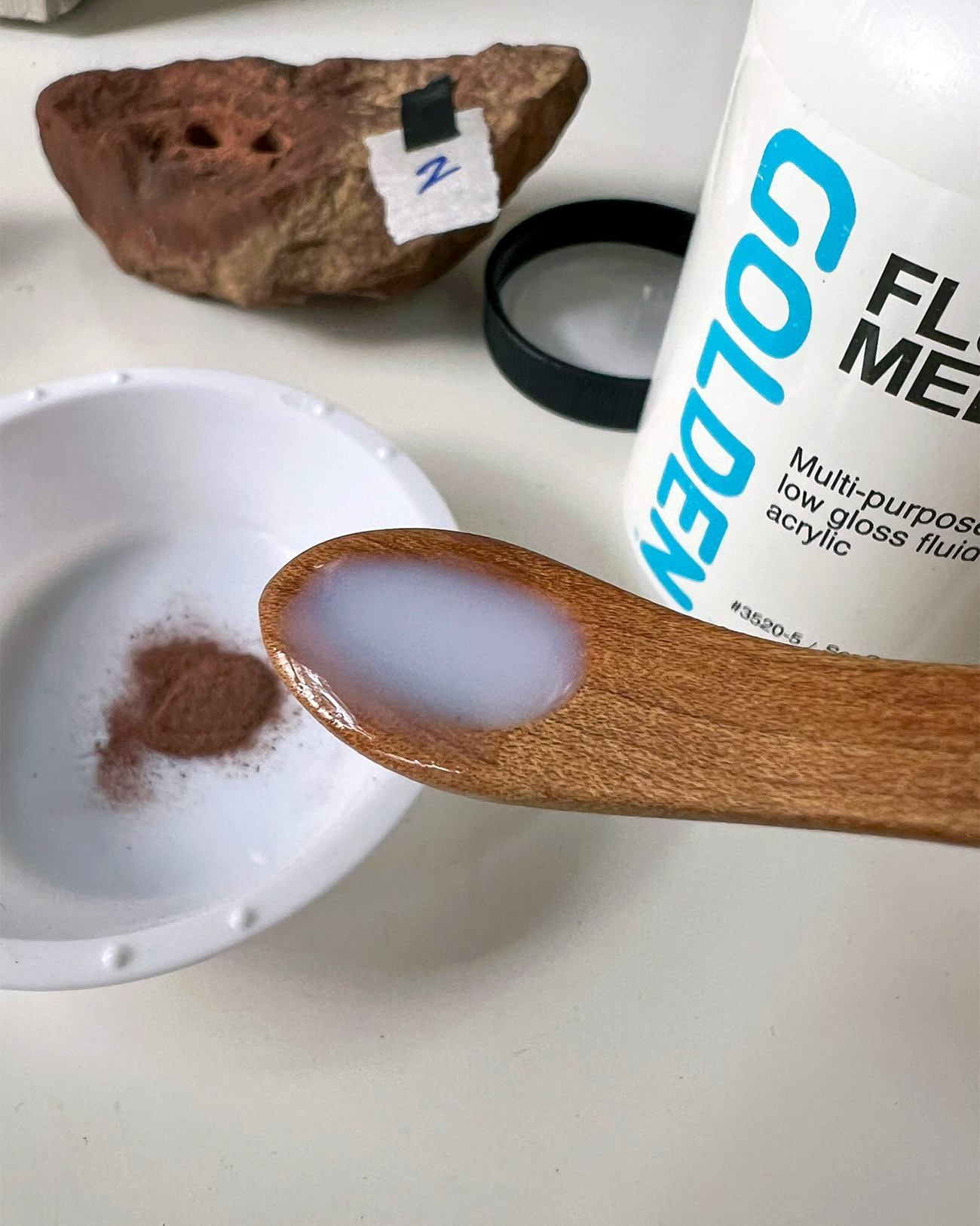
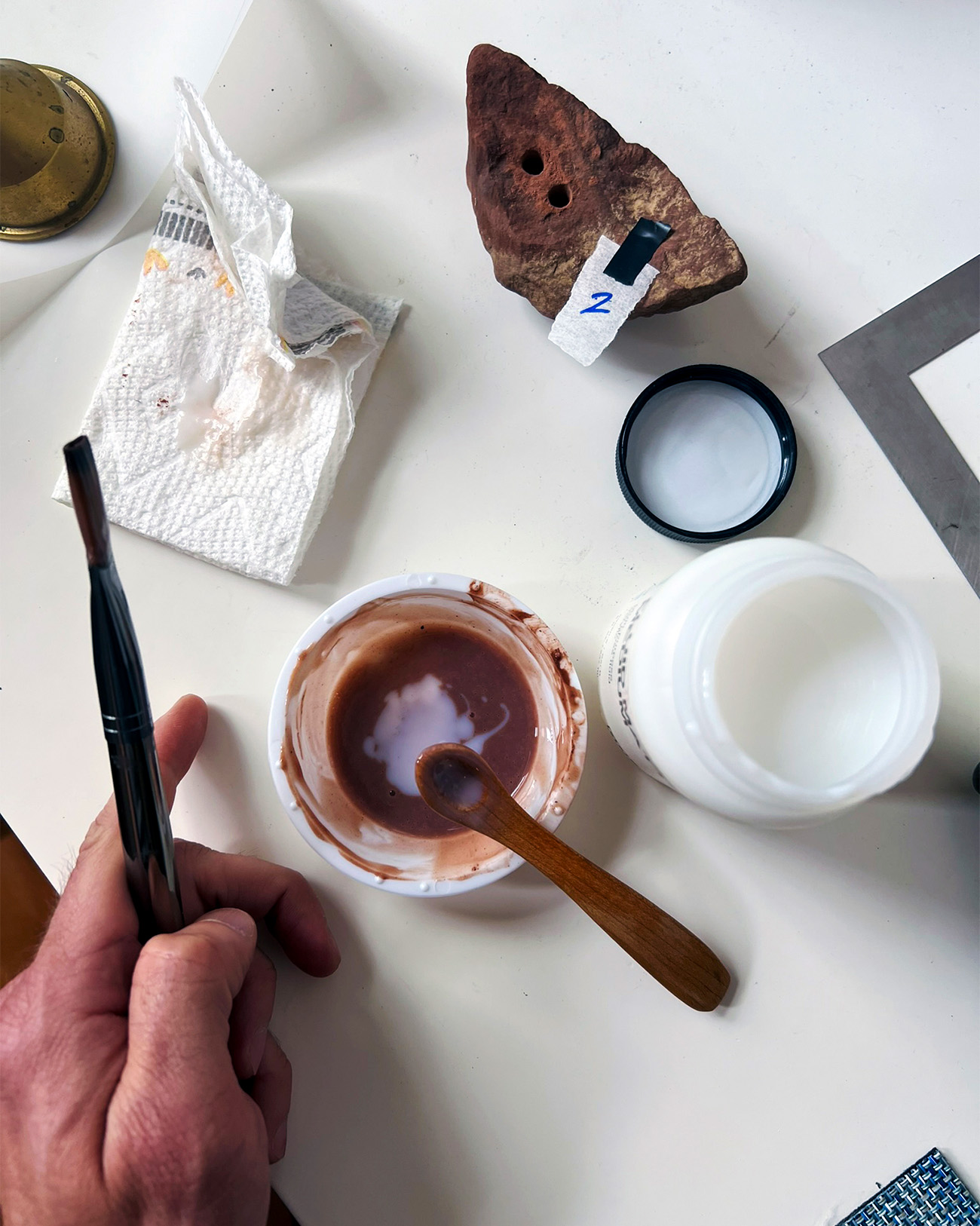
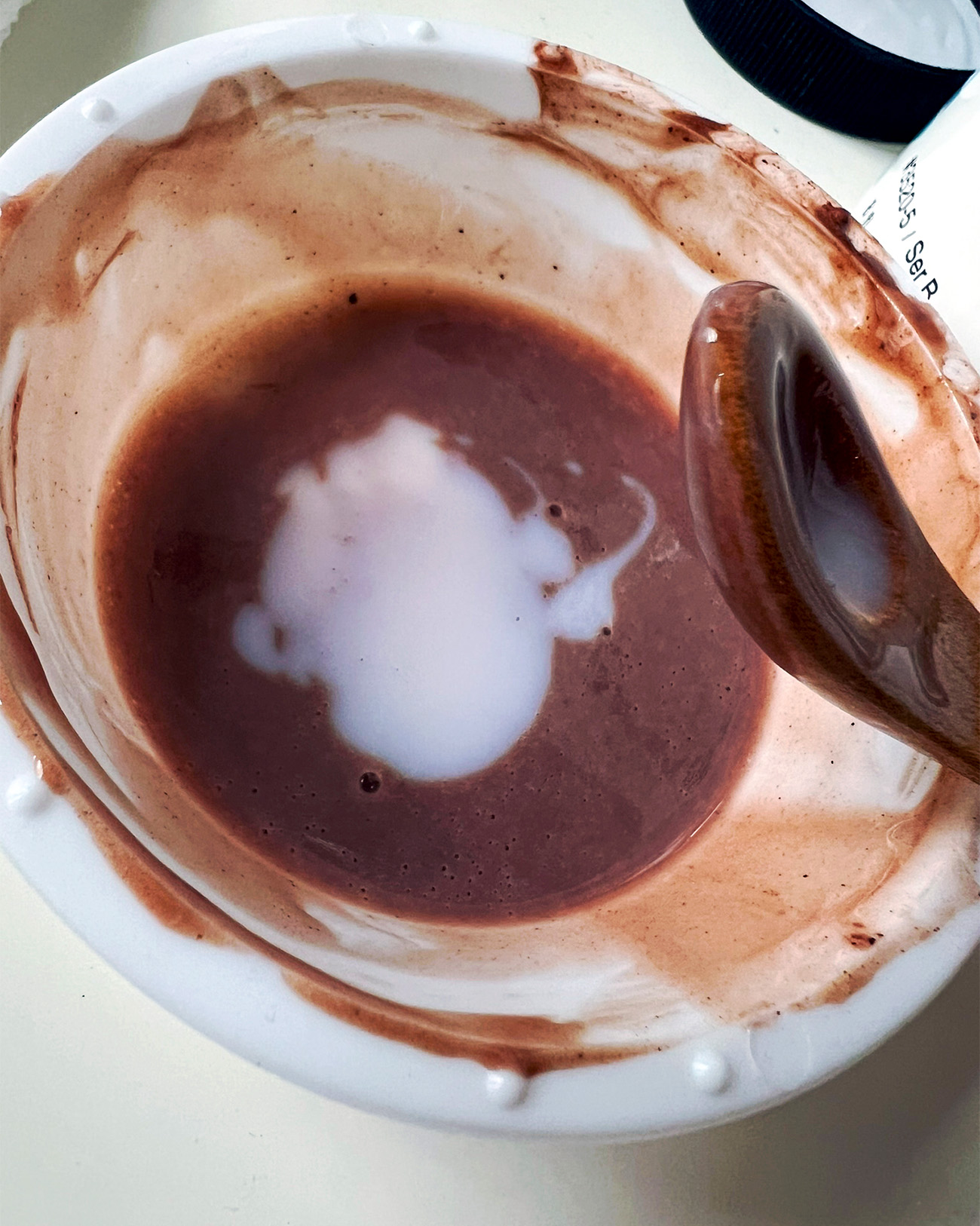
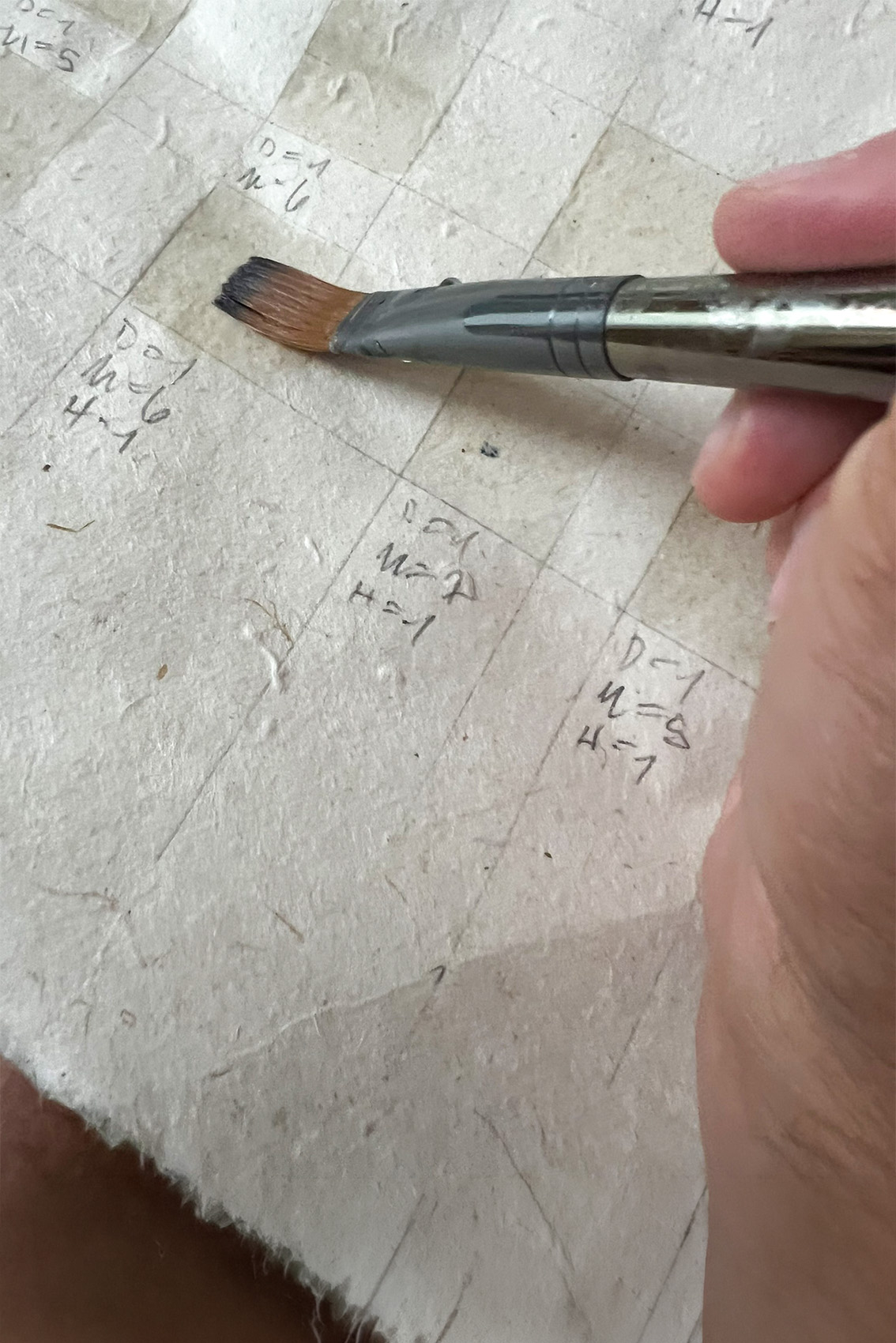
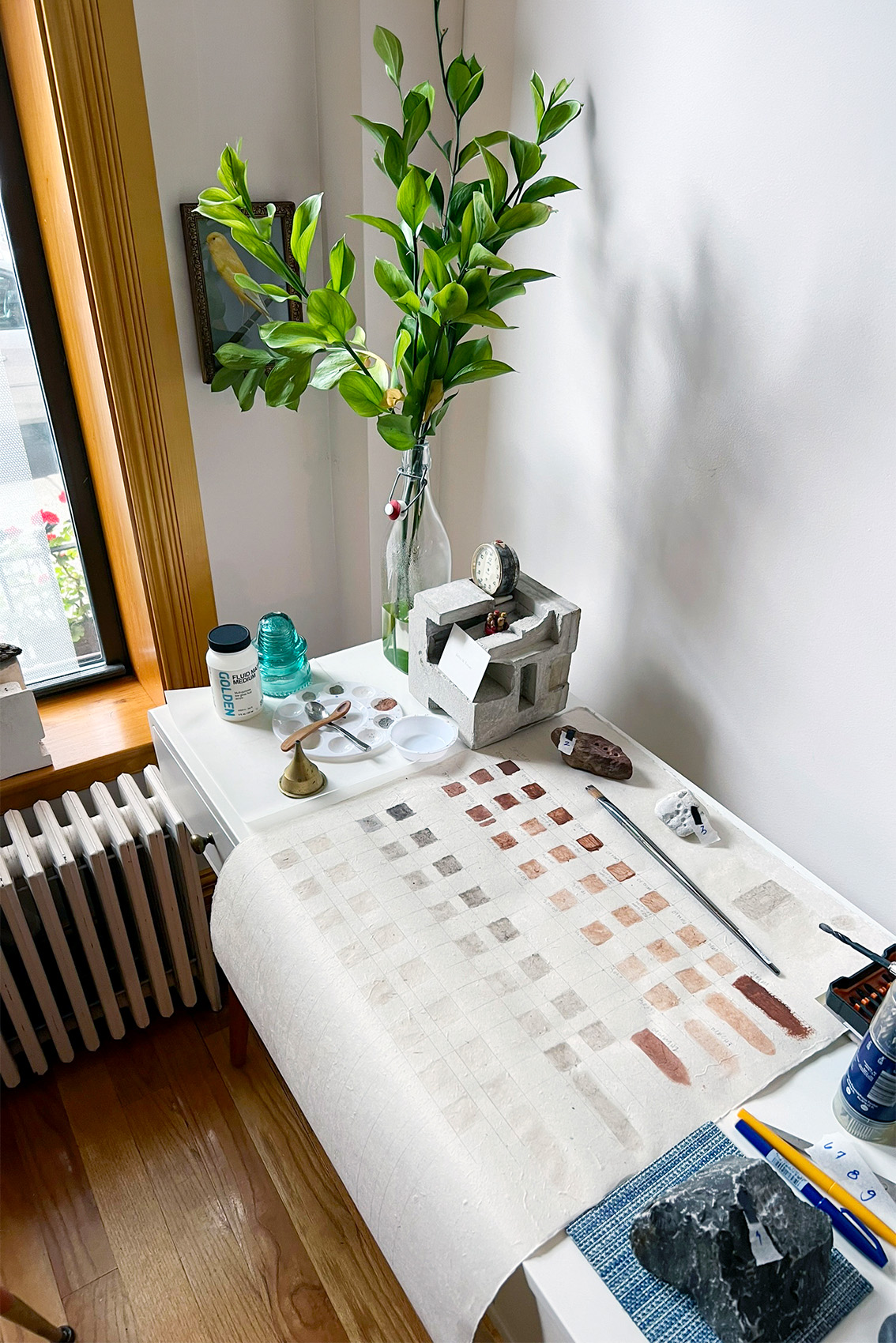
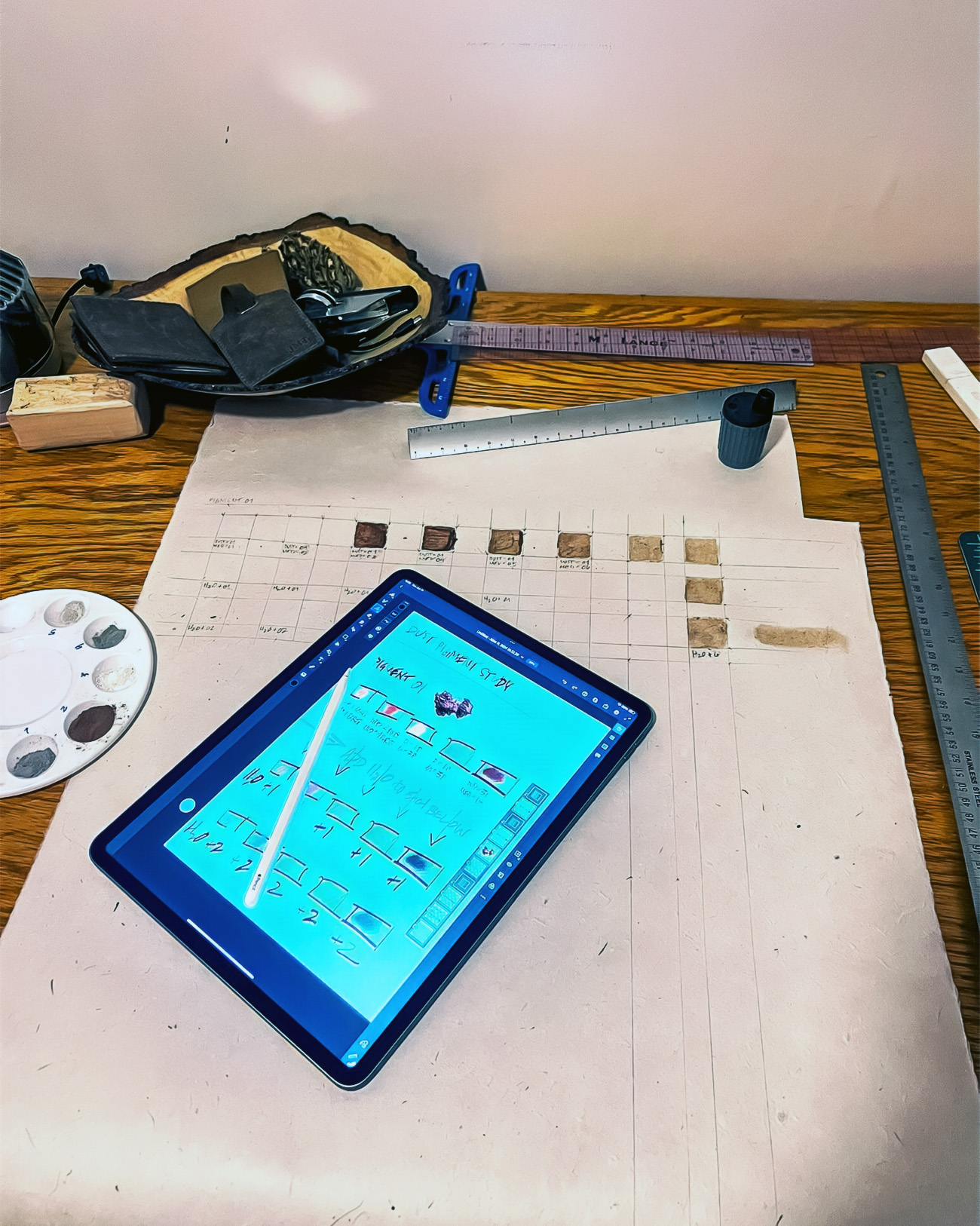
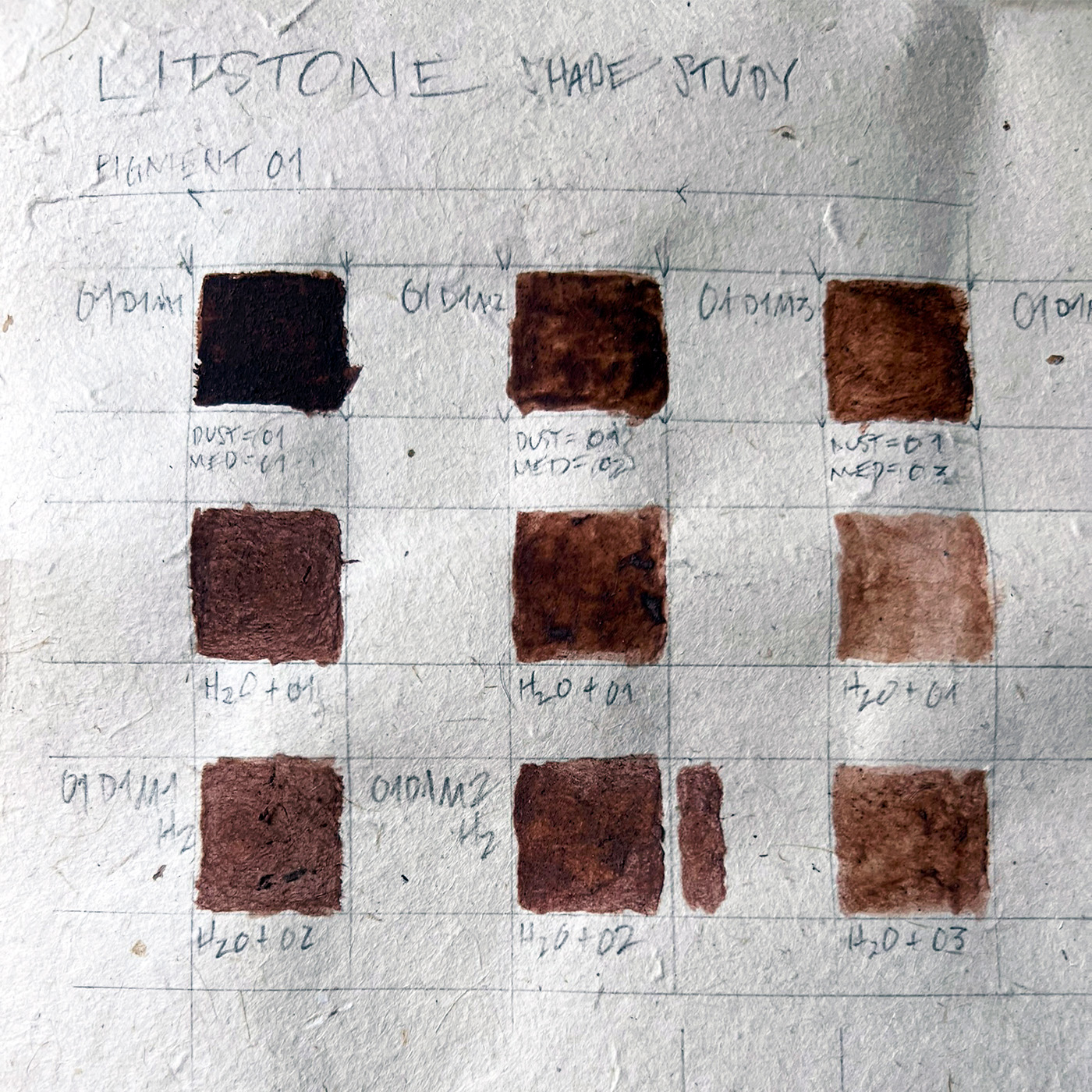
The notation settled fast: D for dust, M for medium — a fluid matte acrylic, the least binder that would hold a mineral to paper — H for water. A cell marked 01D1M3 reads pigment 01, one part dust to three of medium. Each row runs the medium out toward M = 8, and the water rows chase the transparency a lit shade would ask for.

[ the bore is a mine ]
The Review
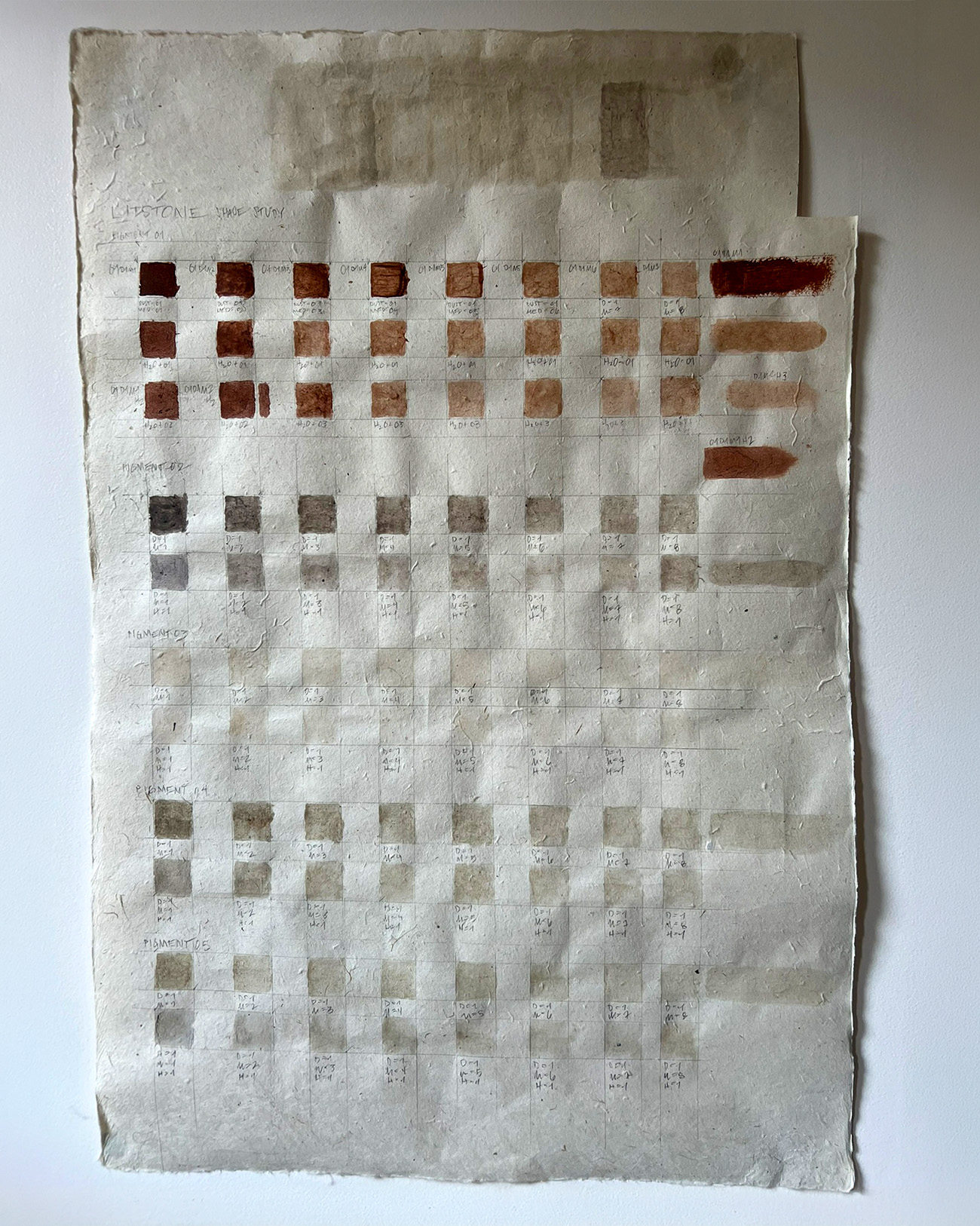
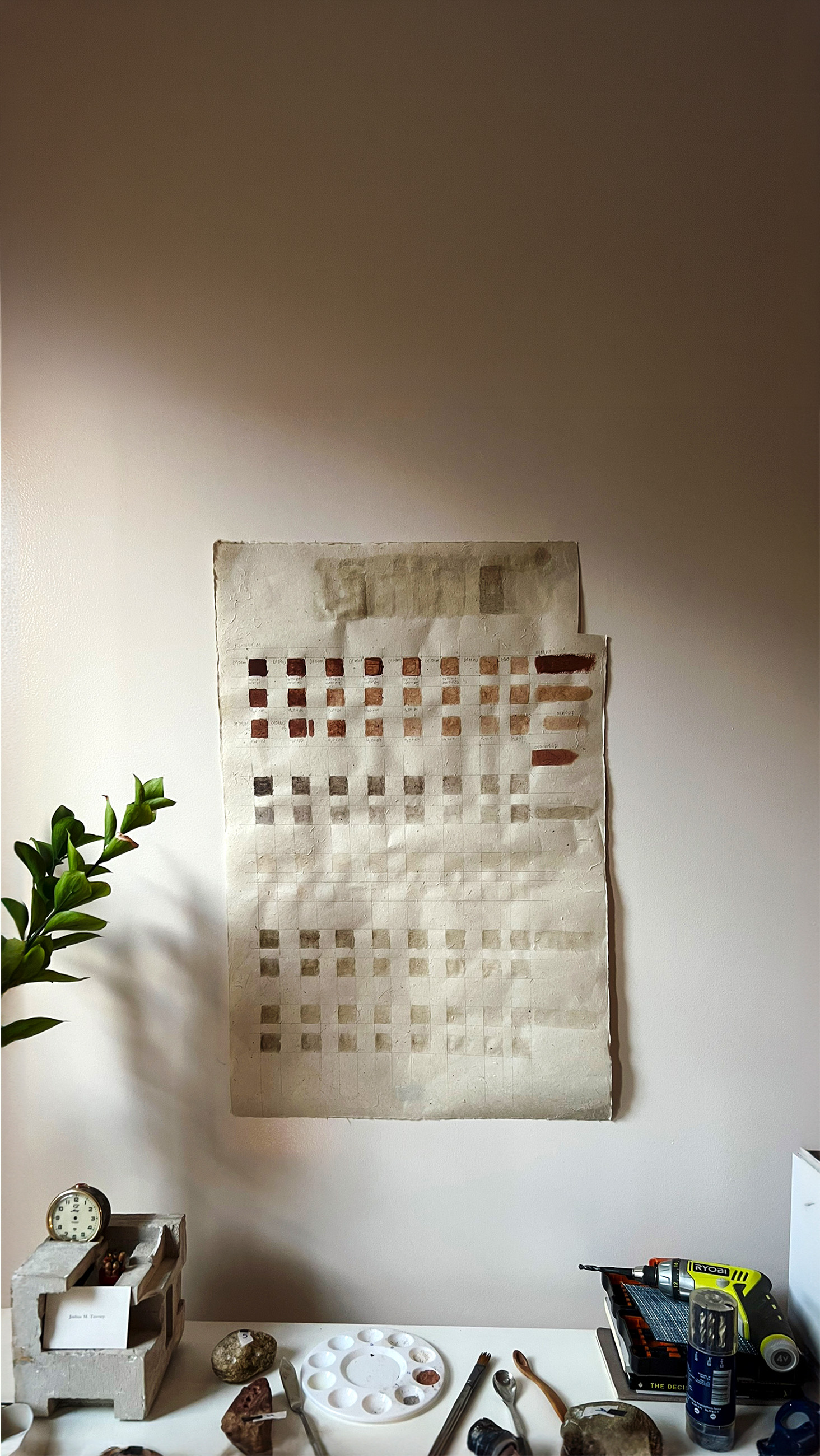
Five pigments, five behaviors. The basalt grinds to a cool gray and stays there — more medium barely moves it. The sandstone runs warm at every dilution. The graywacke never becomes more than a middle gray, and the marble and the granite sit barely a tone above the sheet. That last one is the finding that costs something: the ground is the same handmade paper the shade is made of, so a pale pigment has nowhere to show.
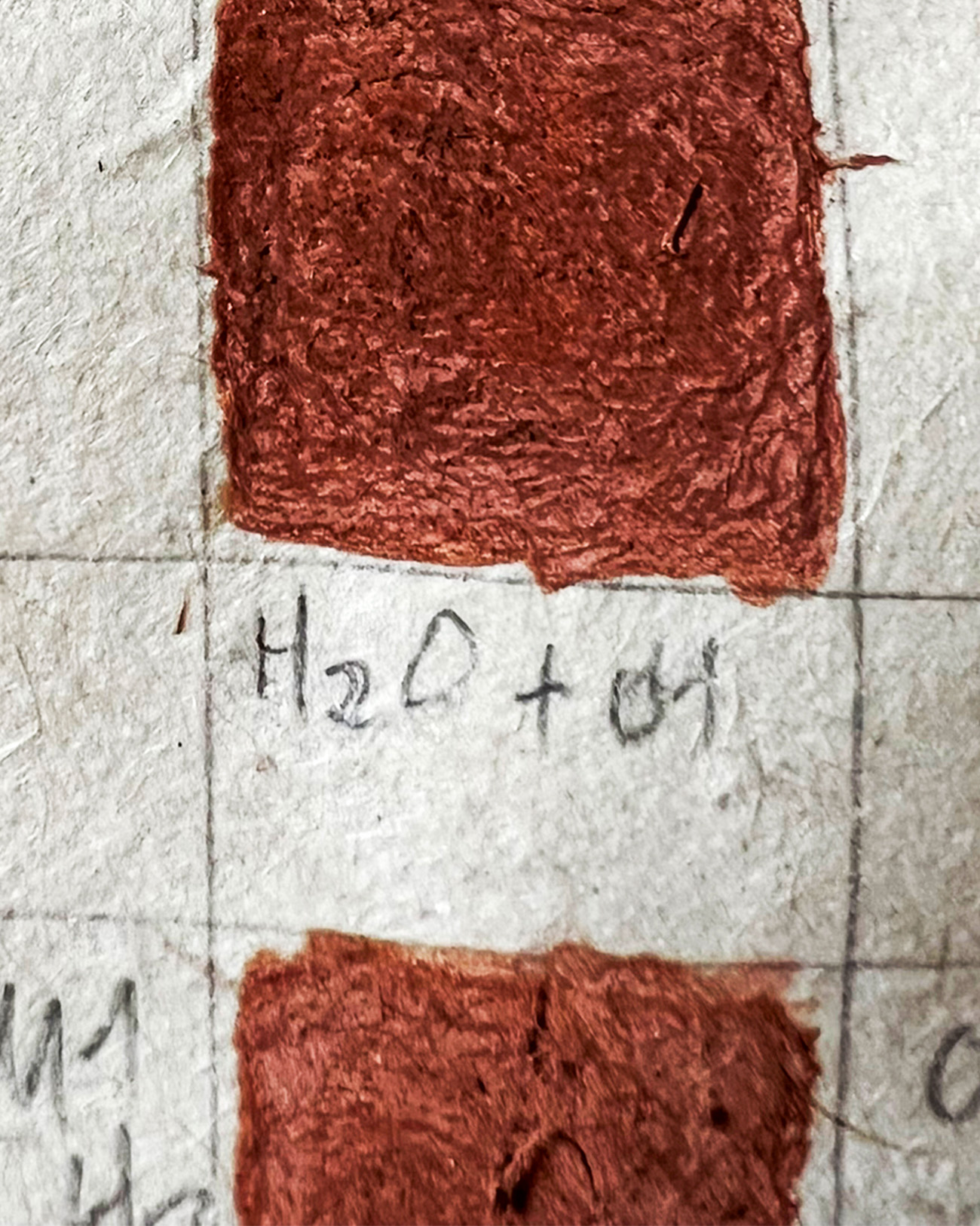
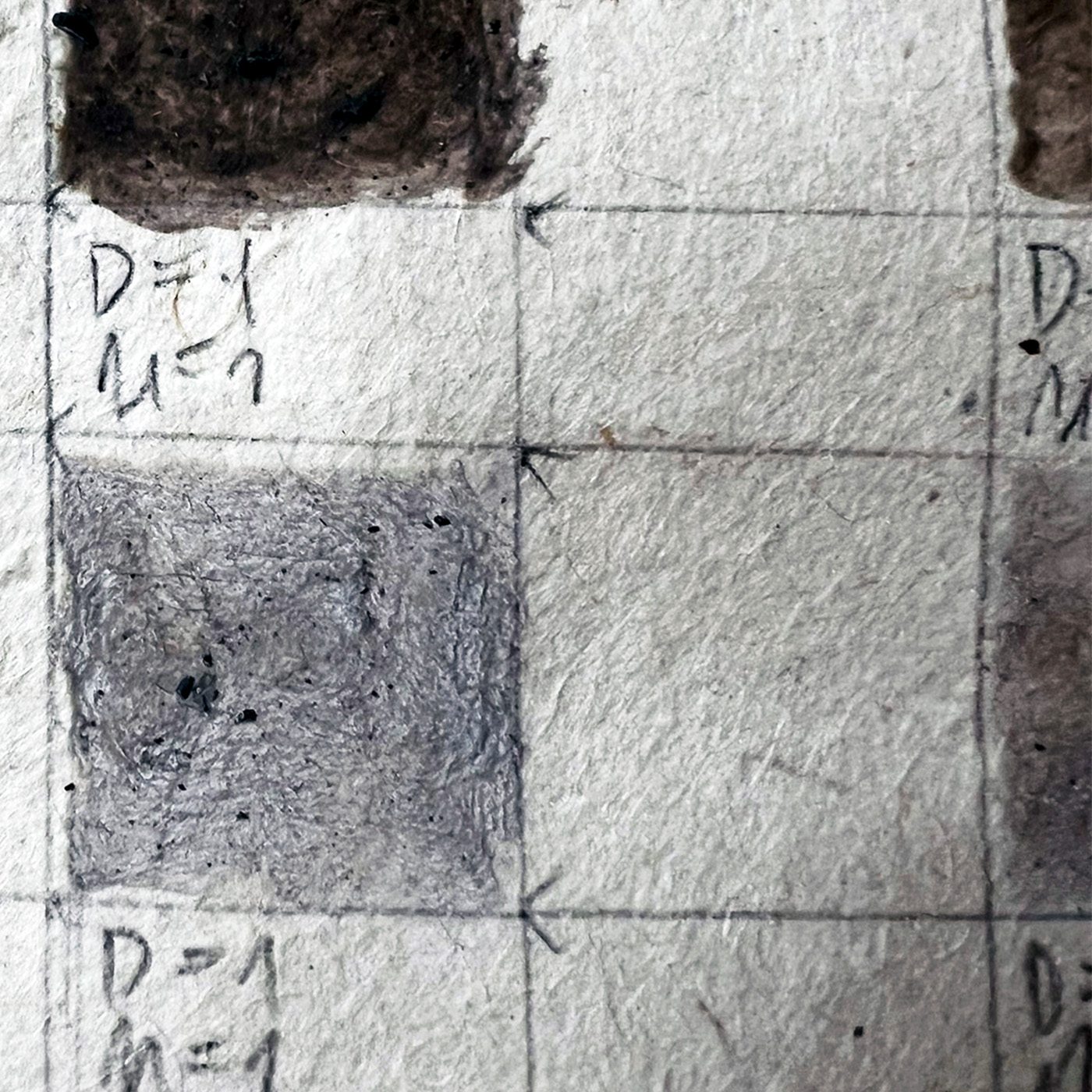
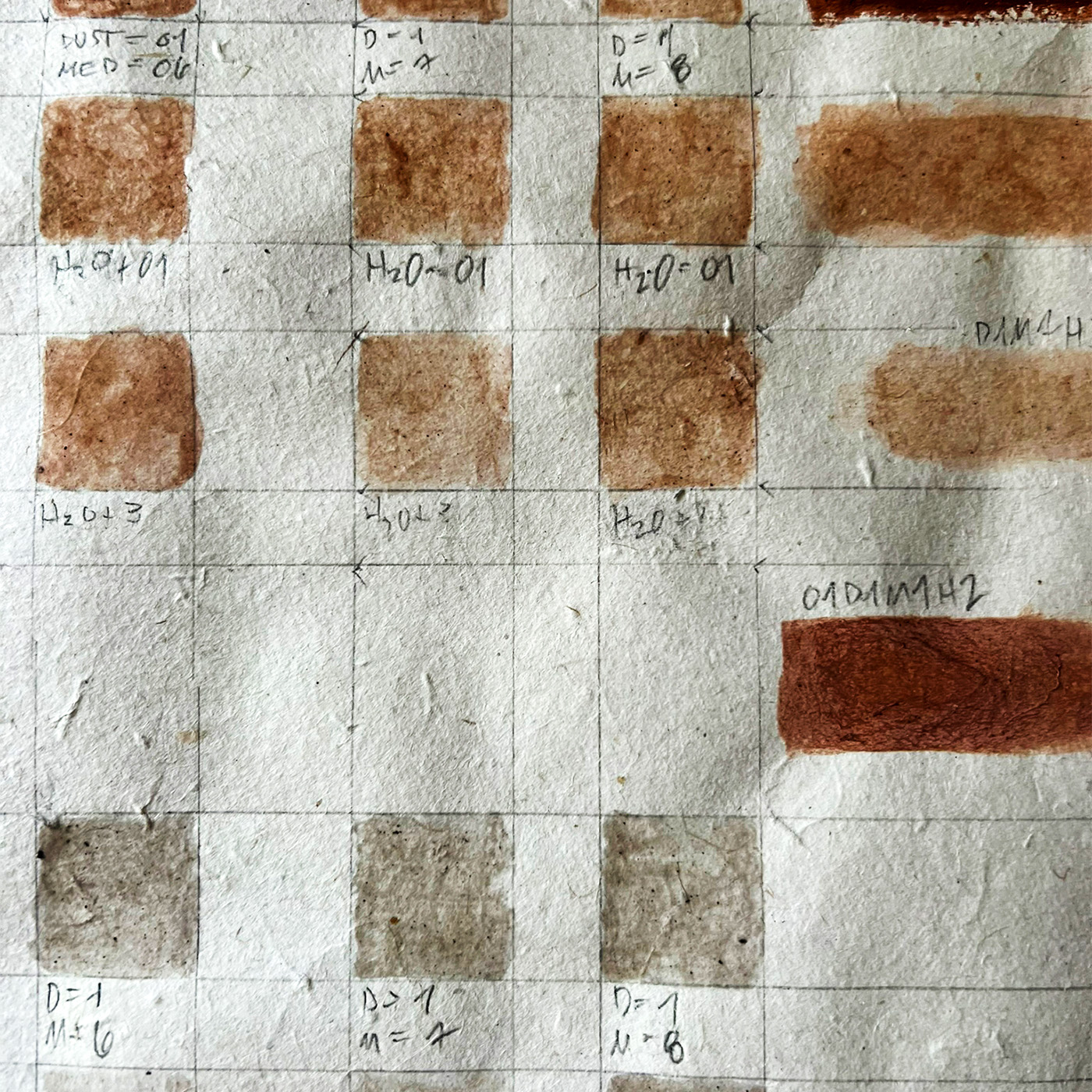
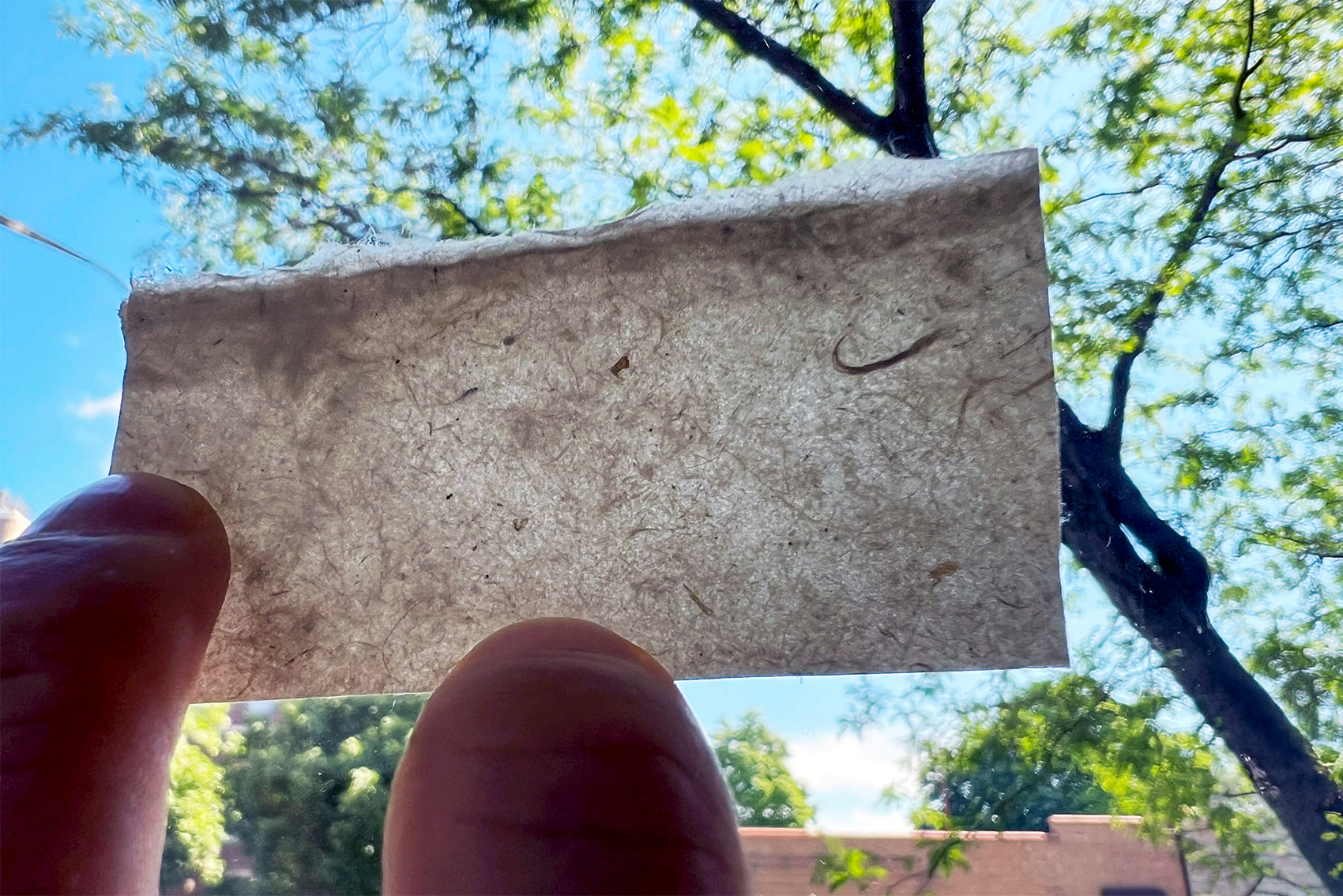
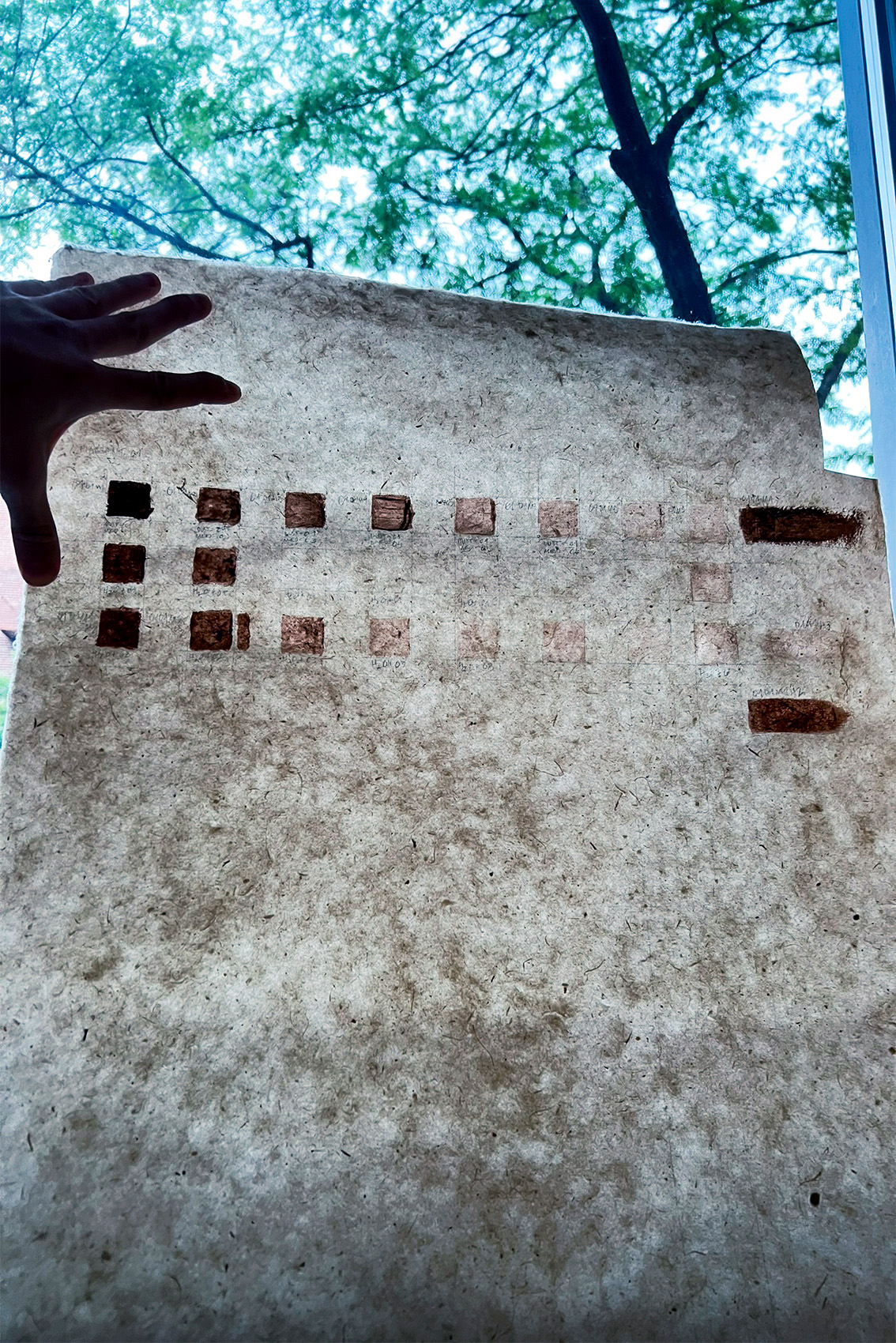
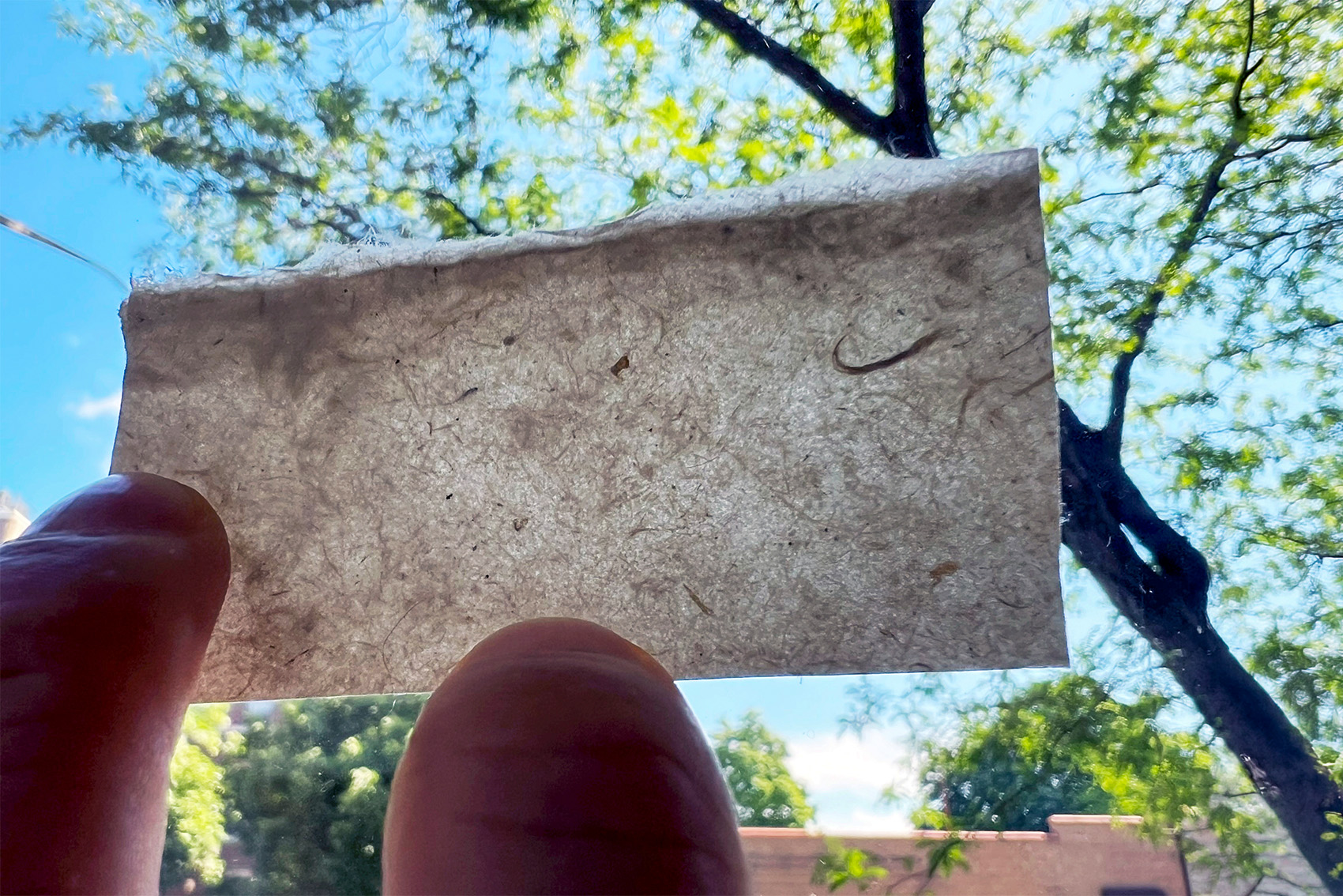
The sheet stayed pinned above the bench for weeks while the marks decided what they wanted to become. The last check was always at the window — a shade is lit from behind, so reflected color is the wrong test.
[ the stone signs itself ]
The Variable
The register holds constant the one thing the lamp never will: the client. Where will it stand, and under what light? Open to the air and weather, or enclosed in a lobby nave, deliberately dim, so the lamp has to demand your attention. That answer decides how much pigment the shade can carry.
It decides because the paint is not waterproof. It could be made waterproof, but only by bringing in more materials than I am comfortable bringing in — and the sustainability of the premise is the premise. A sheltered shade, spared rain and direct sun and the swing in temperature, takes a controlled application, and there the client has real say in how the lamp works on the room.
For a lamp that has to live outside, I would not fix the paint. I would propose the opposite: pigment laid on in varying concentrations at chosen points, so that weather becomes the last step in the process rather than the thing that ruins it. The shade would begin to perform on its own, releasing the dust into the fabric on its own schedule. I would rather document that unfolding than prevent it.
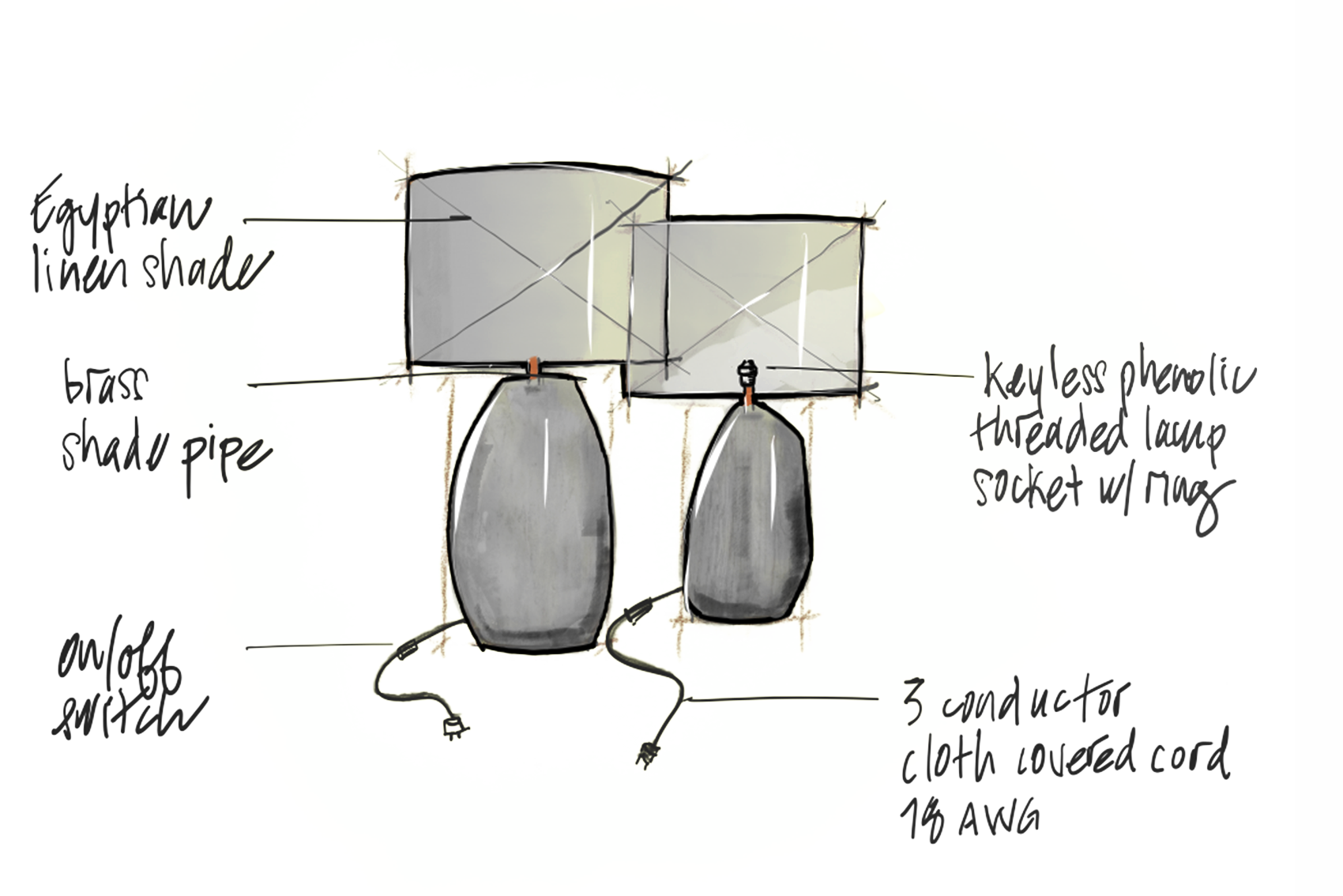
Shade shape and material are the elephant in this room, and they are left out on purpose — this study only had to prove that a lamp could be marked by its own waste with nothing thrown away. If a space ever held several Litstones at once, the first sketch would be this study again at full size: an ombre across the set, if the setting asked for it. And a pattern study is never a waste of time.
The waste of the making became the mark of the made.
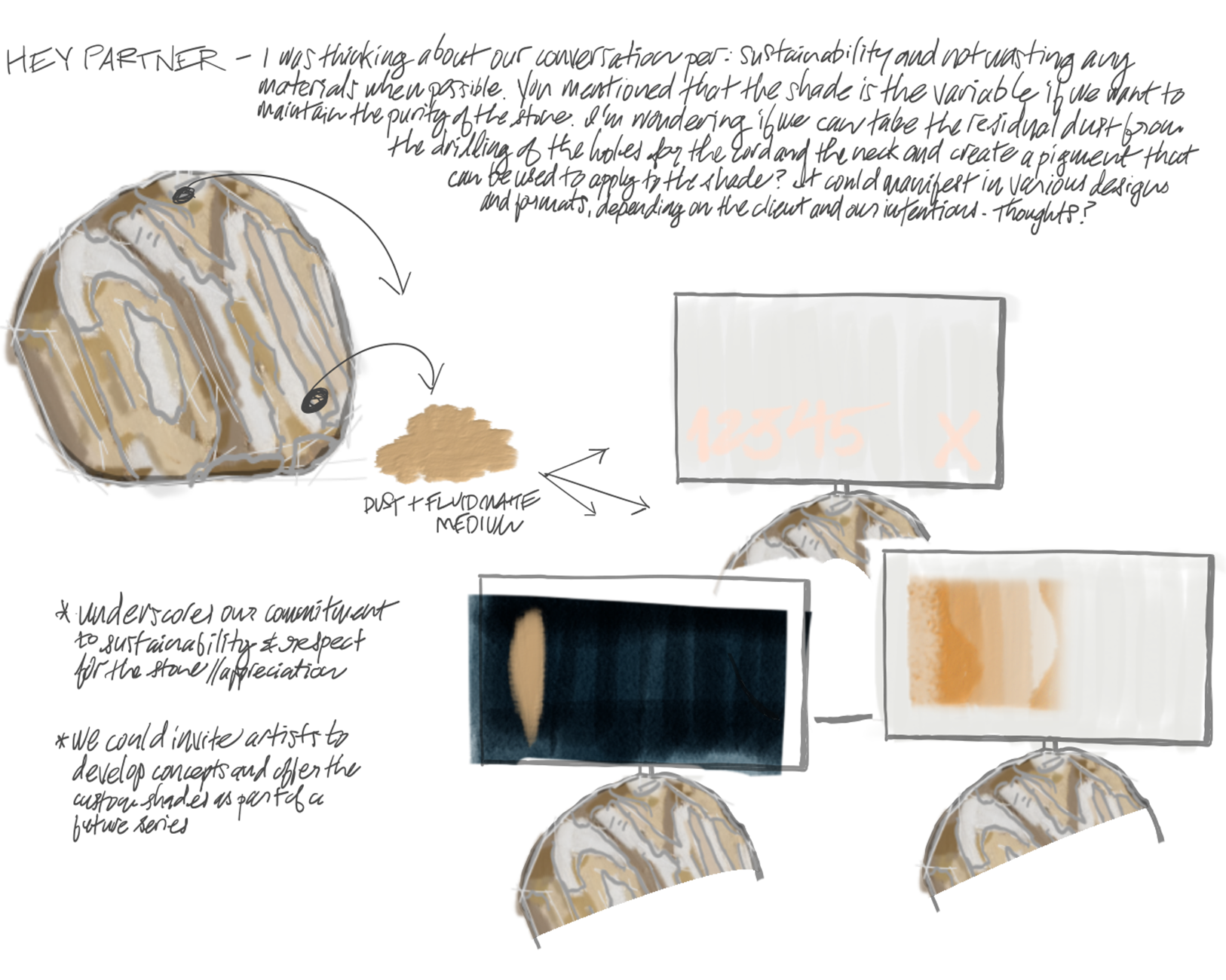
Litstone is a lamp made of a found stone. This is the bench study beside it: the dust from each stone's cord bore, ground and bound into the ink that marks its own shade.
The Intent
The intent, rendered. Each lamp marked with the dust of its own stone — a drift, a wash, a numeral. Not a logo applied to the object; the object, applied to itself.