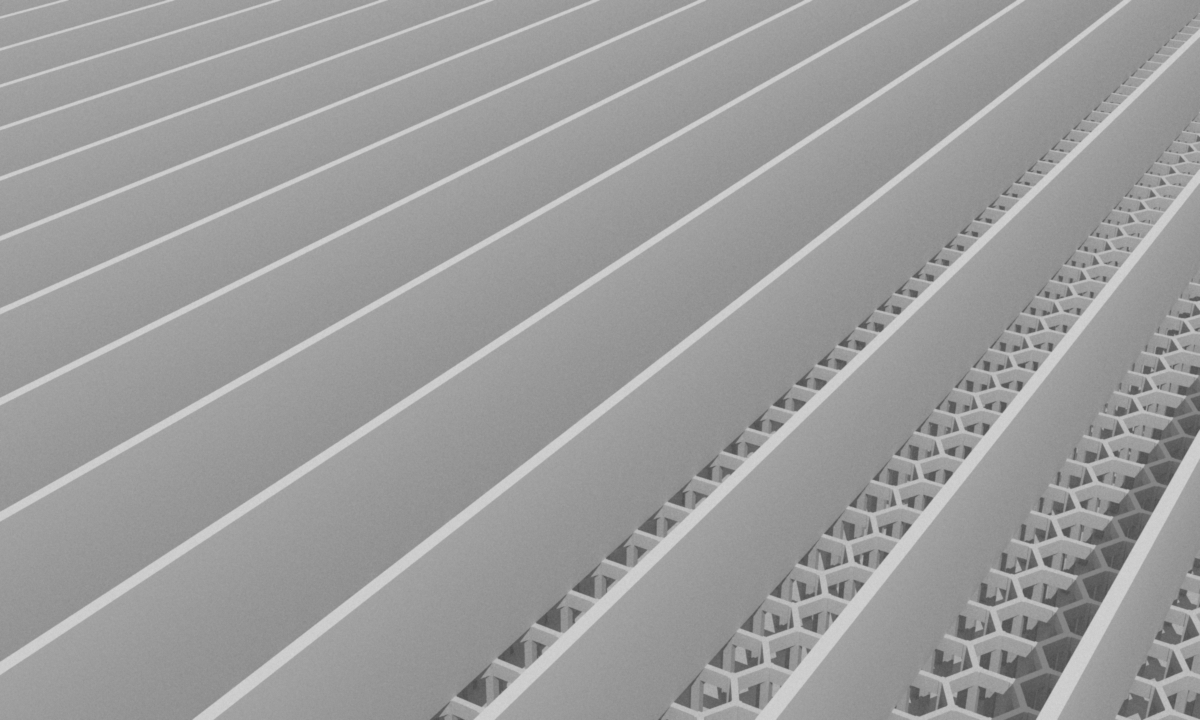
Slot Emission
The aurochs from On Palimpsests, drawn by the coda viewer's own algorithm and run as particles and fluid through the slot.
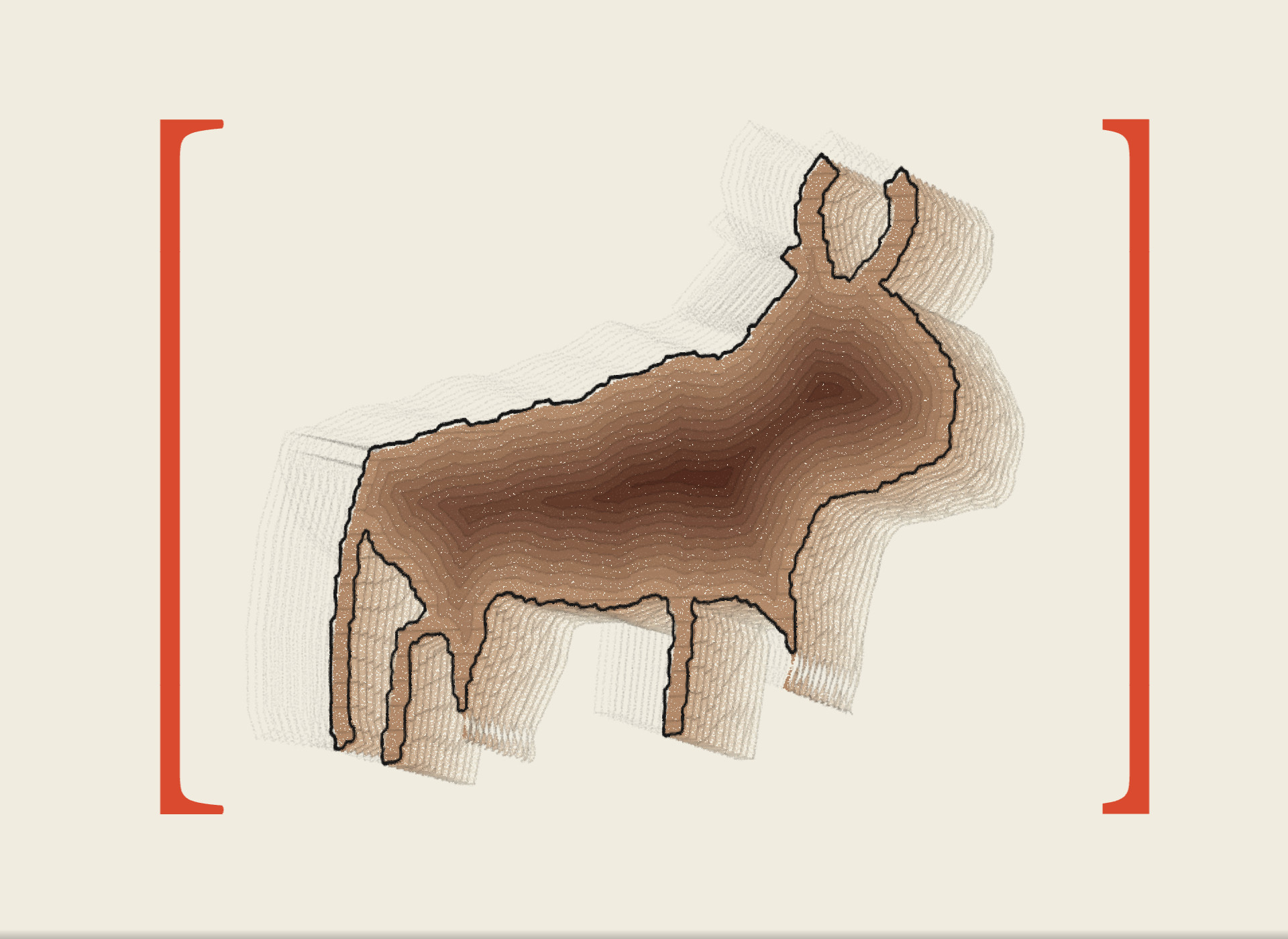
*Slot emission. The name drains through the slot and the aurochs wells up in its four states — original, vandalized, scrubbed, recreated — then the name returns. 262,144 particles; nothing appears or leaves except at the slot.
I saw Refik Anadol’s Unsupervised at MoMA and found it mesmerizing: a whole museum collection condensed into one work, held together by a few variables like time and categorization. I did not want a replica. I wanted to know whether that structure could live inside the logic of my own site, where things already arrive and leave through one line: the slot. I started with a phrase — fluids sloshing out of the slot — and more questions than answers.
Most of the answers were already on the site. The coda of On Palimpsests hands the reader the aurochs and its controls: drag the T location and a cut plane walks through 23 drafts of the animal, the ones left behind going gray; push constants A and B and the drafts tear away from the beast. That viewer was a gift. Nothing here redraws the aurochs. Every particle is aimed at a mark the viewer itself would make — a draft line, a hatch, a ring of poché, the ink of the section — so the beast on the stage is the viewer’s own drawing, run loose as 262,144 particles. The brackets became the cut planes. They never dissolve and never cross the slot, and the particles have to find their way around them. My note on an early pass was that they should bounce in a way that feels “physically aerial, not like lead hitting lead.”
I assumed this would end up in TouchDesigner. The first test was in Blender. It ended up in the browser, because it had to run on the site itself. I did not write the shaders by hand — the engine was built in AI-assisted sessions, one change per version. The direction, and the eye on every version, are mine.
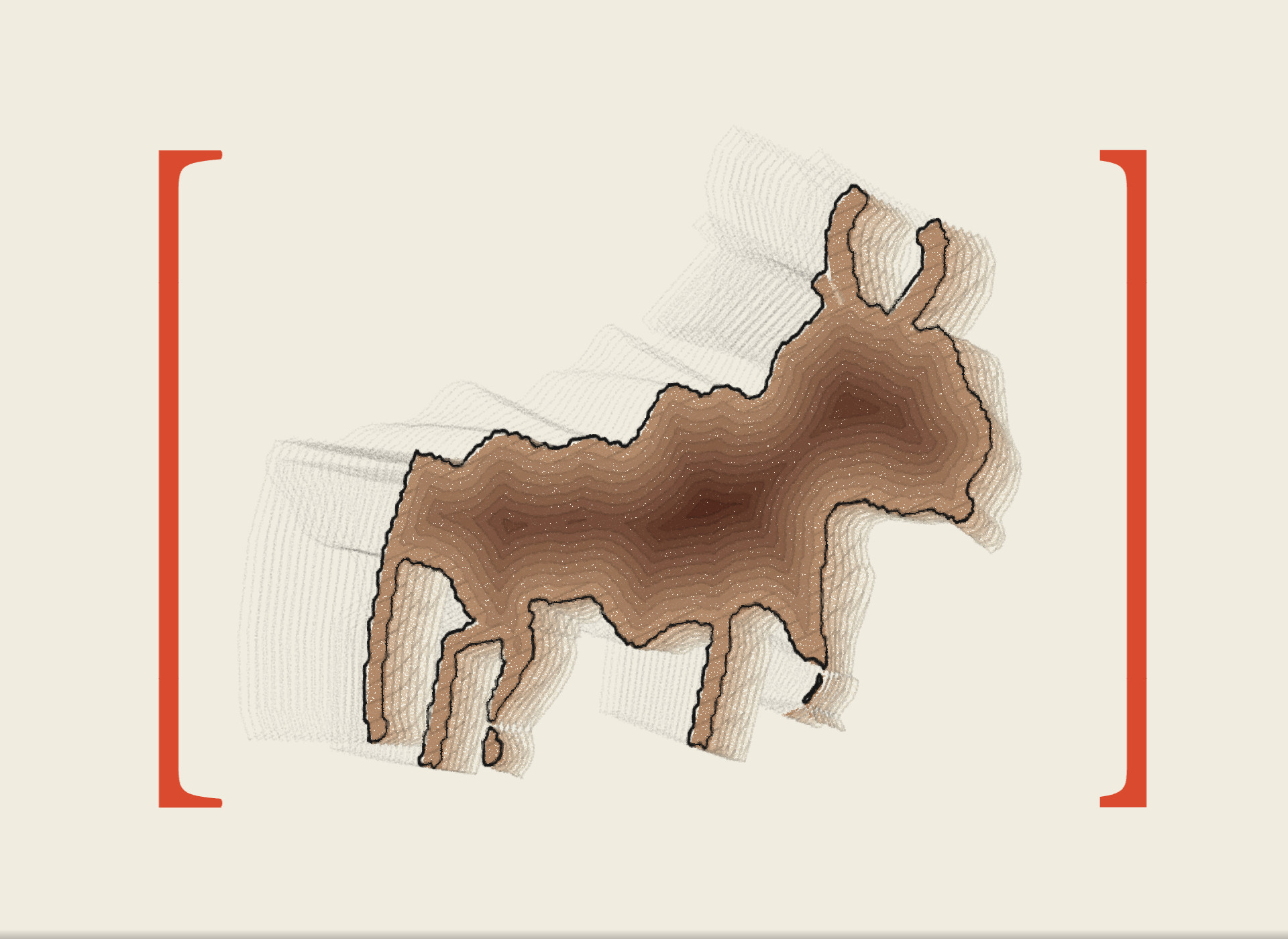
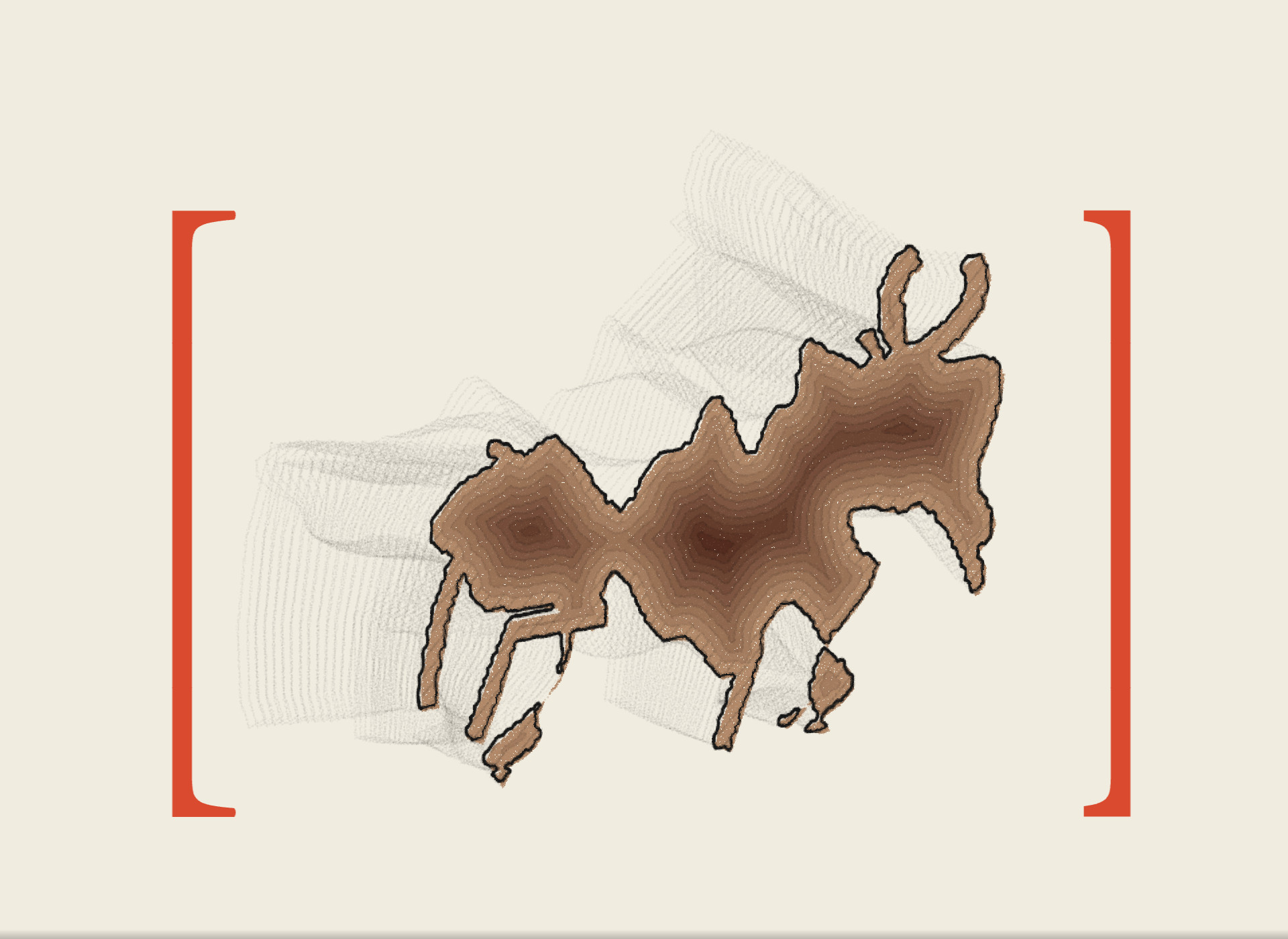
The sequence is the palimpsest’s own: original, vandalized, scrubbed, recreated, and then the name again. My name drains through the slot first. The original wells up at the viewer’s settings, recognizable, before the constants turn and the plane walks back to the first draft. I asked for the wide range to stay. LES VACHES gets written across the last cut, left to right: the one intense text moment, held long enough to read. Then scrubbed, then recreated, each leaving its last outline behind as a trace that dissolves quickly into the space instead of fading in place.
Most of the work was choreography. The early versions moved on cues; I wanted something closer to ballet, the form holding while the particles inside it swim. For a few versions the particles drew nothing at all. I opened the eighth on my own screen and described what I saw — a slowly moving sequence of traces and brackets, and no fluid — and that turned out to be everything that was there. The last two notes before it went live were about the slot itself: the particles stopped just short of it instead of going in, and coming out of it they rose in bands. Now they cross its full depth and disappear at the lower lip, like everything else on the site, and they rise in one even stream.
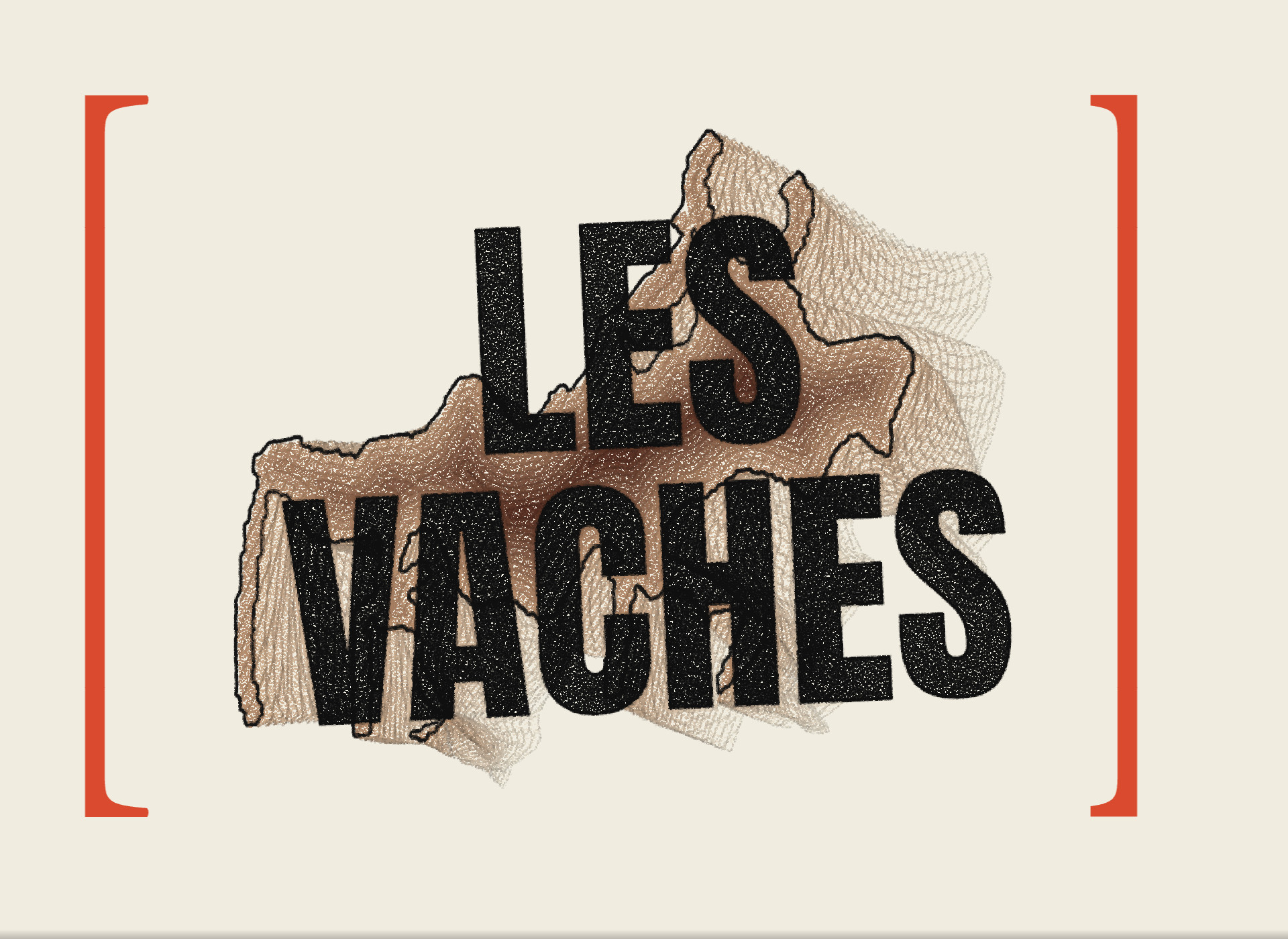
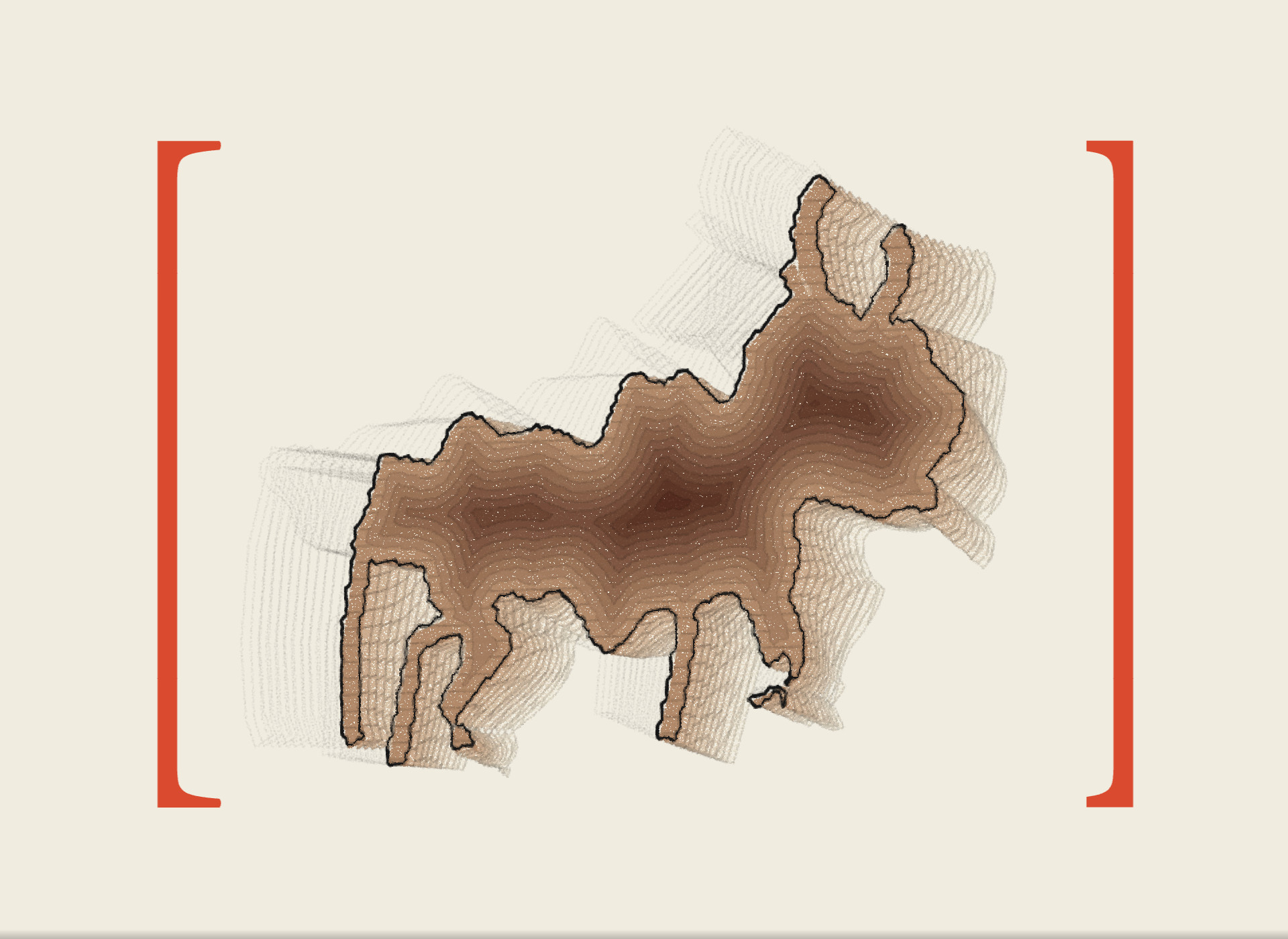
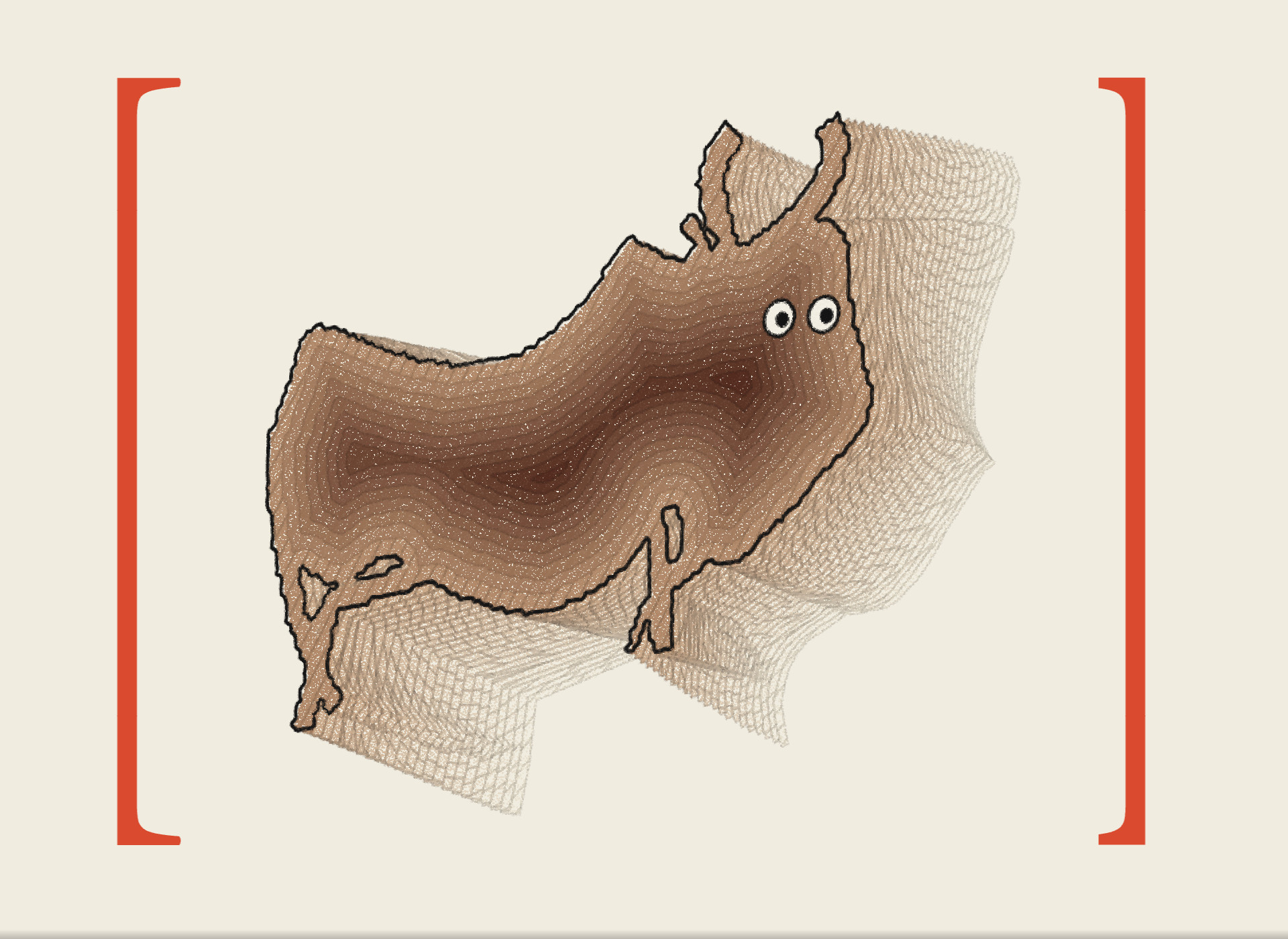
This was meant to be the home page: click the name and the aurochs comes out. Once it became its own study, the load time stopped mattering, and the slot became a constant device, a vehicle I can keep sending new animations through. In On Palimpsests the aurochs is argued over, operated on and handed to the reader. Here it is let go. It still comes back through the slot.
A motion study and a working log. One aurochs from the coda of On Palimpsests, 262,144 particles and one slot; seventeen versions, one change at a time.