Where the Color Lives
A butterfly scale built at true proportions in a spectral path tracer, to find out which of its optical tricks survive the trip.
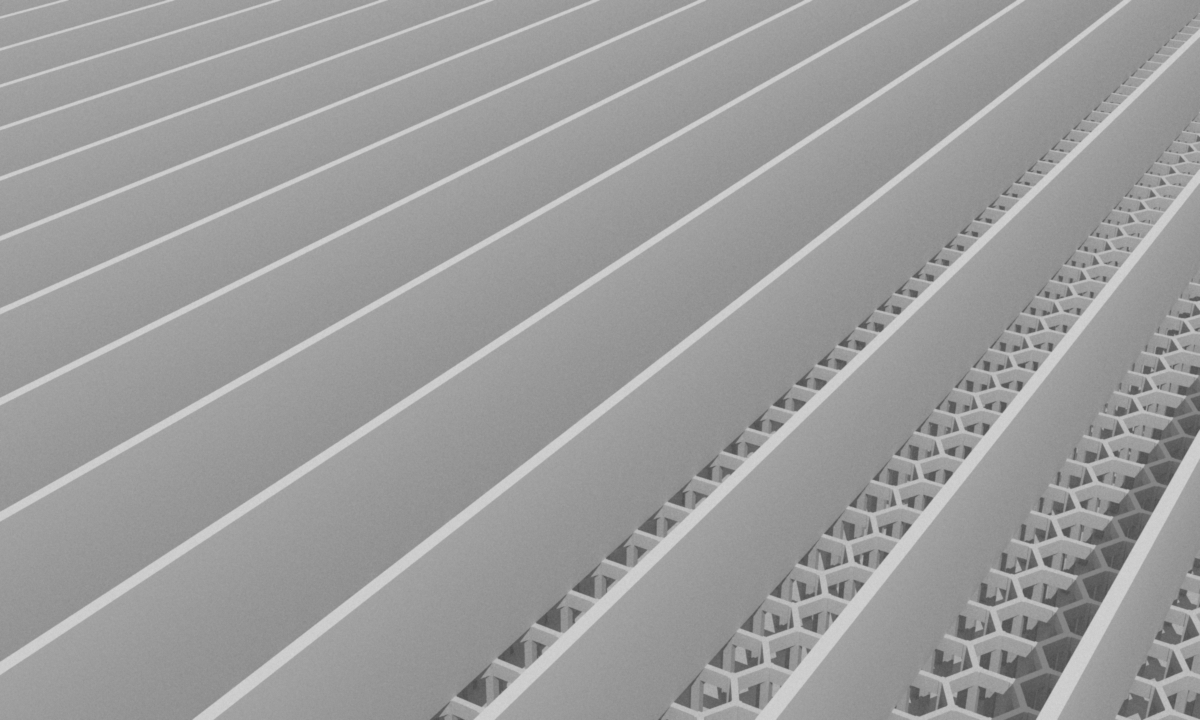
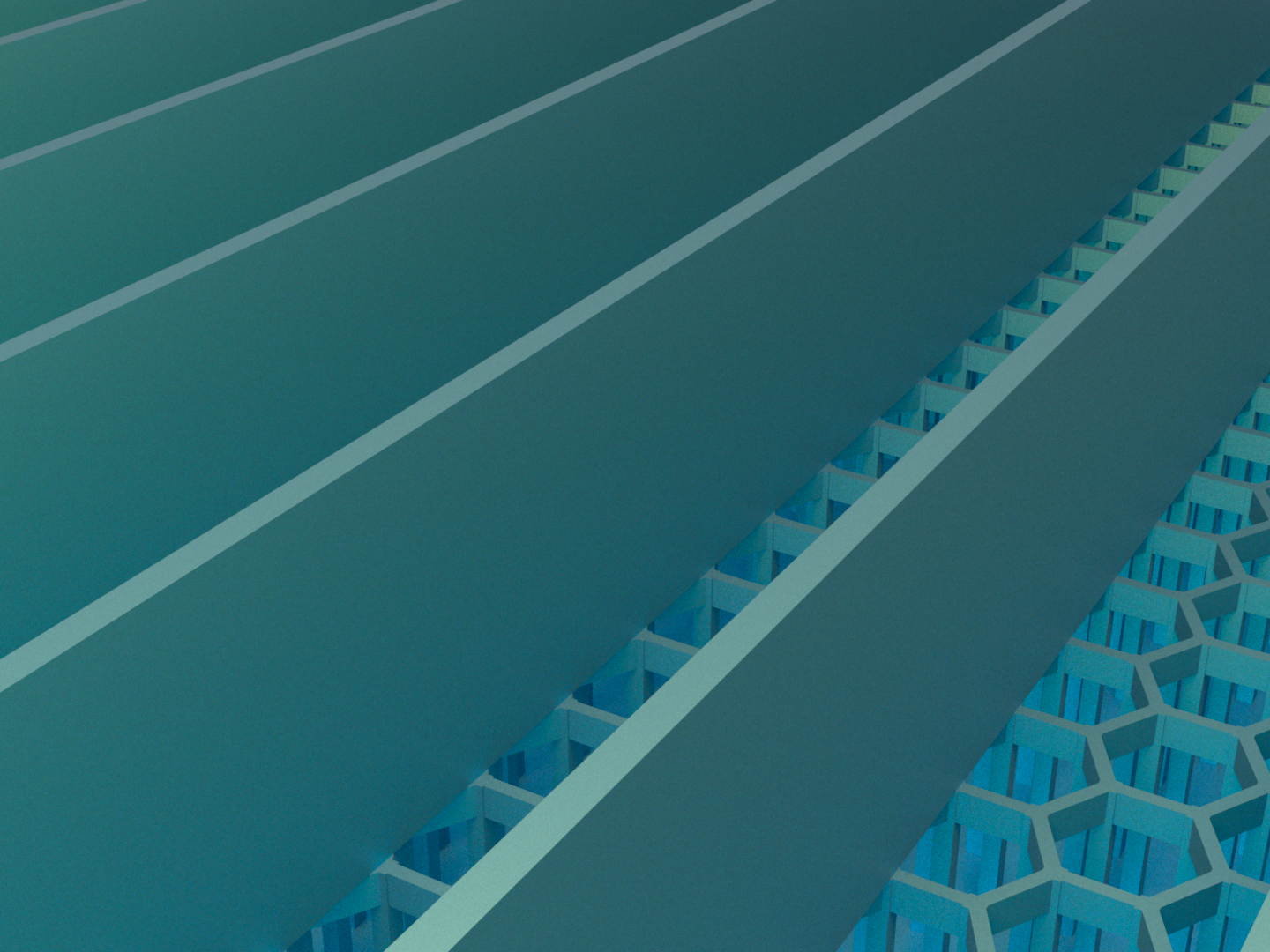
*The model. Lower lamina, trabeculae, perforated upper lamina, longitudinal ridges — neutral material, sun and sky.
I wanted a butterfly in the renderer. Not a picture of one — the scale itself, built at the size it actually is, to see whether a path tracer would hand me the color for free. A blue wing has no blue in it. The color is a spacing: chitin and air stacked at intervals that happen to flatter one wavelength. The black on some of these wings is a spacing too, a honeycomb that keeps whatever light wanders in. If the geometry does the work in nature, maybe the geometry does the work in Mitsuba. That was the bet.
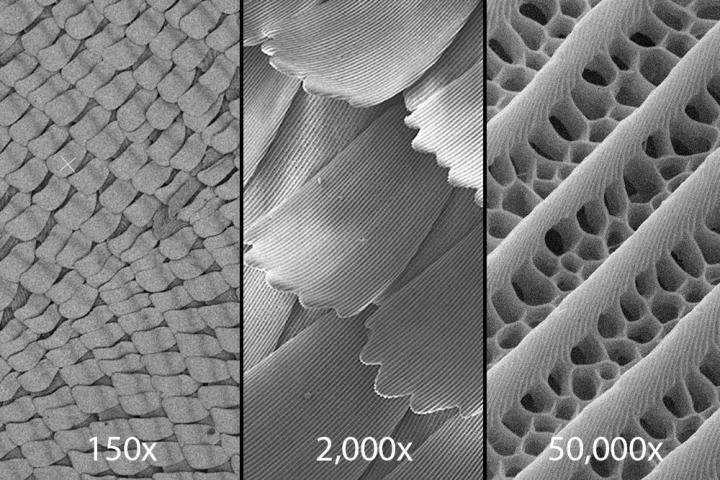
So I built one. Mitsuba 3, the spectral variant, four wavelengths riding each ray, a D65 softbox hung over the scene and a dim sky behind it. The scale is modeled in micrometers at the proportions Davis et al. published in 2020 — a lower lamina, trabeculae holding up a perforated upper lamina, ridges running the length of it — and in a neutral gray it looks like a parking structure designed by someone who hates cars. Then the multilayer, twice. Once the honest way: six chitin slabs and their air gaps, actual geometry, a plain dielectric, quarter-wave at 470 nm. And once the cheating way: a flat plane wearing a material that solves the transfer matrix at every shading point and hands the answer to a GGX lobe. A second pass turns that dial to 545 nm. I did not write the solver by hand — the scene, the material and the measurements were scripted in an AI-assisted session. The question, and what I make of the answer, are mine.

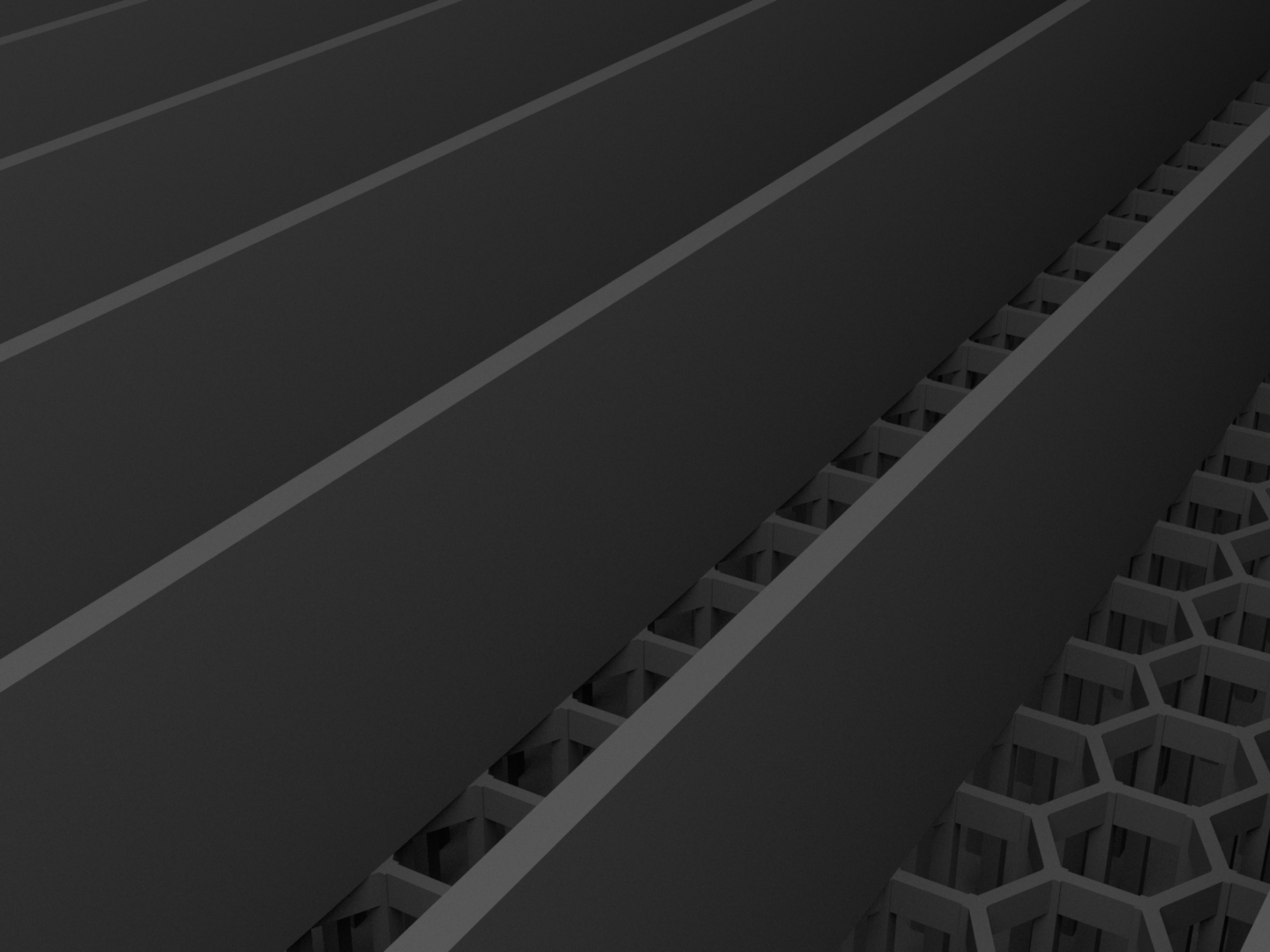
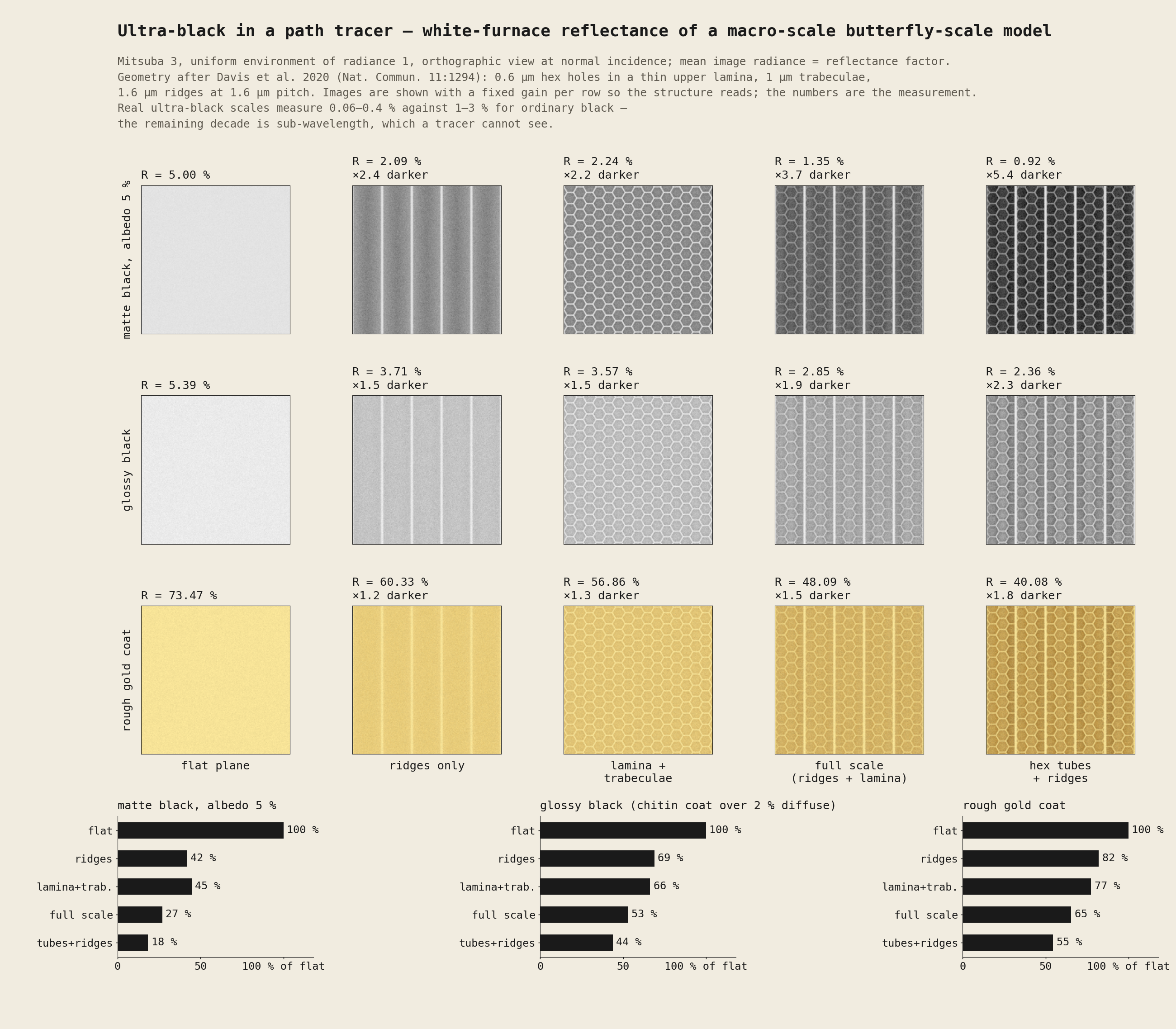
The honest way renders gray. Not the wrong color — no color. A path tracer carries no phase, so six slabs of real chitin return nothing but Fresnel, and six Fresnels add up to a nice even gray. The cheating way goes blue immediately, and the blue moves as the plane tips away, which is the one thing a thin film is supposed to do. Put that material on the scale geometry and it holds; turn the dial and the same mesh comes back green. The color lives in the material. The mesh never knew. Black is the opposite story. Paint the scale matte, 5 percent albedo, same camera, same softbox, and it comes in at 0.44× the brightness of a flat plane in the same paint — the ridges and the honeycomb eat the light, exactly as the geometry says they should. Trapping survives the trip into the renderer. Color does not. Which makes a path tracer a very good model of a wall and a poor model of a wing.
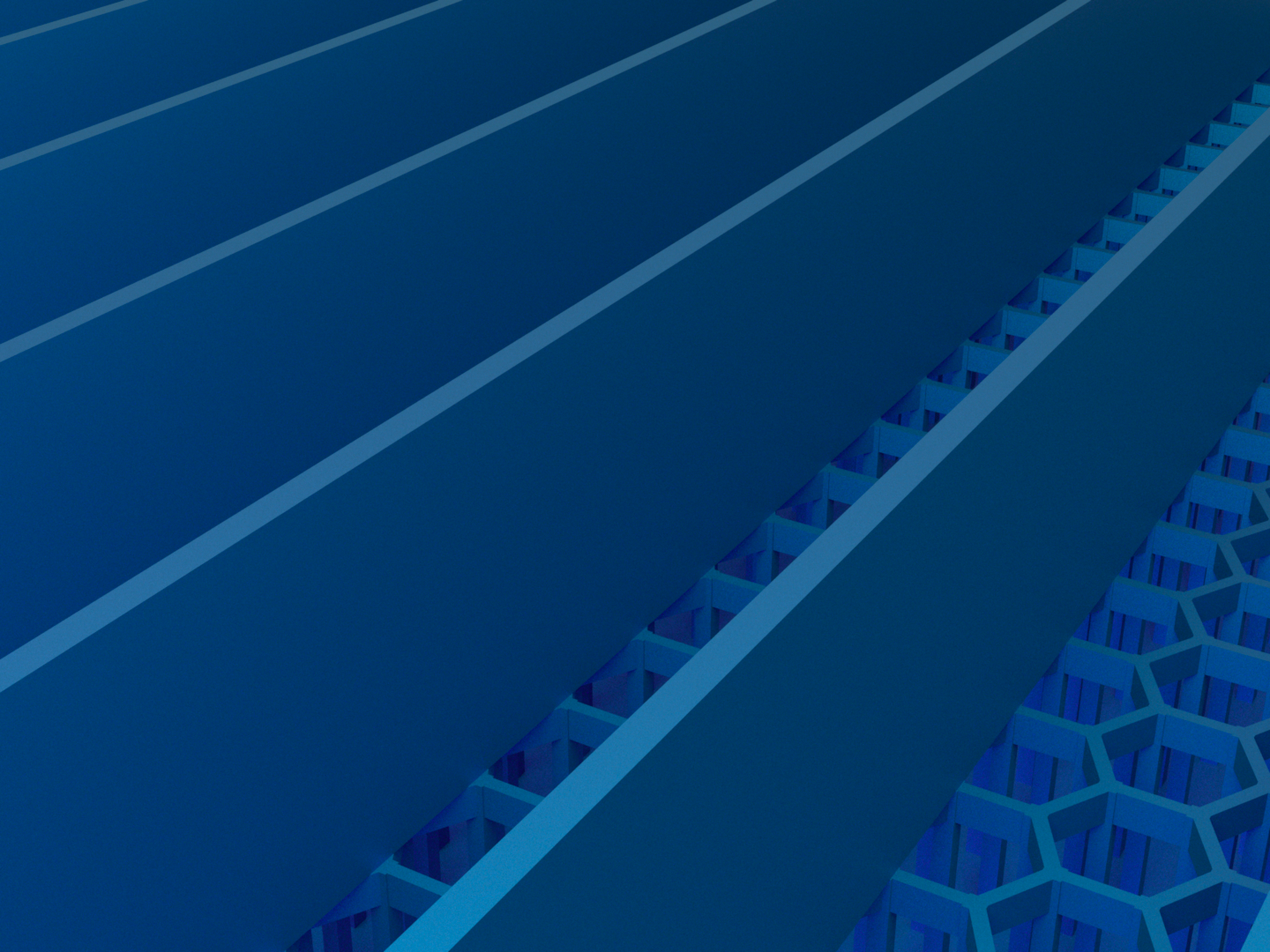

I keep asking walls what they remember — most of On Palimpsests is that — and this is the same question put to a surface whose color is in its layers rather than on them. Next is the same experiment run against other models and other ways of tracing. Nothing more specific than that yet. The butterfly is in no hurry.
A render study and a working note. One butterfly scale, built at true size in Mitsuba 3; six panels under one lamp; and the furnace table that started it.
