A bid to re-imagine Arby's drive-thru: three concepts for the vehicular customer journey, built for mobile pre-order and traditional on-site customers alike.
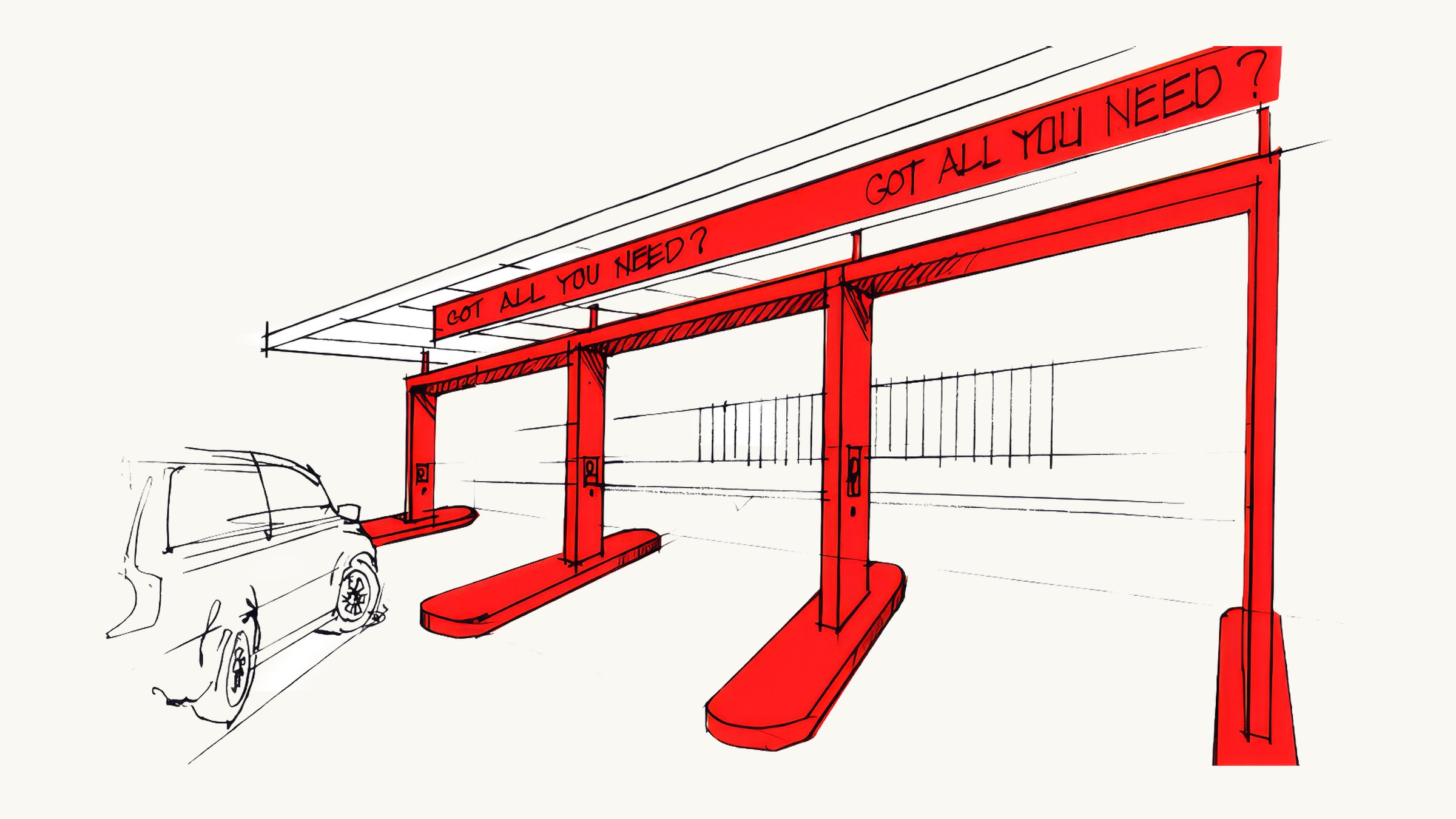
Arby's put its drive-thru up for reconsideration and Prophet bid on it. The drive-thru is a piece of architecture built entirely out of one assumption: a single line of cars, one order at a time, in the order they arrive. Mobile pre-ordering breaks that assumption without removing the lane — the pre-ordered customer has already done the part the building is organized around, and now has nowhere to be. Three concepts, each taking a different position on what to do about it — drawn as vehicular sequences rather than as buildings, because in a drive-thru the plan is downstream of the path a car takes through it.
One of four accounts I worked at Prophet between 2017 and 2018; the others were Chopt, Encompass Health, and Mitchell Grocery.
Designer, concept development. I drew the vehicular journey by hand first, then as site plans, and developed three concepts to the board. Envelops Me brings the whole brand system into the car, treating arrival as a built and digital environment that serves pre-order and traditional customers on the same path. Lets Me Choose splits them — dedicated pick-up areas separate from the drive-thru lane, decided by the customer on arrival, which is also what clears the bottleneck out of the kitchen and the lot. Transform for Me adds ordering stations with digital panels, so the decision to stay or take it away is made after the order rather than before it.
A drive-thru is a building made out of a queue.
Take away the assumption that everybody arrives in the same state and there is no plan left — just a lane, a window, and a lot full of people the building has no instructions for. Every one of the three concepts is a different answer to where the pre-ordered customer is supposed to go.
Three schemes are an argument, not a menu.
They were not options for the client to pick from on taste. Each takes a position on how much choice the customer should be given and where the choice happens, and drawing all three at equal weight is how you make a room say which of those it actually believes.
The obvious thing nobody has said out loud.
The room stalled on the post-order moment — what a customer does after pulling into a dedicated park-and-eat spot. I said what I actually do, which is stare at my phone while I eat fast food, and proposed that the cardboard tray carry a section that folds out into a slot holding a phone in either orientation, right where you are already looking. It is not a clever idea. It is the ordinary one, and it had not been said.
A bid is a real project.
You draw the whole thing at full conviction knowing it may never be built, and the discipline of that is worth keeping: the schemes have to be defensible on their own terms, because there is no construction phase coming to sort out which one was right.
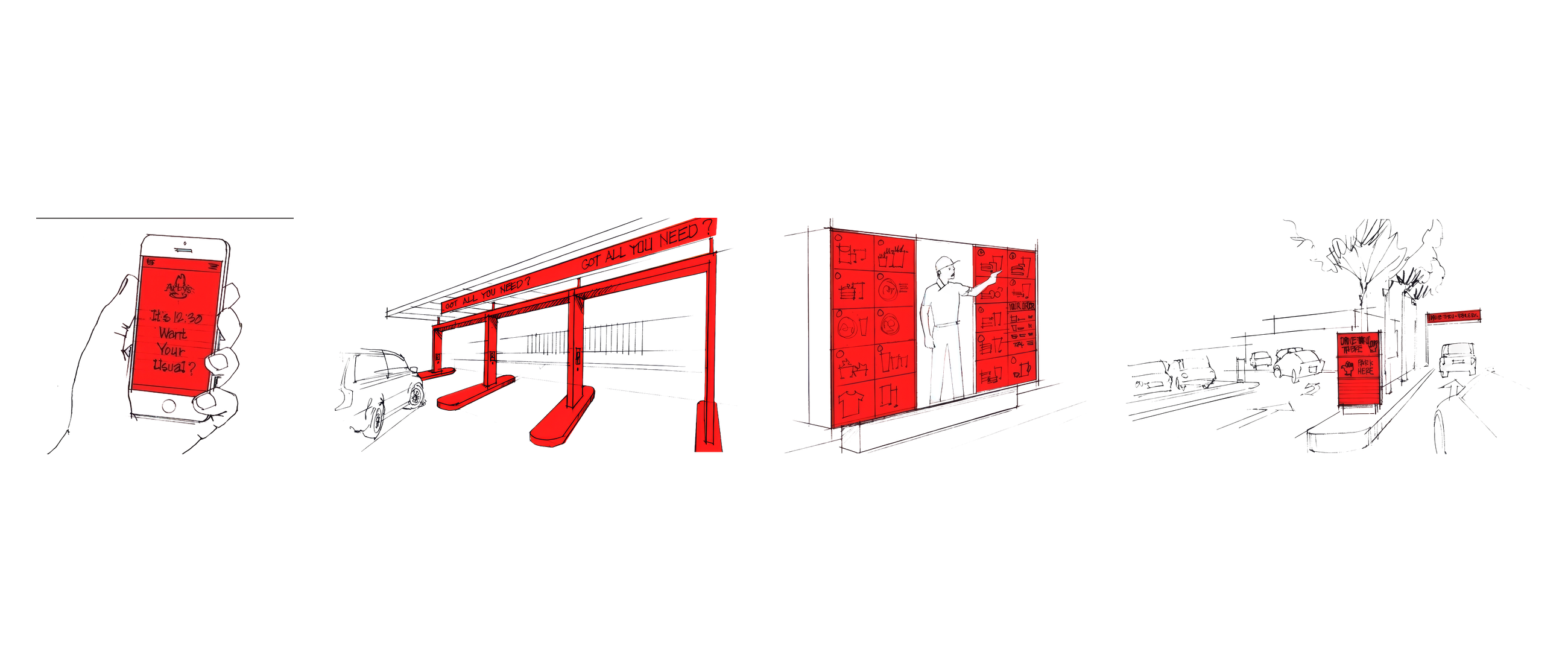
Concept sketches — the vehicular journey, drawn by hand.
Concept sketches — the vehicular journey, drawn by hand.
Concept sketches — the vehicular journey, drawn by hand.

In a drive-thru the plan is downstream of the path a car takes through it.
In a drive-thru the plan is downstream of the path a car takes through it.
In a drive-thru the plan is downstream of the path a car takes through it.
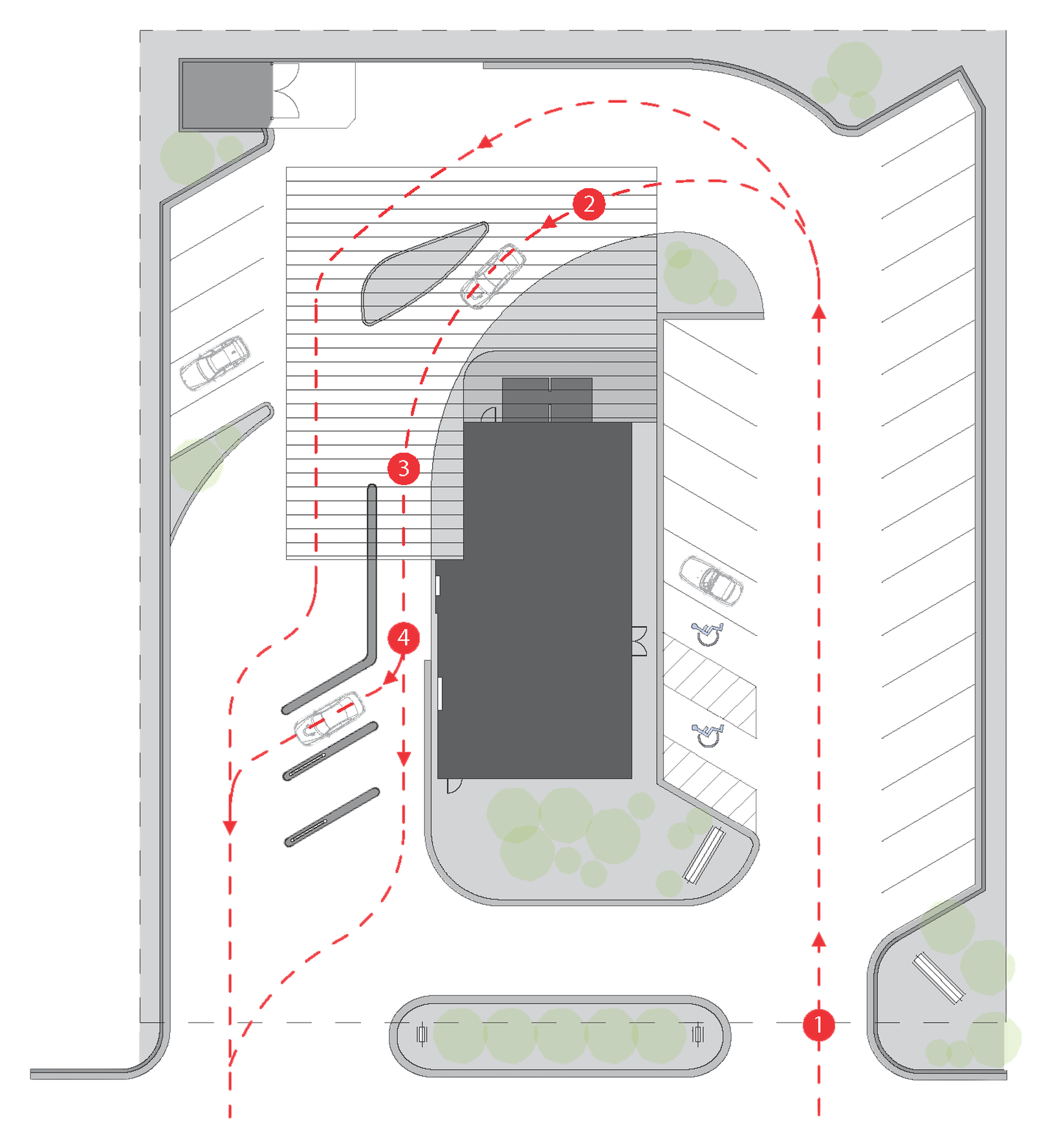
Envelops Me — site plan and vehicular sequence.
Envelops Me — site plan and vehicular sequence.
Envelops Me — site plan and vehicular sequence.
The complete digital immersion fast food experience brings the entire Arby's brand system into your car. This concept envelops the customer as they enter a built and digital environment, accommodating both mobile pre-order and traditional customers.
The complete digital immersion fast food experience brings the entire Arby's brand system into your car. This concept envelops the customer as they enter a built and digital environment, accommodating both mobile pre-order and traditional customers.
The complete digital immersion fast food experience brings the entire Arby's brand system into your car. This concept envelops the customer as they enter a built and digital environment, accommodating both mobile pre-order and traditional customers.
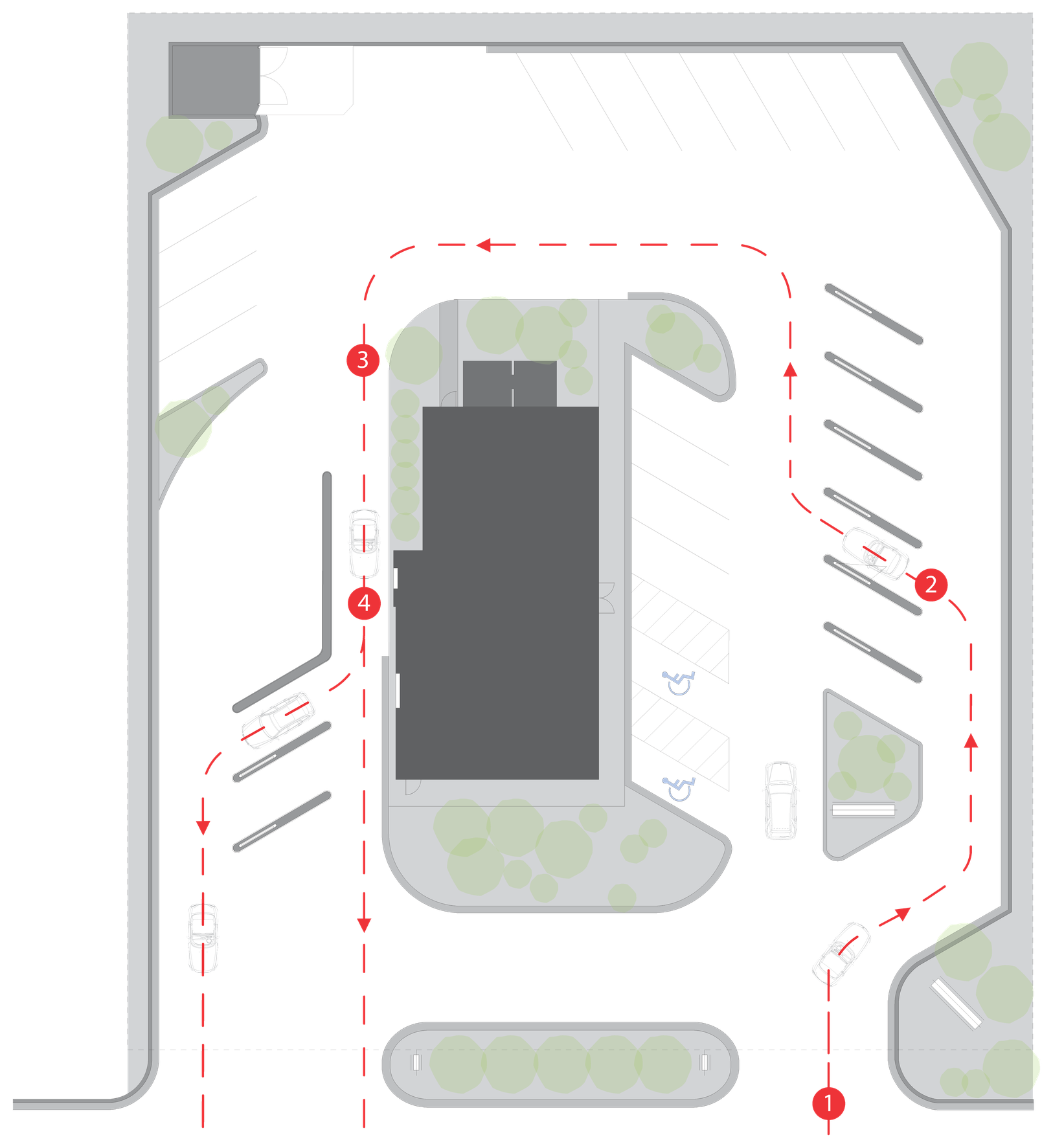
Lets Me Choose — pickup split from the lane.
Lets Me Choose — pickup split from the lane.
Lets Me Choose — pickup split from the lane.
One benefit of mobile ordering is that it significantly reduces bottleneck situations in the kitchen and, as a result, the parking lot. Lets Me Choose separates the mobile customer from the drive-thru with dedicated order pick-up areas. The customer can decide which method upon arrival.
One benefit of mobile ordering is that it significantly reduces bottleneck situations in the kitchen and, as a result, the parking lot. Lets Me Choose separates the mobile customer from the drive-thru with dedicated order pick-up areas. The customer can decide which method upon arrival.
One benefit of mobile ordering is that it significantly reduces bottleneck situations in the kitchen and, as a result, the parking lot. Lets Me Choose separates the mobile customer from the drive-thru with dedicated order pick-up areas. The customer can decide which method upon arrival.
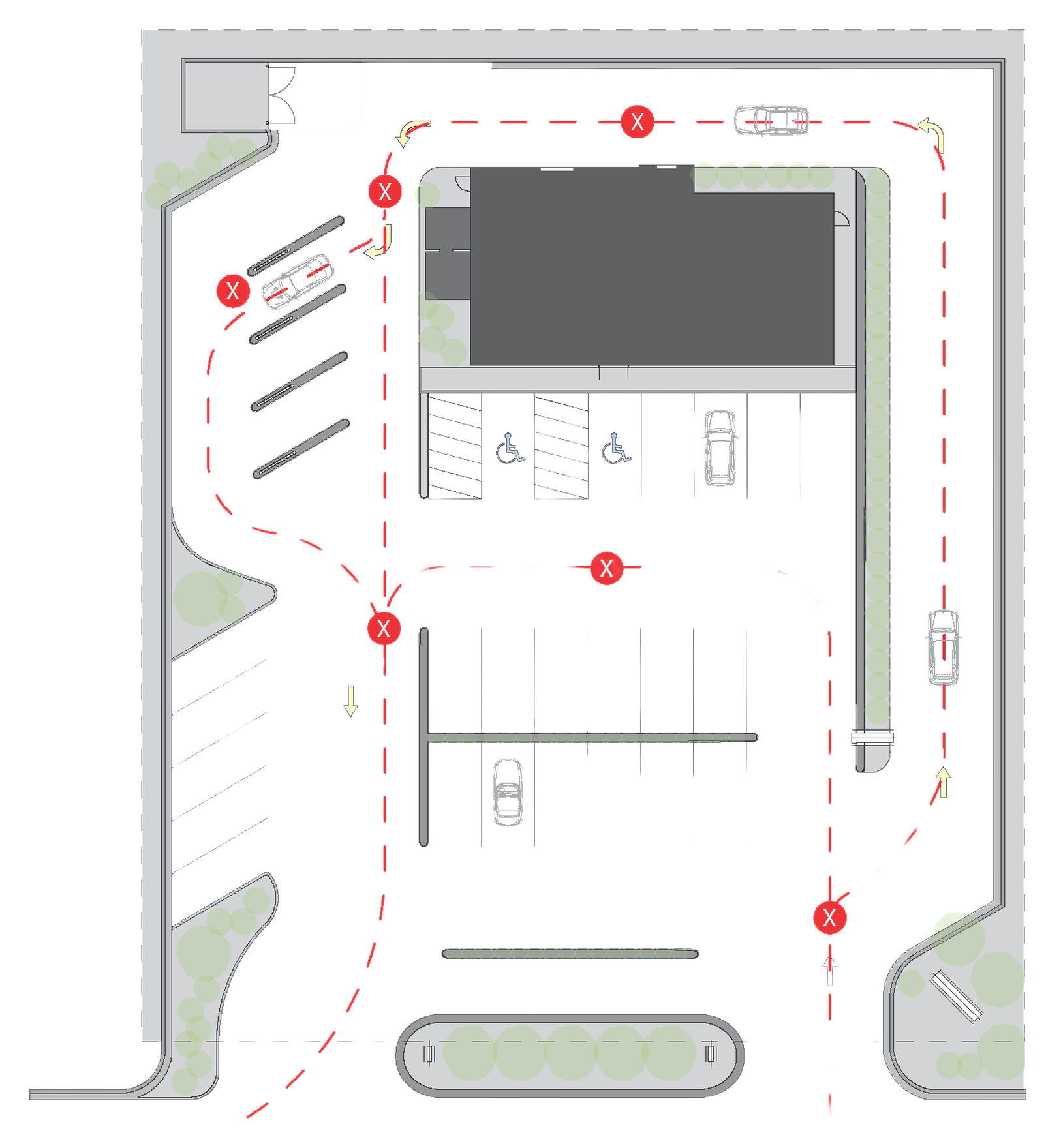
Transform for Me — ordering stations, on-site or to-go.
Transform for Me — ordering stations, on-site or to-go.
Transform for Me — ordering stations, on-site or to-go.
In addition to a traditional experience, this concept provides a series of ordering stations with digital panels that allows customers to place their order and decide if they would like to remain on-site or continue with their order to-go.
In addition to a traditional experience, this concept provides a series of ordering stations with digital panels that allows customers to place their order and decide if they would like to remain on-site or continue with their order to-go.
In addition to a traditional experience, this concept provides a series of ordering stations with digital panels that allows customers to place their order and decide if they would like to remain on-site or continue with their order to-go.
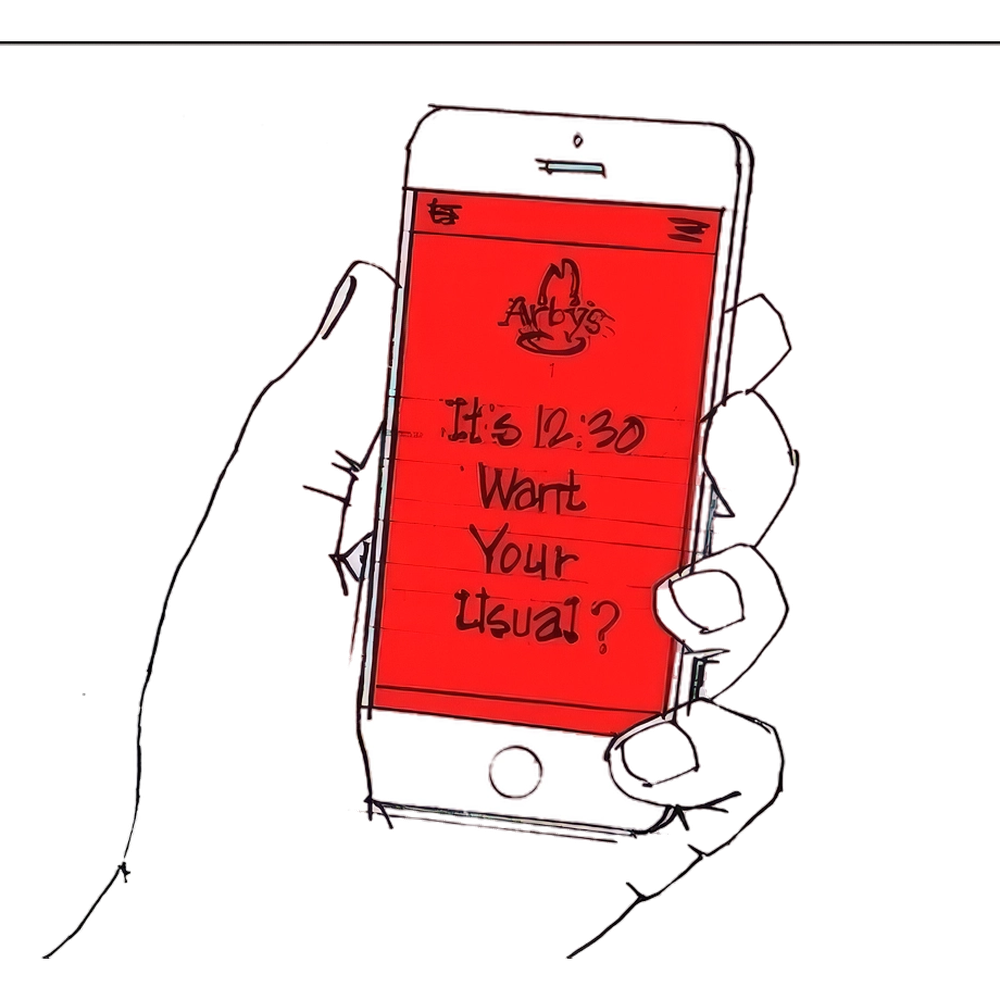
Mobile pre-order — the customer has already done the part the building is organized around.
Mobile pre-order — the customer has already done the part the building is organized around.
Mobile pre-order — the customer has already done the part the building is organized around.
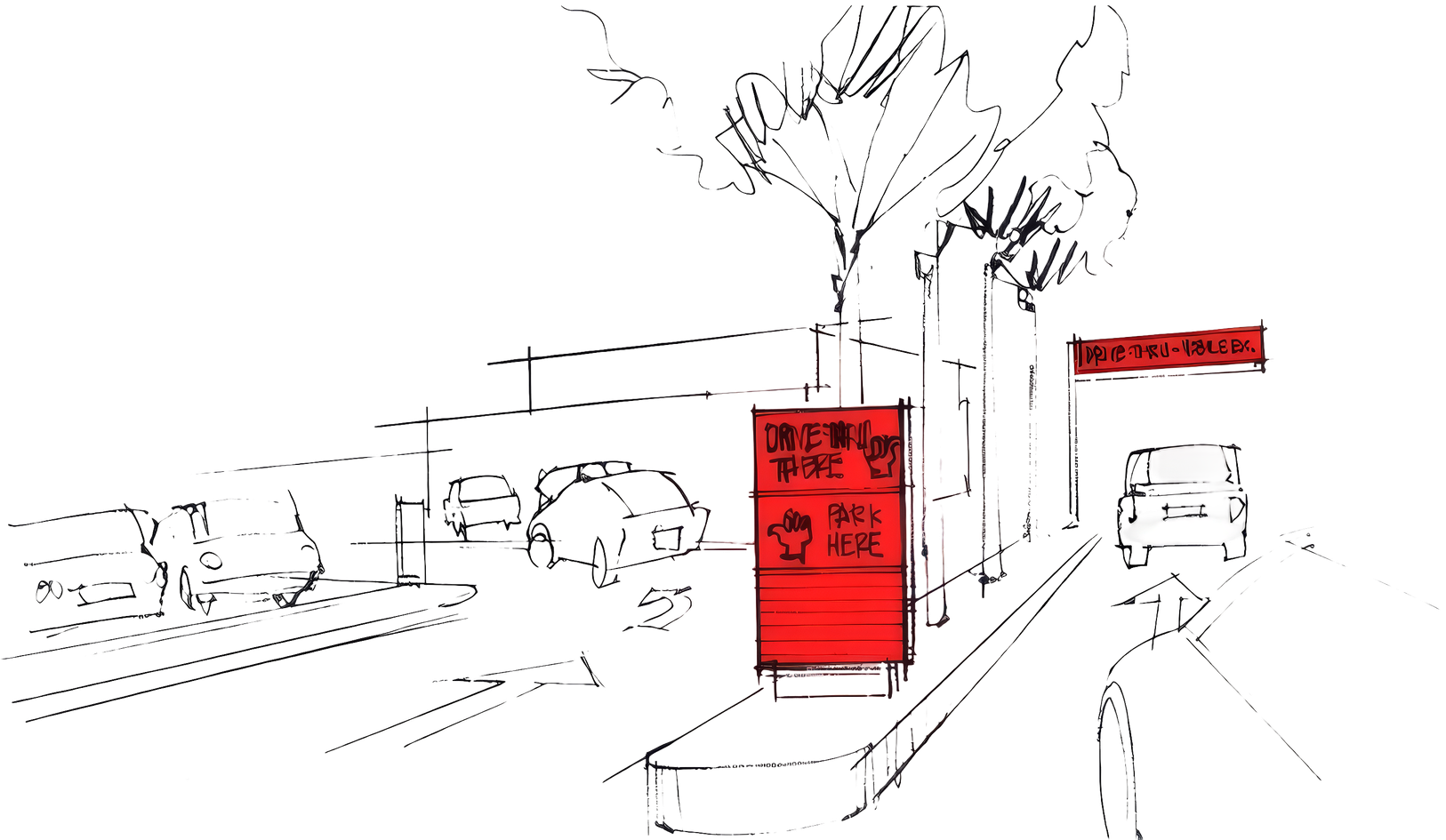
The vehicular journey, drawn by hand — the drive-thru lane and the park-here stalls.
The vehicular journey, drawn by hand — the drive-thru lane and the park-here stalls.
The vehicular journey, drawn by hand — the drive-thru lane and the park-here stalls.
It is not a clever idea. It is the ordinary one, and it had not been said.
It is not a clever idea. It is the ordinary one, and it had not been said.
It is not a clever idea. It is the ordinary one, and it had not been said.